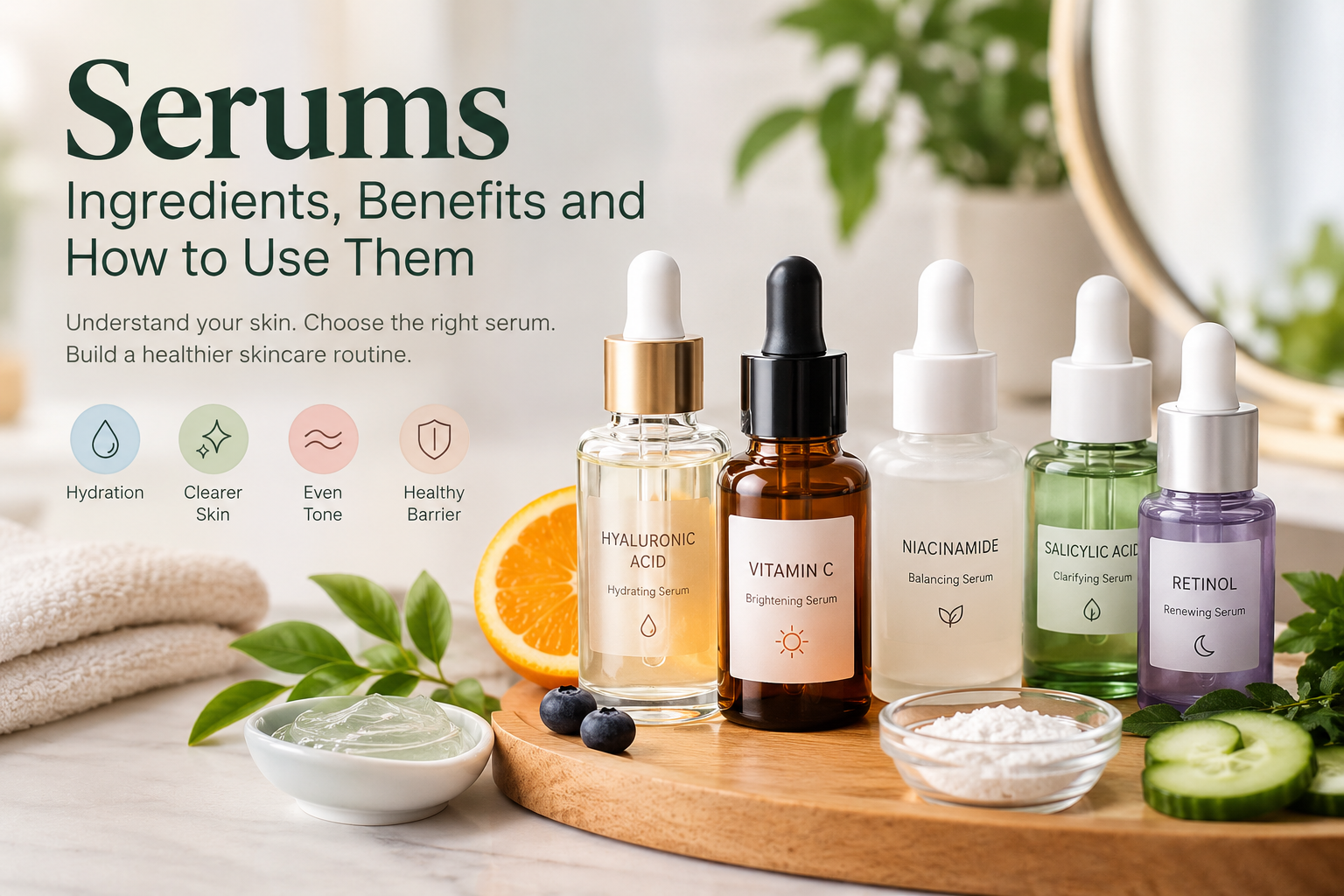
Choosing skincare products can feel overwhelming when shelves are filled with bottles designed for different skin concerns. Some products focus on moisture, others target clogged pores, and some are intended to improve the appearance of uneven skin tone. Among these options, serums offer a way to add selected ingredients to a skincare routine without necessarily using a heavy cream.
However, the most suitable serum is not always the most expensive or the one receiving the most attention online. Understanding your skin’s needs, checking product labels, and learning how individual ingredients work can help you make a more informed decision.
This guide explains how serums differ, what common ingredients do, how to select a suitable formula, and which habits can make your skincare routine more practical.
Table of Contents
What Makes a Serum Different From Other Skincare Products?
A serum is a skincare formulation designed to deliver particular ingredients to the skin. Depending on its composition, it may have a watery, gel-like, or slightly creamy consistency.
The main difference between serums is their intended purpose. Onea formula may focus on attracting moisture, while another may contain ingredients intended to exfoliate the skin or improve the appearance of pigmentation. The word serum alone does not tell you how a product will perform.
Moisturizers generally help maintain skin comfort and reduce water loss. Cleansers remove dirt, oil, sunscreen, and other material from the skin’s surface. Serums can complement these products by providing ingredients selected for a particular concern.
For example, someone experiencing dryness may prefer a formula containing glycerin, whereas someone concerned about clogged pores might consider a product containing salicylic acid. These products have different functions, so choosing one should begin with identifying the problem you want to address.
Why Understanding Your Skin Matters Before Buying a Serum
A skincare product should respond to an actual need rather than an advertising promise. Before purchasing a new formula, notice how your skin behaves during the day and after washing.
When Your Skin Feels Dry or Stretched
If your face feels tight after cleansing, the first thing to examine is your existing routine. Hot water, frequent washing, or a cleanser that removes too much natural oil may leave your skin uncomfortable.
Switching to a mild cleanser and applying a suitable moisturizer may help. A hydrating serum can be an additional option if your skin still feels dry, but adding more products will not necessarily solve a problem caused by harsh cleansing.
When Your Skin Becomes Shiny
Excess shine often appears around the forehead, nose, and chin. Some people find that heavy skincare products make this more noticeable, while others naturally produce more oil.
A lightweight formula containing niacinamide may suit certain people who want to improve the appearance of oily skin. However, trying to remove all surface oil can be counterproductive because aggressive cleansing may irritate the skin.
When Your Complexion Looks Uneven
Uneven pigmentation can develop for different reasons, including sun exposure and marks left after inflammation. The appropriate skincare approach depends on what caused the discoloration.
Some vitamin C and niacinamide products may gradually improve the appearance of particular types of dark spots. Daily sun protection is also important. A spot that changes in size, shape, or colour should be assessed by a healthcare professional rather than treated as a routine cosmetic concern.
When Your Skin Feels Rough
Rough patches do not always mean that your skin needs exfoliation. Dryness, irritation, and a weakened skin barrier can also affect texture.
If roughness appears alongside redness, peeling, or stinging, avoid immediately introducing a strong exfoliating product. A gentler routine may be more appropriate until the skin settles.
Common Serum Ingredients and Their Functions
The ingredient list can tell you much more about a serum than its packaging or promotional claims. Different ingredients serve different purposes, and understanding these differences can help you avoid buying unsuitable products.
Glycerin for Moisture Retention
Glycerin is a moisture-binding ingredient used in many skincare formulations. It helps the outer layer of the skin retain water, which can improve how soft and comfortable the skin feels.
A serum containing glycerin may be useful when your skin feels dry after cleansing or during periods of low humidity. Combining it with a suitable moisturizer can help support hydration by reducing moisture loss.
Glycerin is not limited to serums. It is also found in cleansers, creams, and lotions, so you may already be using it without realizing it.
Hyaluronic Acid for a Hydrated Appearance
Hyaluronic acid is a humectant that attracts water. Skincare products containing this ingredient are commonly used to make the skin feel hydrated and temporarily appear fuller.
Its effects depend on the complete formulation and the other products in your routine. Although it may soften the appearance of dehydration-related fine lines, it does not permanently remove wrinkles or replace a moisturizer.
If you choose a hyaluronic acid serum, follow the product’s application directions and use a moisturizer when appropriate.
Niacinamide for Everyday Skin Support
Niacinamide is a form of vitamin B3 used in products intended to support the skin barrier and improve the appearance of uneven tone. Some formulations may also help manage the appearance of excess oil.
It is available in products with different concentrations. A higher percentage does not automatically produce better results, particularly if the formula causes irritation.
People new to niacinamide may prefer a well-tolerated product rather than choosing the strongest concentration available.
Vitamin C for Antioxidant Care
Vitamin C is an antioxidant used in skincare to help protect against some effects of environmental stress. Certain formulations may also help improve the appearance of sun-related discoloration and uneven skin tone.
Not all vitamin C products behave alike. Their stability, formulation, and ingredient form can influence performance. Follow the manufacturer’s storage instructions, and discontinue use if the product repeatedly causes irritation.
Retinol for Texture and Visible Signs of Aging
Retinol is a vitamin A derivative commonly included in products targeting the appearance of fine lines, uneven texture, and certain acne concerns.
It can be irritating when introduced too quickly. Some users experience dryness, redness, peeling, or increased sensitivity, especially when combining it with other active ingredients.
Follow the product directions and introduce retinol cautiously. Topical retinoids are generally avoided during pregnancy; anyone pregnant, planning pregnancy, or breastfeeding should discuss suitable options with a qualified healthcare professional.
Salicylic Acid for Clogged Pores
Salicylic acid is an exfoliating ingredient commonly used in skincare products for blackheads and certain blemishes. It helps loosen dead skin cells and material that can accumulate within pores.
This ingredient may suit some people with oily or blemish-prone skin, but it is not appropriate for every skin concern. Frequent application can cause dryness, redness, and irritation.
Begin according to the product instructions and avoid combining several strong exfoliating products without professional guidance. If your skin becomes persistently uncomfortable, stop using the product.
How to Select a Serum Without Wasting Money
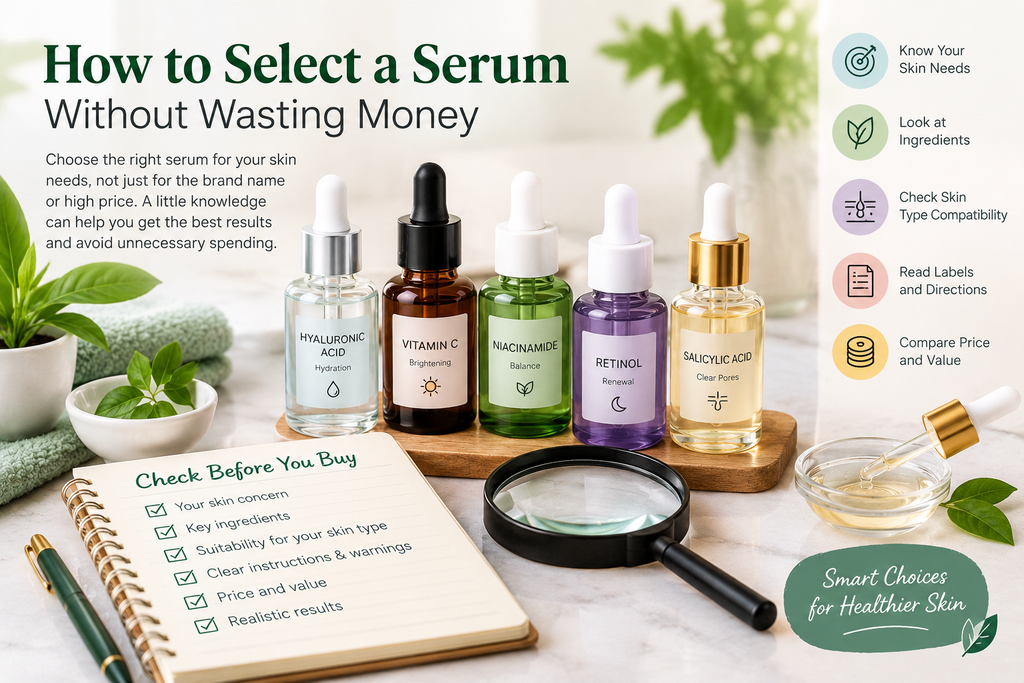
Choosing a product becomes easier when you evaluate it according to your needs rather than its popularity.
Start with one concern. Decide whether your main priority is dryness, excess oil, uneven pigmentation, or clogged pores. Trying to address every concern at once can make your routine unnecessarily complicated.
Read the full label. Check the ingredients, directions, warnings, and expiry information. The product’s front label may emphasize benefits without explaining its limitations.
Consider your skin’s sensitivity. Fragrance and strong active ingredients may be unsuitable for some people. A fragrance-free formula may be worth considering if you are sensitive to scented products, although it is not a guarantee against reactions.
Look at the complete formulation. An ingredient’s presence alone does not establish how well a product will work. Its concentration, formulation, and compatibility with your skin also matter.
Choose a realistic price. A costly serum is not automatically more effective than an affordable one. Select a product from a trustworthy source that fits your budget and has clear usage instructions.
Be cautious of products promising perfect skin, permanent wrinkle removal, or complete elimination of dark spots within a few days. Such claims should not replace realistic expectations.
A Simple Method for Introducing a New Serum
Changing your entire routine at once makes it difficult to identify which product is helping or causing a reaction. A gradual approach is more practical.
First, Keep Your Routine Familiar
Continue using the cleanser, moisturizer, and sunscreen that already suit your skin. Choose one new serum for a clearly defined purpose instead of starting several products together.
Next, Follow the Application Instructions
The amount and frequency depend on the particular formula. Use the recommended quantity and apply it only to the areas specified on the label.
Avoid applying a product close to your eyes or lips unless it is specifically intended for those areas.
Then, Apply Moisturizer When Needed
A serum does not automatically replace a moisturizer. The serum may deliver selected ingredients, while a moisturizer helps maintain comfort and limit water loss.
Follow the product directions for layering. In many routines, a lightweight serum is applied before moisturizer.
Finish Your Morning Routine With Sunscreen
Use broad-spectrum sunscreen with SPF 30 or higher during the day. Apply it according to the instructions and reapply when necessary, particularly after swimming, sweating, or prolonged outdoor exposure.
Sunscreen is an important part of a routine for anyone concerned about sun-related skin changes or uneven pigmentation.
Can You Combine Different Serums?
Combining products may be appropriate in some routines, but it is not essential. Using more formulas increases the number of ingredients your skin is exposed to and can make irritation more difficult to trace.
For example, a person who needs additional hydration might benefit from one hydrating serum and a moisturizer. Adding several products with similar purposes may not provide a meaningful extra benefit.
Take particular care when combining retinol, exfoliating acids, or other potentially irritating ingredients. If you are unsure about compatibility, ask a dermatologist or pharmacist familiar with your skincare products.
Introduce products individually and observe your skin before adding another. This makes it easier to identify which formula suits you.
Signs That a Serum May Not Suit Your Skin
Not every reaction means an ingredient is dangerous, but persistent discomfort should not be ignored.
Watch for:
- Burning or stinging that continues after application.
- Redness that repeatedly returns.
- New patches of peeling or excessive dryness.
- Itching, swelling, or a rash.
- Skin that becomes unusually sensitive to products you previously tolerated.
If these symptoms develop, discontinue the suspected product. Avoid adding further active ingredients in an attempt to correct the reaction. Seek medical advice if symptoms are severe, persistent, or accompanied by swelling or blistering.
A patch test performed according to the manufacturer’s directions may help reveal some reactions before wider application, although it cannot guarantee that a product will be suitable for everyone.
How Long Should You Wait for Results?
Different skincare concerns respond at different speeds. A hydrating formula may make your skin feel more comfortable relatively quickly, whereas changes in the appearance of dark spots, fine lines, or uneven texture may take weeks or longer.
Results also depend on the ingredient, the formulation, how consistently the product is used, and the cause of the concern.
One practical approach is to take a photograph under similar lighting every few weeks. This can help you compare gradual changes more fairly than checking your skin repeatedly throughout the day.
Do not continue using a product that causes persistent irritation simply because you are waiting for results. Comfort and tolerability are important parts of choosing suitable skincare.
How to Keep Your Serum in Good Condition
Skincare products can deteriorate when stored incorrectly. Keep the container closed and follow the manufacturer’s storage guidance.
Avoid placing bottles in direct sunlight or near excessive heat. Certain vitamin C formulations, for example, may be sensitive to exposure to air and light.
Check the expiry date and any period-after-opening symbol on the packaging. Avoid sharing applicators, and keep the bottle opening clean.
If the product develops a noticeable change in colour, smell, or texture, stop using it and check the manufacturer’s guidance before deciding whether it is still suitable.
For more guidance on using skincare products in the correct order, read the American Academy of Dermatology’s skincare application tips.
Who Should Seek Advice Before Using Active Serums?
People with eczema, rosacea, highly sensitive skin, or a damaged skin barrier may need extra care when choosing products containing exfoliating acids or retinoids.
If you already use prescription skincare treatments, ask your healthcare professional or pharmacist before adding ingredients that could increase irritation.
Persistent acne, painful inflammation, scarring, and unexplained skin changes may require professional assessment rather than repeated trials of cosmetic products.
A serum should fit your skin’s needs and tolerance. It should not be used simply because a particular ingredient is popular.
Frequently Asked Questions About Serums
1. What is the main purpose of a serum?
A serum is designed to deliver selected skincare ingredients for a particular purpose, such as hydration, improving the appearance of uneven tone, or addressing clogged pores. Its effects depend on the formulation and the skin concern.
2. Can I use a serum every day?
Some formulas are designed for daily application, while others require less frequent use. Follow the product instructions and pay attention to your skin’s response.
3. Should I use serum before or after moisturizer?
Many lightweight serums are applied before moisturizer, but the correct order depends on the formulation and the manufacturer’s instructions.
4. Are serums suitable for sensitive skin?
Some are, but suitability depends on the ingredients and the individual’s sensitivity. People with reactive skin may prefer simpler formulas and should introduce unfamiliar products cautiously.
5. Can serums permanently remove dark spots?
No serum can guarantee permanent removal of every dark spot. Some ingredients may improve the appearance of certain types of pigmentation, but results vary and the cause of discoloration matters.
6. Are natural serums safer than synthetic products?
Not necessarily. Natural and synthetic ingredients can both cause irritation or allergic reactions. The formulation, quality, and individual response are more useful considerations than the label alone.
7. Do I need several serums for healthy skin?
No. Many people can maintain a useful routine with a gentle cleanser, moisturizer, and sunscreen. Additional products are optional and should have a clear purpose.
Final Thoughts
Selecting serums does not have to mean buying a large collection of skincare products. Begin by identifying the concern you want to address, then choose a formula with suitable ingredients and clear instructions.
Pay attention to how your skin responds, introduce unfamiliar products gradually, and maintain a consistent routine that includes moisturizer and daytime sun protection. Avoid judging products by their price or popularity alone.
A useful skincare routine is one that fits your needs, remains manageable, and does not leave your skin persistently irritated. Serums can contribute to that routine, but the right choice is always more important than the number of products you use.
Disclaimer: This article provides general educational information and does not replace professional medical advice. Consult a qualified healthcare professional for persistent skin concerns, significant reactions, or questions about using active skincare ingredients.
