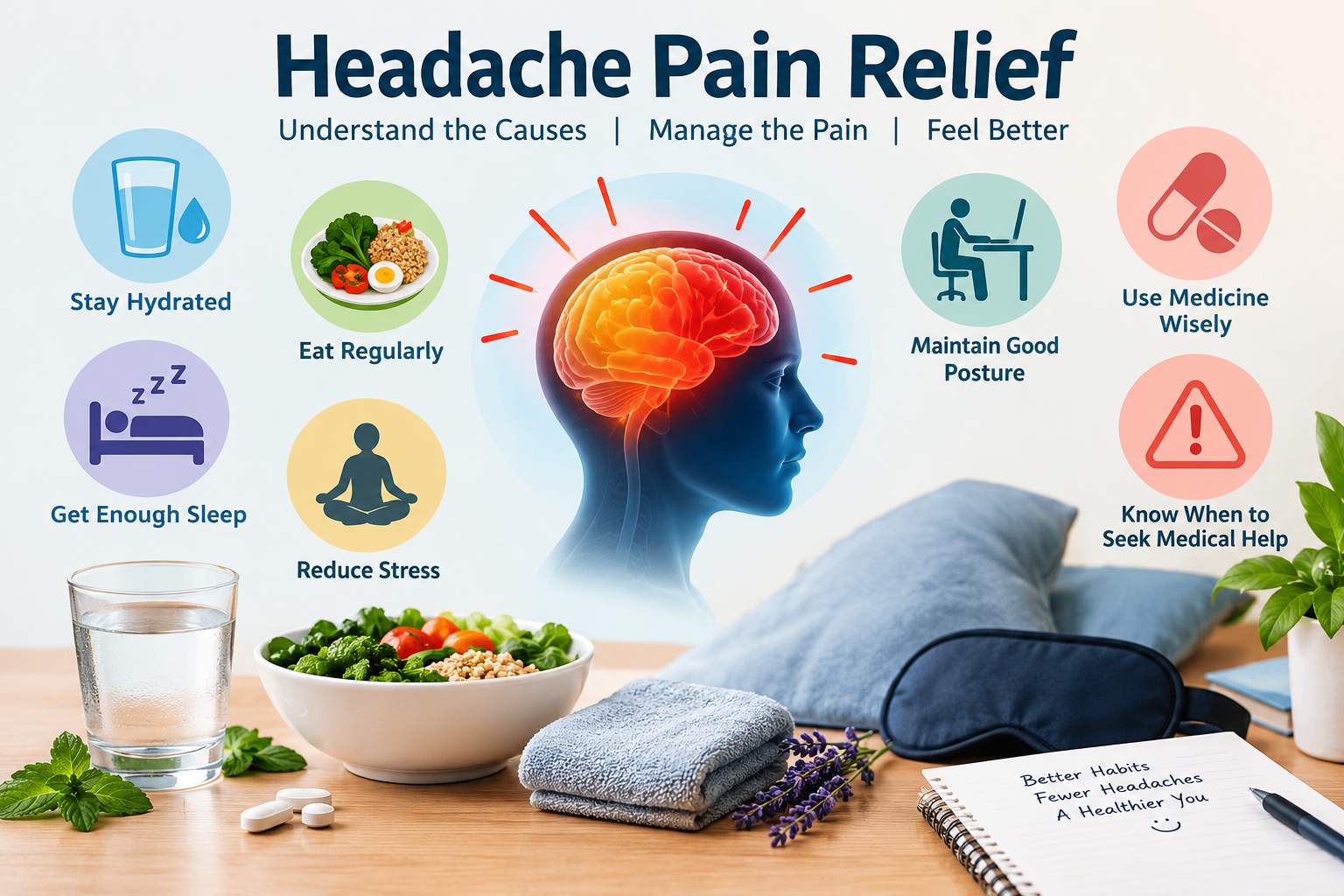
A headache can turn an ordinary day into an uncomfortable experience. You might struggle to concentrate on your work, feel irritated by everyday noise, or find it difficult to enjoy your usual activities. The discomfort may last for a short time or return repeatedly over several days.
Finding suitable headache pain relief requires more than simply trying the first remedy you find. The location of the pain, the way it develops, your daily habits, and any additional symptoms can all provide useful clues. Some headaches improve with simple adjustments, while others need specific treatment or medical evaluation.
This article explains practical ways to manage common headaches, understand possible triggers, use pain relief medicines responsibly, and recognise symptoms that should never be ignored.
Table of Contents
Understanding the Different Ways a Headache Can Feel
Head pain does not always present in the same way. One person may describe a heavy sensation around the forehead, while another experiences pulsing discomfort near one temple. Some people also notice nausea, sensitivity to light, or pain around the neck.
These differences matter because headaches can develop for many reasons.
A tension-type headache often produces a pressing or tightening sensation. Migraine may cause throbbing pain and additional symptoms that interfere with everyday activities. Headaches associated with dehydration, illness, medication use, or other medical conditions can have different patterns.
Although recognising these differences can help you describe your symptoms, the sensation alone cannot confirm a diagnosis.
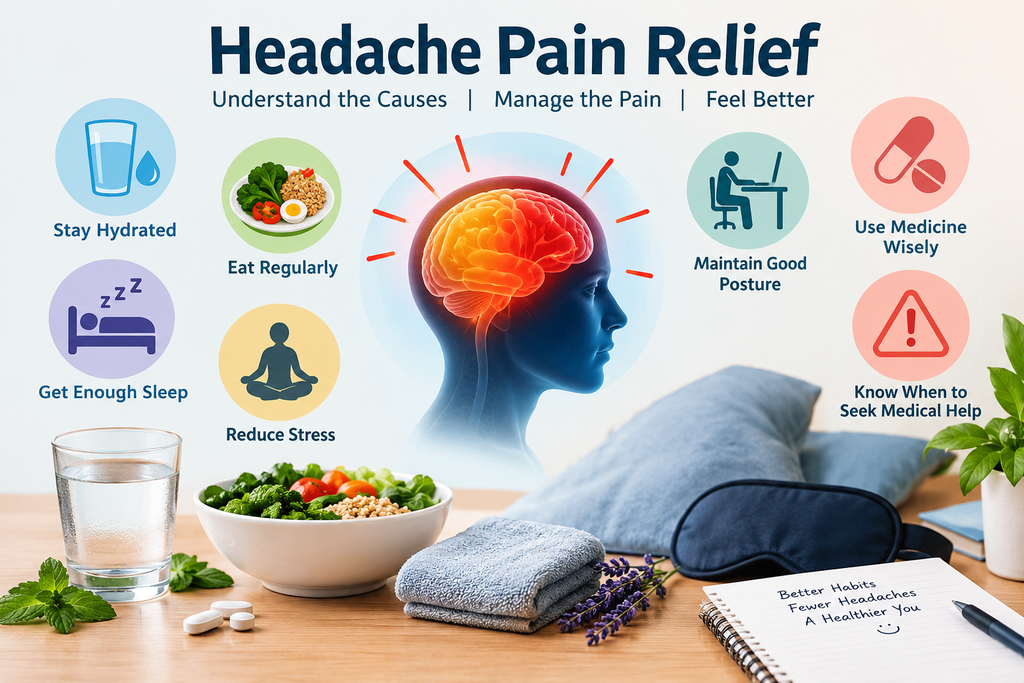
What Can Make Head Pain Worse?
Understanding what happens before a headache may help you identify factors that contribute to the discomfort.
Changes in Your Daily Schedule
A disrupted routine can affect sleep, eating habits, hydration, and stress levels. For some people, several small changes occurring together may contribute to a headache.
For example, a particularly busy day might involve a late bedtime, a missed lunch, and several hours of uninterrupted computer work. None of these factors necessarily explains the pain on its own, but observing the pattern may help you understand your personal triggers.
Prolonged Concentration
Activities requiring sustained concentration can encourage people to remain in one position for too long. Reading, studying, working at a desk, or using a phone may also lead to uncomfortable neck positioning.
If your head begins to ache during these activities, take a comfortable break and review your posture. Repeated headaches during screen use may also warrant an eye examination.
Emotional Pressure
Ongoing worries and stressful situations can affect muscle tension, sleep quality, and daily routines. These changes may contribute to headaches in susceptible individuals.
Managing stress will not eliminate every headache, but activities such as walking, relaxation, and maintaining regular sleep hours may support overall well-being.
Individual Migraine Triggers
People living with migraine may notice that particular circumstances precede an attack. Possible triggers include disrupted sleep, hormonal changes, certain sensory conditions, and changes in caffeine consumption.
Triggers vary considerably. Keeping a record of your own experiences is more useful than following a long list of foods or activities that supposedly affect everyone.
8 Practical Approaches to Headache Pain Relief
The following methods may help with mild headaches when no warning signs are present. Their effectiveness depends on the type and cause of the pain.
1. Restore Your Usual Fluid Intake
Think about how much you have been drinking, particularly if the weather is hot or you have been physically active. If you may be dehydrated, drink water and continue taking fluids regularly.
People who have lost fluids through vomiting or diarrhoea may need additional guidance about rehydration. Anyone with a medical condition requiring fluid restriction should follow their healthcare professional’s advice.
Drinking water can help when dehydration contributes to head pain, but it is not a universal treatment for every headache.
2. Give Yourself a Comfortable Rest Period
Choose a place where you can sit or lie down comfortably without unnecessary interruptions. If light or sound aggravates your symptoms, reduce those distractions where possible.
Rest may be particularly helpful for people experiencing migraine-related sensitivity. However, if the headache is sudden and severe, or accompanied by confusion, weakness, or other alarming symptoms, do not delay emergency care to see whether sleep helps.
3. Experiment With Gentle Temperature Comfort
A cool, damp cloth placed across the forehead may feel soothing to some people. Others prefer a comfortably warm shower when they notice muscle tightness.
Try one option at a time and stop if it increases your discomfort. Never apply ice directly to the skin, and avoid temperatures that could cause burns or skin damage.
These measures may improve comfort temporarily but should not replace appropriate treatment for an underlying condition.
4. Adjust Your Working Position
Review the way you sit when reading, studying, or using a computer. Keep your shoulders relaxed, support your back, and position the screen so you do not need to bend your neck for long periods.
Short movement breaks can interrupt prolonged sitting. Gentle shoulder movements may also help if you feel stiffness around the upper back and neck.
Avoid forceful stretching or neck manipulation, especially if the pain is unfamiliar, severe, or associated with an injury.
5. Eat Regularly Throughout the Day
Long gaps between meals may contribute to headaches in some individuals. If you have missed a meal, consider eating something balanced that suits your normal diet.
You could choose a meal containing vegetables, whole grains, and protein, or a suitable snack if a full meal is not available.
There is no single meal that reliably treats every headache. Instead, aim for a consistent eating routine and note whether particular patterns repeatedly occur before your symptoms.
6. Use Relaxation to Reduce Tension
Set aside a few minutes to sit comfortably and breathe at a natural pace. Allow your shoulders to settle and release unnecessary tension in your jaw.
You might also enjoy a quiet walk, gentle stretching, or another calming activity that does not worsen the pain.
Relaxation may be useful when stress contributes to your symptoms, but it is not a substitute for medical assessment when the headache is persistent or concerning.
7. Review Your Sleep Habits
Sleep disruption can contribute to headaches in some people. Try to maintain reasonably consistent sleeping and waking times rather than repeatedly changing your schedule.
Make your bedroom comfortable and allow enough time for rest. If you regularly wake with head pain, particularly alongside loud snoring or significant daytime sleepiness, ask a healthcare professional whether a sleep-related condition could be involved.
8. Choose Medicines Carefully
Some headaches respond to over-the-counter pain relievers, including paracetamol or ibuprofen. However, the safest option depends on your age, medical history, pregnancy status, and other medicines.
Before using a pain reliever, read the package instructions and ask a pharmacist or doctor if you are uncertain about its suitability.
Keep these precautions in mind:
- Do not take more than the recommended dose.
- Check the active ingredients in combination products.
- Avoid combining medicines without confirming that doing so is safe.
- Ask for professional advice if you have chronic health conditions or take regular medication.
- Seek guidance before using pain relievers during pregnancy.
Ibuprofen may be unsuitable for some people with stomach ulcers, kidney problems, or particular medication interactions. Excessive paracetamol can cause serious liver damage.
Frequent use of headache medicines may contribute to medication-overuse headaches. If you repeatedly need painkillers, discuss your symptoms and a longer-term treatment plan with a healthcare professional.
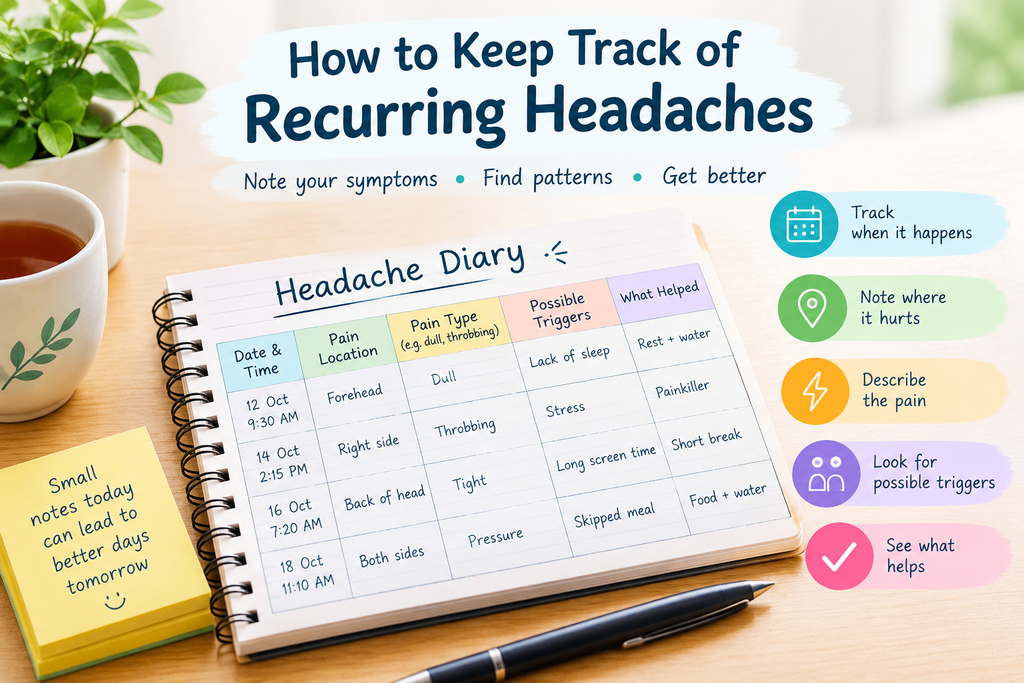
How to Keep Track of Recurring Headaches
When headaches occur repeatedly, memory alone may not provide a clear picture of what is happening. A simple headache record can help you notice patterns and explain them during a medical appointment.
Record the following details whenever an episode occurs:
Time and duration: Note when the pain starts and when it improves.
Pain location: Describe whether it affects the forehead, temples, one side of the head, or several areas.
Pain quality: Explain whether it feels like pressure, throbbing, or another sensation.
Additional symptoms: Record nausea, light sensitivity, visual disturbances, or other changes.
Recent activities: Include sleep changes, missed meals, screen use, physical activity, and unusual stress.
Treatment response: Write down what you tried and whether it helped.
After several entries, look for repeated associations instead of assuming that one event proves a trigger. Share the record with a healthcare professional if the headaches continue or interfere with your routine.
Keeping a record of recurring headaches can help you notice patterns and discuss your symptoms with a healthcare professional. For more information about headache causes and care, read this helpful guide from MedlinePlus.
Headache Types: Signs That May Help You Describe Your Symptoms
Different headache conditions can overlap, but certain patterns may offer useful clues.
Tension-Type Headaches
These often produce pressure or tightness across the head. Some people also notice tenderness around the scalp, neck, or shoulders.
Comfortable posture, regular breaks, and relaxation may help some individuals. Frequent or persistent symptoms should still be assessed.
Migraine
Migraine can involve moderate to severe head pain, sometimes accompanied by nausea and sensitivity to light or sound. Pain may affect one side or both sides of the head.
People with recurrent migraine may benefit from a treatment plan that includes suitable medicines and strategies to reduce the impact of attacks.
Headaches Associated With Illness
Some illnesses can cause headaches alongside other symptoms, such as fever, nasal congestion, or general body discomfort. The associated symptoms and their severity help determine whether medical evaluation is needed.
A severe headache accompanied by fever and a stiff neck is an emergency warning sign.
Headaches Associated With Sleep Problems
Some people notice head pain after an unsettled night or on waking in the morning. Possible explanations vary, including migraine and sleep-related conditions.
If this pattern happens regularly, seek medical advice instead of assuming that poor sleep is the only cause.
Habits That May Help Reduce Future Headaches
Preventing every headache is not always possible. However, a consistent routine may reduce some common contributing factors.
- Follow a regular sleep schedule: Try to maintain similar bedtime and waking hours.
- Drink fluids consistently: Pay attention to your needs during hot weather and exercise.
- Avoid repeatedly missing meals: Keep your eating routine as steady as practical.
- Take breaks during desk work: Change positions and adjust your workstation for comfort.
- Manage ongoing stress: Make room for suitable physical activity and relaxing activities.
- Monitor your personal triggers: Use your headache record to identify recurring patterns.
- Review frequent medicine use: Ask a healthcare professional about safer long-term management if headaches keep returning.
If your headaches are frequent or disabling, prevention may require specific treatment rather than lifestyle changes alone.
When Should You Seek Medical Attention?
It is important to distinguish a familiar, mild headache from one that may indicate a serious problem.
Seek emergency medical care if you experience:
- A headache that reaches extreme intensity suddenly.
- New weakness, numbness, difficulty speaking, confusion, or loss of balance.
- A seizure or sudden loss of vision.
- Severe head pain with fever and a stiff neck.
- A severe headache following a significant head injury.
Arrange prompt medical assessment if the pain continues to worsen, repeatedly returns, affects your daily activities, or occurs with persistent vomiting or new vision problems.
A new or severe headache during pregnancy or after childbirth also requires prompt medical advice, particularly when accompanied by vision changes or other concerning symptoms.
Never assume that a severe or unusual headache is harmless simply because it improves temporarily.
Frequently Asked Questions
What is a sensible first step for headache pain relief?
For a mild headache without warning signs, consider whether you have missed a meal, had too little fluid, or spent too long in an uncomfortable position. Rest and simple adjustments may help, depending on the cause.
Can headaches improve without medication?
Some mild headaches settle with time and supportive care. Others may need medicine or assessment by a healthcare professional, particularly if they are severe or recurrent.
Why does head pain sometimes return after treatment?
The underlying trigger may remain, or the treatment may not be appropriate for the headache type. Repeated symptoms deserve assessment rather than continually increasing medicine use.
Can computer use contribute to headaches?
Extended screen use may contribute to eye strain, uncomfortable posture, or muscle tension. Repeated symptoms can also have other causes, so consider an eye examination or medical advice when needed.
Is a headache on one side always a migraine?
No. One-sided pain can occur with migraine and other conditions. The location alone is not enough to identify the cause.
When should I stop treating a headache at home?
Seek emergency help for sudden extreme pain or symptoms such as weakness, confusion, seizures, or severe headache with fever and a stiff neck. Arrange medical assessment for recurring, worsening, or unusual headaches.
Final Thoughts
Good headache care starts with observing your symptoms rather than assuming that every episode has the same explanation. Regular meals, suitable hydration, comfortable working positions, adequate sleep, and appropriate treatment may help some people manage mild head pain.
If headaches become frequent or interfere with your quality of life, a healthcare professional can help identify the cause and discuss suitable treatment or prevention. The safest approach combines practical self-care with an understanding of when medical attention is necessary.
Medical disclaimer: This article provides general educational information and does not replace professional medical advice, diagnosis, or treatment.
