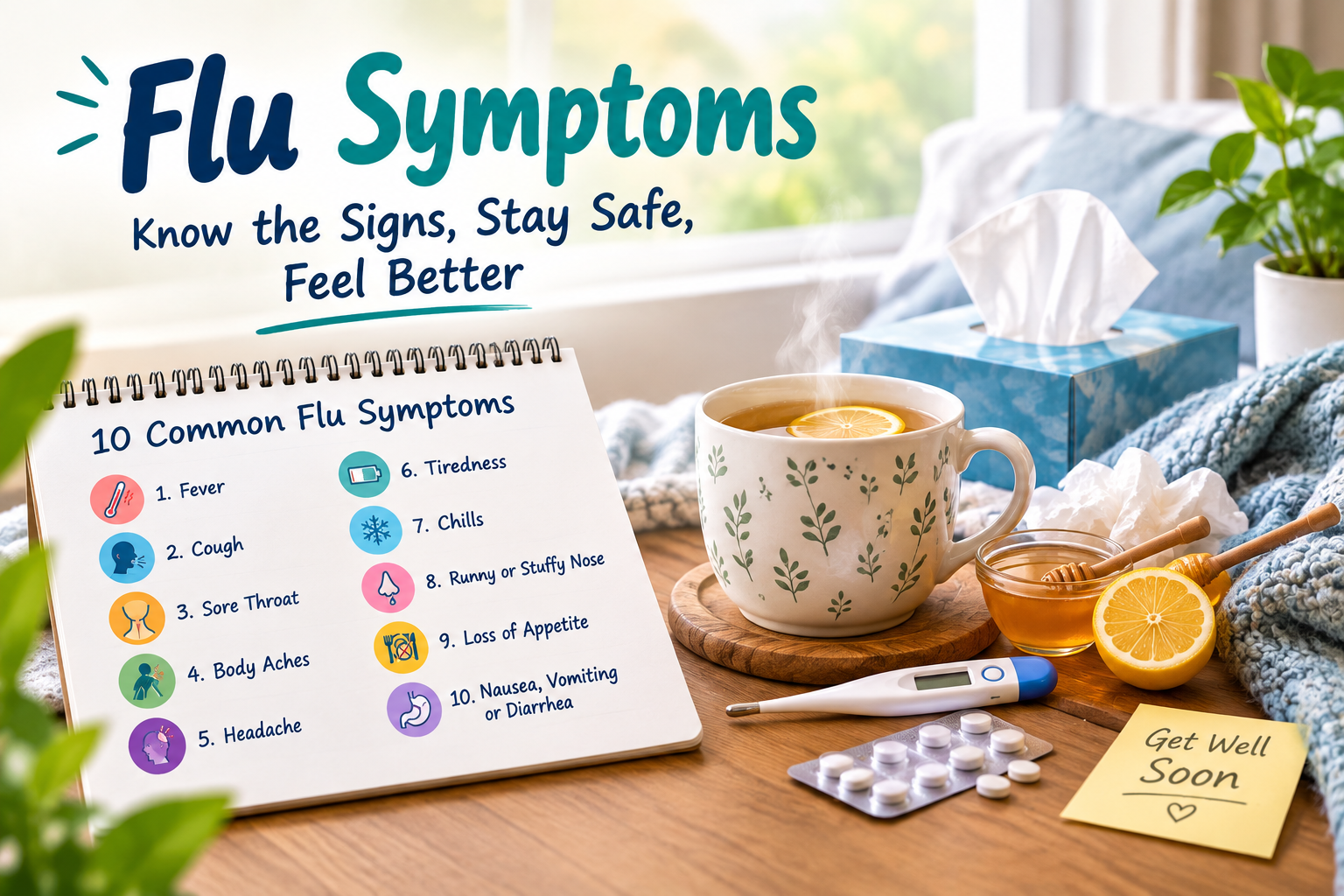
The flu is a common respiratory infection caused by influenza viruses. It can make you feel unwell quite suddenly and may affect your energy, sleep, appetite, and daily activities. Some people recover within a few days, while others may need more time to feel completely better.
Knowing the common flu symptoms can help you recognize the illness early and understand when you may need extra care. In this article, we will discuss 10 common signs of the flu, how they can affect your body, how the flu differs from a cold, and simple ways to support your recovery.
Table of Contents
What Is the Flu?
Influenza, commonly called the flu, is a contagious viral infection that mainly affects the respiratory system. It can spread from person to person through respiratory particles when an infected person coughs, sneezes, talks, or breathes.
The flu can affect people of all ages. However, young children, older adults, pregnant people, and people with certain health conditions may have a higher risk of complications.
10 Common Flu Symptoms
Everyone does not experience the flu in exactly the same way. However, there are several signs that commonly occur during an influenza infection.
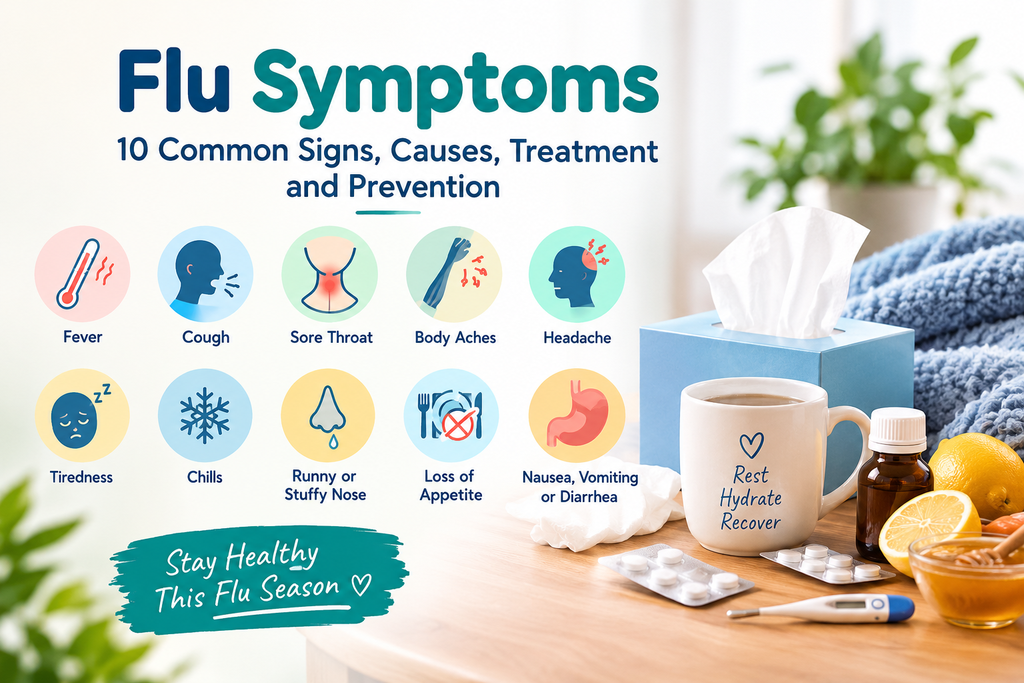
Here are 10 flu symptoms you should know:
1. Fever
Fever is one of the most recognized signs of influenza. You may feel unusually hot, sweaty, or feverish.
A fever can occur as your body’s immune system responds to the infection. Some people may also experience chills while their temperature is changing.
What you can do:
- Drink enough fluids.
- Get plenty of rest.
- Monitor your temperature if needed.
- Follow appropriate medical advice if the fever is severe or persistent.
2. Dry or Persistent Cough
A cough is another common sign of influenza. It may start as a mild irritation and become more noticeable as the illness develops.
A dry cough can make your throat feel irritated and may sometimes disturb your sleep.
Helpful tips:
- Drink warm fluids if they feel soothing.
- Avoid cigarette smoke and other irritants.
- Rest your voice if your throat is uncomfortable.
- Seek medical advice if breathing becomes difficult.
3. Sore Throat
A sore or irritated throat can occur with influenza. You may notice discomfort when swallowing or talking.
A sore throat can also occur with many other respiratory infections, so it is not enough on its own to identify influenza.
For comfort, you can:
- Drink plenty of fluids.
- Choose warm or soothing drinks.
- Avoid smoke and other throat irritants.
- Rest when you feel tired.
4. Body Aches and Muscle Pain
Body aches are often one of the more uncomfortable flu symptoms. You may experience soreness in your muscles, back, arms, or legs.
These aches can make normal activities feel more difficult and may occur together with tiredness and fever.
Getting adequate rest and staying hydrated may help you feel more comfortable while your body recovers.
5. Headache
A headache may develop during influenza and can occur alongside fever, tiredness, and body aches.
For some people, the headache can make it harder to concentrate or carry out normal activities.
Rest, adequate fluids, and appropriate symptom relief may help. If you experience a severe or unusual headache, seek medical advice.
6. Extreme Tiredness
Feeling unusually tired or weak is another common sign of influenza. You may find that everyday activities require more effort than usual.
This tiredness can sometimes continue even after other symptoms have started improving.
Give your body enough time to rest and avoid pushing yourself too hard while recovering.
7. Chills and Sweating
Chills can occur during influenza, especially around the time of a fever. You may suddenly feel cold even when the surrounding temperature is comfortable.
Some people may also experience sweating as their body temperature changes.
Wearing comfortable clothing, resting, and maintaining hydration can help you stay comfortable.
8. Runny or Stuffy Nose
A runny or blocked nose can also occur with influenza. You may experience congestion, sneezing, or difficulty breathing comfortably through your nose.
Although nasal symptoms are often associated with a common cold, they can also appear during influenza.
Drinking fluids and keeping the air comfortably humidified may help relieve nasal discomfort.
9. Loss of Appetite
When you are sick, you may not feel as hungry as usual. Loss of appetite can happen along with fever, tiredness, headache, and other symptoms.
Even if you do not feel like eating a large meal, try to maintain adequate fluid intake and choose nutritious foods when you can.
Small, light meals may be easier to tolerate than large meals.
10. Nausea, Vomiting, or Diarrhea
Some people, particularly children, can experience nausea, vomiting, or diarrhea during influenza.
These symptoms can increase the risk of dehydration, especially when combined with fever or reduced fluid intake.
If vomiting or diarrhea is severe, persistent, or accompanied by signs of dehydration, contact a healthcare professional.
How Do Flu Symptoms Start?
The flu often develops more suddenly than a typical cold. You may feel relatively normal and then begin experiencing tiredness, chills, fever, body aches, or coughing.
The exact combination and severity of flu symptoms can vary from one person to another. Some people may experience several symptoms at once, while others may have only a few.
Flu Symptoms vs. Common Cold
The flu and a common cold can look similar, but there are some general differences.
| Flu | Common Cold |
|---|---|
| Often begins suddenly | Usually develops gradually |
| Fever is more common | Fever is less common |
| Body aches can be significant | Body aches are usually mild |
| Tiredness may be strong | Tiredness is usually milder |
| Cough is common | Cough can occur |
| Chills can occur | Chills are less common |
| Runny nose can occur | Runny nose is very common |
These differences are general and cannot confirm a diagnosis. Other respiratory infections can cause similar symptoms.
How Long Do Flu Symptoms Last?
For many healthy people, flu symptoms begin improving after several days, and recovery often occurs within about a week. However, coughing and tiredness may continue for longer.
Recovery time can vary depending on age, general health, and whether complications develop.
Getting enough sleep, drinking fluids, and giving your body time to recover can be helpful during this period.
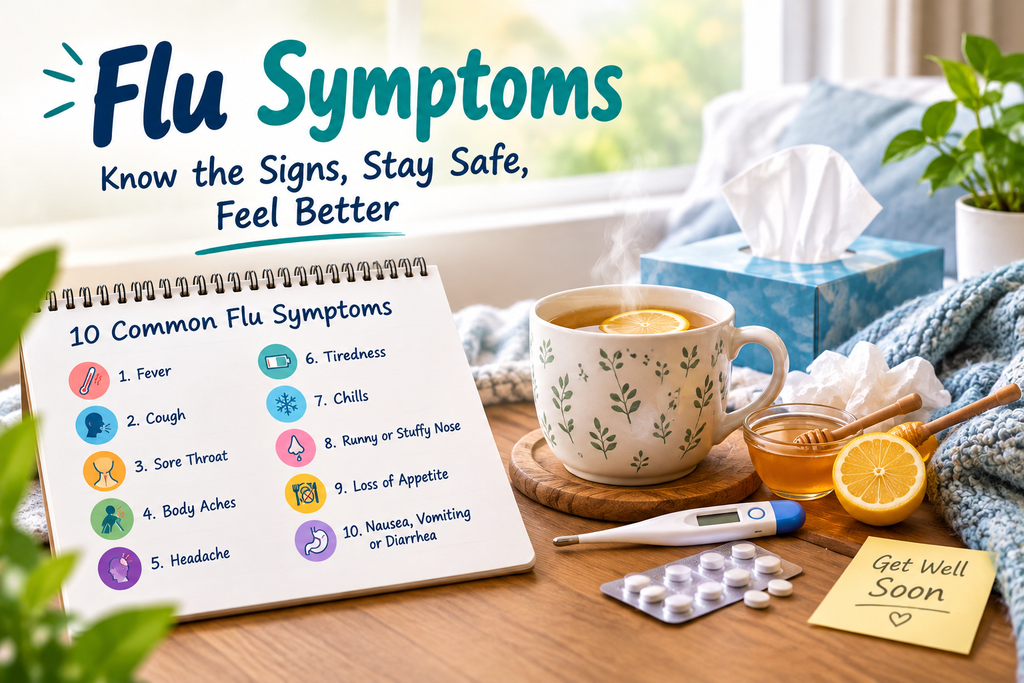
What Causes the Flu?
Influenza viruses cause the flu. The infection can spread when an infected person releases respiratory particles by coughing, sneezing, talking, or breathing.
You can also become infected after touching a contaminated surface and then touching your mouth, nose, or eyes.
Because influenza is contagious, avoiding close contact with people who are sick can help reduce the risk of infection.
How to Feel Better During the Flu
If your illness is mild, several simple measures may help you feel more comfortable.
1. Get Enough Rest
Your body needs energy to fight an infection, so allow yourself plenty of time to sleep and rest.
2. Drink Plenty of Fluids
Water and other suitable fluids can help prevent dehydration, particularly if you have a fever.
3. Eat Nutritious Foods
Choose light and nutritious foods when you feel able to eat. You do not need to force yourself to eat large meals.
4. Avoid Smoke and Irritants
Cigarette smoke and other irritants can make coughing and throat discomfort worse.
5. Take Medicines Carefully
Some over-the-counter medicines may help relieve fever or aches. Always follow the instructions on the package and ask a doctor or pharmacist if you are unsure what is appropriate for you.
Antibiotics do not treat influenza because it is caused by a virus. In some cases, a healthcare professional may recommend antiviral treatment.
How Can You Prevent the Flu?
Preventing influenza can help protect you and the people around you.
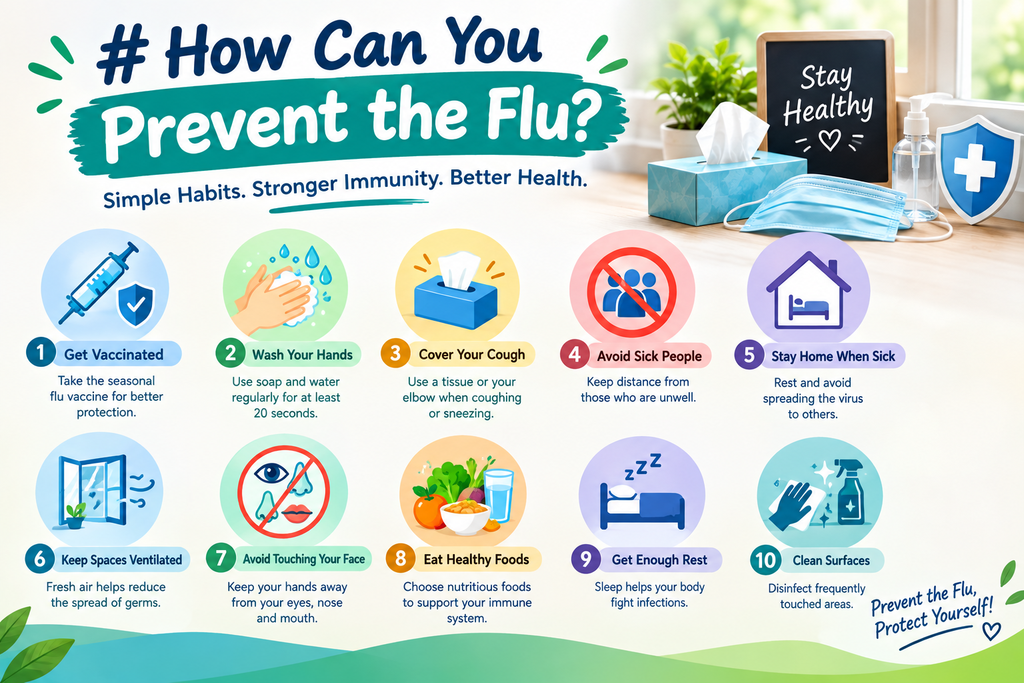
Here are some useful prevention habits:
- Get recommended seasonal flu vaccination.
- Wash your hands regularly.
- Cover your mouth and nose when coughing or sneezing.
- Avoid close contact with people who are sick.
- Stay home when you are unwell.
- Keep indoor spaces well ventilated.
- Avoid touching your eyes, nose, and mouth with unwashed hands.
When Should You See a Doctor?
Most people recover from influenza without serious complications. However, some situations require medical attention.
Seek urgent medical care if you experience:
- Difficulty breathing
- Chest pain or pressure
- Severe confusion
- Serious dehydration
- Severe weakness
- Symptoms that improve and then suddenly become much worse
People at higher risk of complications should contact a healthcare professional early if they develop influenza-like illness.
For more information about flu prevention, vaccination, and healthy habits, visit the CDC’s official flu prevention guide.
Final Thoughts
Understanding flu symptoms can help you recognize the common signs of influenza and take appropriate steps to care for yourself. Fever, cough, sore throat, body aches, headache, tiredness, chills, congestion, appetite changes, and digestive problems are among the possible signs.
Most people with mild influenza recover with rest, fluids, and supportive care. However, severe or worsening symptoms should not be ignored.
If you are unsure whether your symptoms are caused by influenza, a cold, COVID-19, or another respiratory infection, a healthcare professional can help you determine the appropriate next steps.
Frequently Asked Questions About the Flu
1. What are the first signs of the flu?
Early flu symptoms can include sudden tiredness, fever, chills, headache, body aches, cough, and sore throat.
2. Can you have the flu without a fever?
Yes. Some people with influenza may not develop a fever. Other signs such as coughing, tiredness, body aches, or headache may still occur.
3. How long does the flu usually last?
Many people begin feeling better within several days and recover within about a week, although coughing and tiredness can last longer.
4. Is the flu contagious?
Yes. Influenza can spread from person to person through respiratory particles and close contact.
5. Can I treat the flu at home?
Mild illness can often be managed with rest, adequate fluids, nutritious foods, and appropriate symptom relief. People with severe symptoms or a higher risk of complications should seek medical advice.
6. When should I worry about flu symptoms?
Seek urgent medical attention if you develop difficulty breathing, chest pain, severe confusion, serious dehydration, or significant worsening of your condition.
Eating nutritious foods can also support a healthy lifestyle. For more simple ideas, check out our guide on Healthy Food Tips.
Disclaimer: This information is for educational purposes only, please consult your doctor before trying any remedy.
