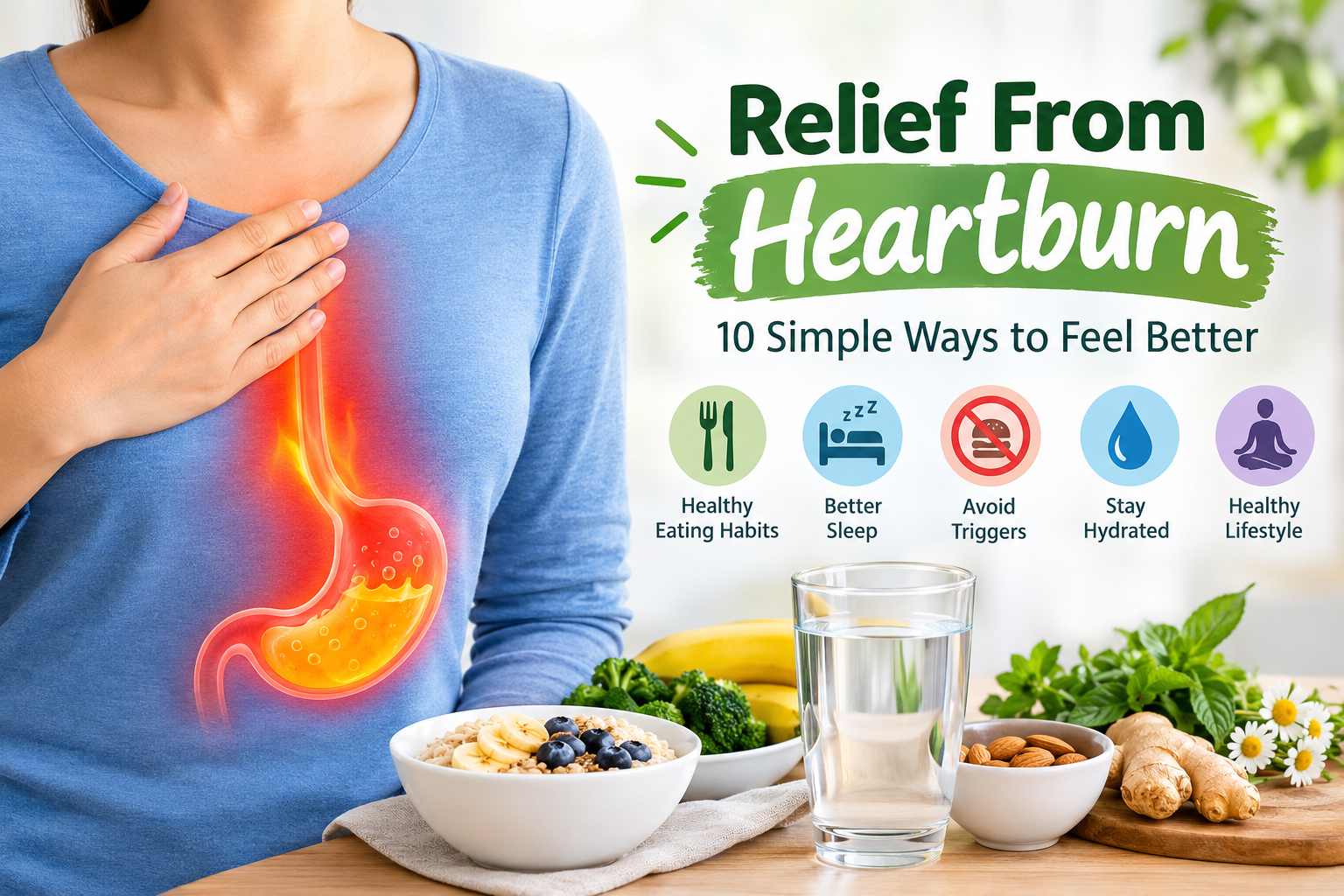
Heartburn can turn an ordinary day into an uncomfortable experience. You may notice a burning feeling in your chest after eating, a sour taste in your mouth, or discomfort that becomes worse when you lie down. These symptoms often occur when stomach acid moves back into the esophagus, the tube that carries food from your mouth to your stomach.
The good news is that several everyday habits may help reduce discomfort. Finding relief from heartburn starts with understanding what triggers your symptoms and choosing safe, practical ways to manage them.
In this guide, you will learn about common causes, simple lifestyle changes, food triggers, treatment options, and signs that mean you should seek medical advice.
Table of Contents
What Is Heartburn?
Heartburn is a burning sensation behind the breastbone that can sometimes spread toward the throat. Despite its name, it is usually related to acid reflux rather than a problem with the heart.
It happens when stomach contents flow backward into the esophagus and irritate its lining. Occasional symptoms are common, but frequent episodes may indicate gastroesophageal reflux disease (GERD).
People experience heartburn differently. Some notice discomfort after a heavy meal, while others experience symptoms at night or when bending over.
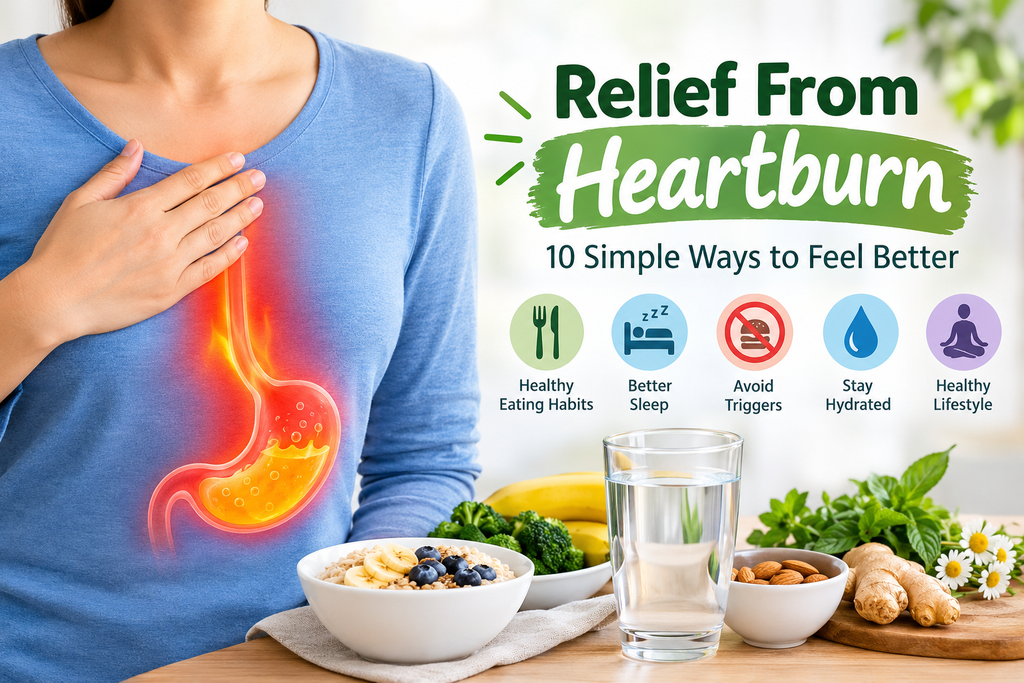
10 Ways to Get Relief From Heartburn
There is no single solution that works for everyone. However, these practical steps may help you manage occasional symptoms and reduce the chances of them returning.
1. Eat Smaller Meals
Large meals can put extra pressure on your stomach and make acid reflux more likely. Instead of eating one or two very heavy meals, try smaller portions throughout the day.
Eat slowly, chew your food thoroughly, and stop when you feel comfortably satisfied. These simple habits may help reduce post-meal discomfort.
2. Avoid Lying Down After Eating
One useful strategy for relief from heartburn is to remain upright after meals. Lying down too soon can make it easier for stomach contents to move toward the esophagus.
Try to wait at least three hours after eating before going to bed. If you need to rest, sit comfortably rather than lying flat.
3. Identify Your Food Triggers
Certain foods and drinks can trigger symptoms in some people, although individual reactions vary.
Common triggers include:
- Spicy foods
- Fried and high-fat meals
- Tomatoes and tomato-based sauces
- Citrus fruits and juices
- Chocolate and peppermint
- Coffee and other caffeinated drinks
- Carbonated beverages
You do not necessarily need to eliminate every item on this list. Keep a simple food diary and note which meals seem to cause symptoms. Avoiding your personal triggers may make a meaningful difference.
4. Drink Water in Comfortable Amounts
Drinking water normally throughout the day supports hydration. Small sips may also help clear an unpleasant taste from your mouth.
However, water is not a guaranteed treatment for acid reflux, and drinking large amounts quickly may increase stomach fullness. Choose comfortable amounts rather than forcing yourself to drink extra water.
5. Raise Your Upper Body While Sleeping
Nighttime symptoms can interfere with sleep and leave you feeling tired the next morning.
If heartburn regularly occurs at night, consider using a properly designed wedge to elevate your upper body. Another option is raising the head end of your bed by approximately 6–8 inches.
Simply stacking several pillows may bend your body in a way that does not provide the same benefit. Sleeping on your left side may also help some people experience fewer nighttime reflux symptoms.
6. Maintain a Healthy Weight
Extra abdominal weight can increase pressure on the stomach and contribute to acid reflux. If you are overweight, gradual weight loss may help reduce symptoms.
Focus on balanced meals, regular physical activity, and sustainable habits rather than restrictive diets. People who are already at a healthy weight do not need to lose weight specifically for heartburn.
7. Wear Comfortable Clothing
Tight belts, waistbands, and clothing that presses firmly against your abdomen may worsen symptoms in some people.
Choose comfortable clothing, especially after eating. Reducing unnecessary pressure around your waist is a simple adjustment that may support better symptom management.
8. Avoid Smoking and Limit Alcohol
Smoking can interfere with the normal function of the muscle that helps prevent stomach contents from moving backward. Alcohol may also trigger symptoms in some individuals.
Avoiding smoking and limiting or avoiding alcohol may help reduce reflux. If you notice that particular drinks consistently cause discomfort, consider removing them from your routine.
9. Consider Appropriate Over-the-Counter Medicines
When lifestyle changes are not enough, certain nonprescription medicines may help.
- Antacids: These neutralize stomach acid and can provide relatively quick relief from occasional, mild symptoms.
- H2 blockers: These reduce the amount of acid your stomach produces and generally last longer than antacids.
- Proton pump inhibitors (PPIs): These reduce acid production and are used for certain forms of frequent acid reflux. They are not intended to provide immediate relief in every situation.
Follow the product label and ask a pharmacist or healthcare professional which option is appropriate for you. Some medicines are unsuitable for people with particular medical conditions or who take other medications.
Do not rely on frequent self-treatment without medical advice, especially if your symptoms continue or return regularly.
10. Build a Heartburn-Friendly Daily Routine
Consistent habits can help you identify patterns and reduce avoidable triggers.
A practical routine may include:
- Eating meals at regular times.
- Avoiding oversized or very late dinners.
- Staying upright after eating.
- Tracking foods and drinks that trigger symptoms.
- Maintaining a comfortable, healthy weight.
- Getting adequate sleep and regular physical activity.
These habits may provide relief from heartburn over time, although persistent symptoms sometimes require medical evaluation and treatment.
What Causes Heartburn After Eating?
Heartburn often occurs when the muscle between the esophagus and stomach does not close effectively, allowing stomach contents to move upward.
Several factors may contribute, including:
- Eating large meals.
- Consuming personal trigger foods.
- Lying down shortly after eating.
- Pregnancy.
- Excess abdominal weight.
- Smoking.
- Certain medications.
Some people experience symptoms only occasionally, while others develop frequent reflux. If symptoms happen more than twice a week, disturb your sleep, or interfere with daily activities, consult a healthcare professional.
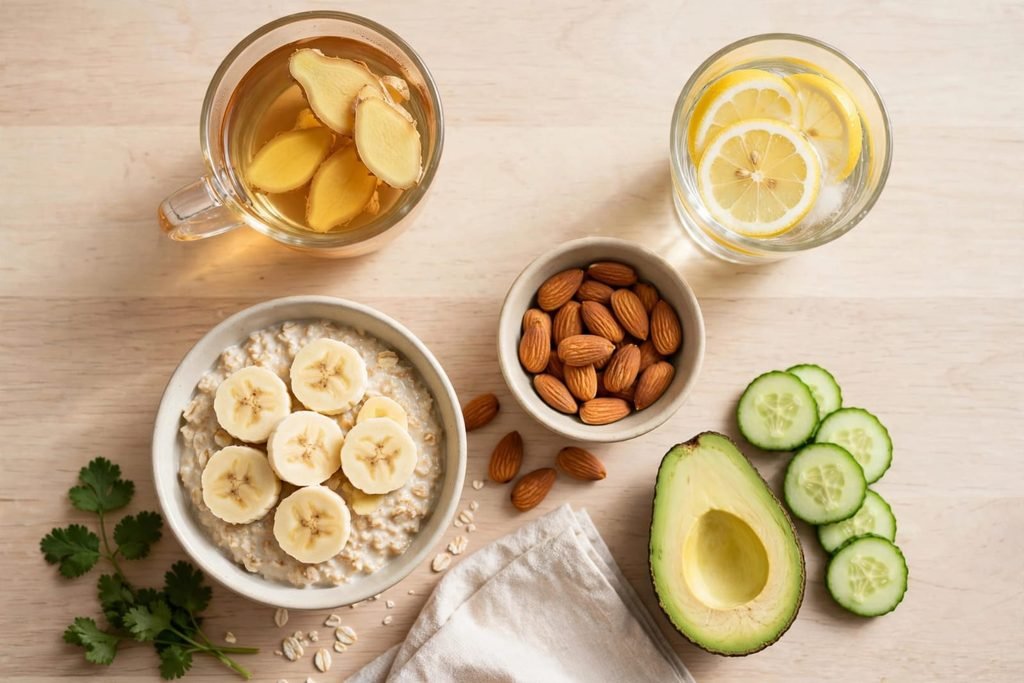
What Foods May Help You Manage Heartburn?
There is no universal heartburn diet because different people react to different foods. However, you may find that simpler, lower-fat meals are easier to tolerate.
Depending on your individual triggers, suitable options may include:
- Oatmeal or other plain whole grains.
- Bananas or melons.
- Steamed vegetables.
- Rice and other simple starches.
- Lean poultry or fish prepared with limited added fat.
Pay attention to portion sizes and preparation methods. A food that suits one person may trigger symptoms in another, so use your own experience rather than following an unnecessarily restrictive diet.
For more information about medical treatments and lifestyle changes, read this helpful guide on heartburn diagnosis and treatment from Mayo Clinic.
When Should You See a Doctor?
Occasional heartburn can often be managed with lifestyle changes and appropriate nonprescription treatments. However, repeated symptoms should not be ignored.
Arrange a medical appointment if you experience:
- Heartburn more than twice a week.
- Symptoms that persist despite treatment.
- Difficulty or pain when swallowing.
- Repeated vomiting.
- Unexplained weight loss.
- Ongoing symptoms that disturb sleep or eating.
Important safety warning: Severe or unexplained chest pain or pressure may be a sign of a heart attack. Seek emergency medical help, particularly if the pain occurs with shortness of breath, sweating, dizziness, or pain spreading to the arm, back, neck, or jaw. Do not assume that new chest pain is simply heartburn.
Frequently Asked Questions
1. What is the fastest way to relieve heartburn?
For occasional, mild symptoms, an appropriate antacid may work relatively quickly. Remaining upright and avoiding further large meals may also help. Seek medical advice if symptoms are severe, persistent, or unusual.
2. Can drinking water stop heartburn?
Water may help clear an unpleasant taste and supports normal hydration, but it does not reliably stop acid reflux. Drinking large quantities quickly may make some people feel worse.
3. Why does heartburn get worse at night?
When you lie down, gravity no longer helps keep stomach contents in place as effectively. Eating close to bedtime can also contribute. Try finishing meals at least three hours before lying down and consider elevating your upper body.
4. Which foods should I avoid if I have heartburn?
Common triggers include fatty meals, spicy foods, chocolate, coffee, citrus, tomatoes, peppermint, and carbonated drinks. Your personal triggers may differ, so a food diary can help you identify them.
5. When does heartburn become a serious problem?
Frequent symptoms, difficulty swallowing, repeated vomiting, or unexplained weight loss require medical evaluation. Severe chest pain or pressure with possible heart attack symptoms requires emergency care.
People managing diabetes can learn more about Lantus Insulin, including its uses, possible side effects, and important safety precautions.
Final Thoughts
Heartburn can be frustrating, especially when it occurs after meals or interrupts your sleep. Fortunately, smaller meals, identifying trigger foods, staying upright after eating, and making appropriate lifestyle changes may help you manage occasional symptoms.
The best approach to relief from heartburn is one that addresses your individual triggers and uses medicines safely when needed. If symptoms are frequent, persistent, or severe, speak with a healthcare professional instead of relying only on home remedies.
Medical Disclaimer: This article is for general educational purposes only and does not replace advice from a qualified doctor, pharmacist, or other healthcare professional. Always follow the prescription and instructions provided for your individual treatment.
