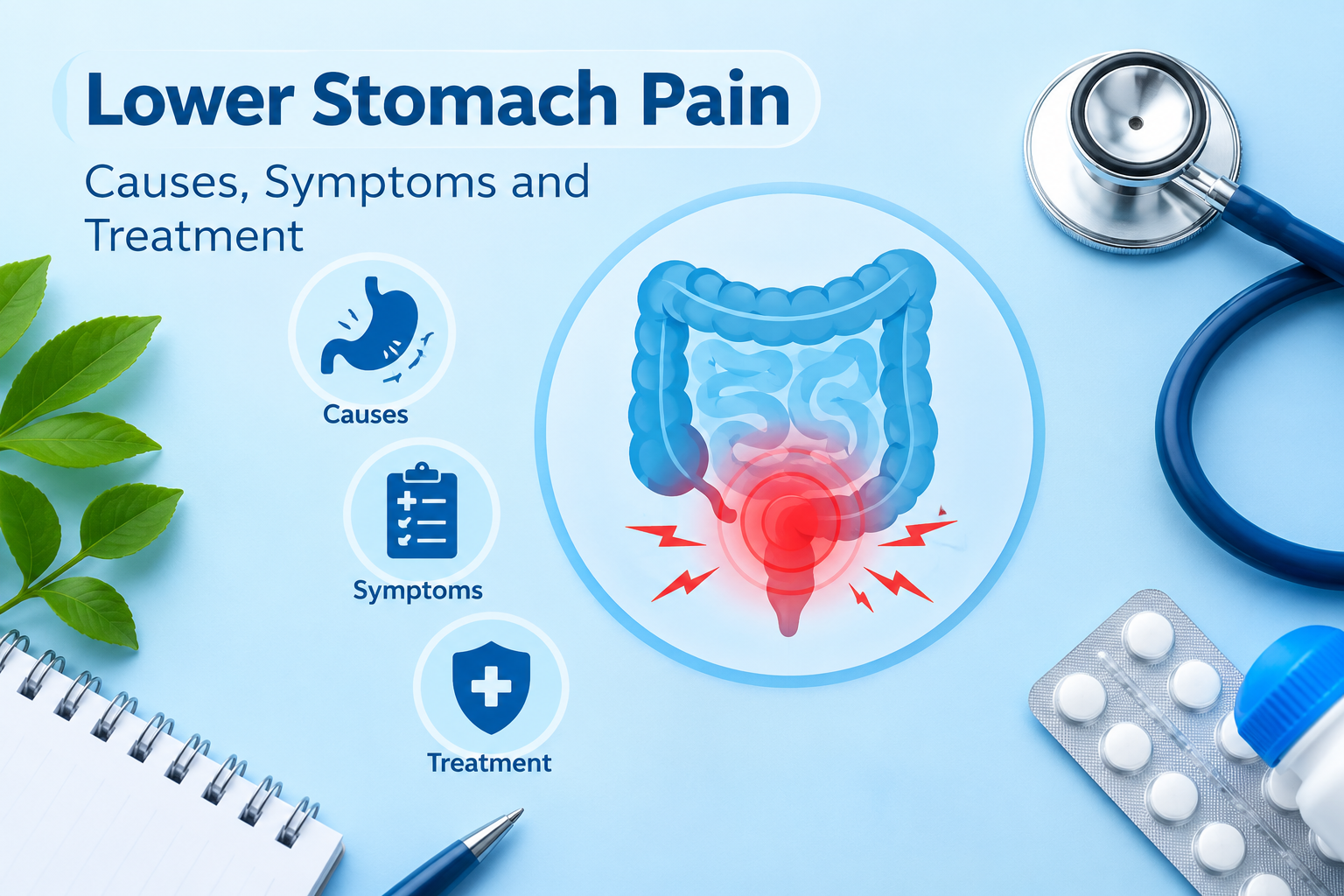
Lower stomach pain is a common problem that can affect people of different ages. It may feel like mild cramps, a dull ache, pressure, or sharp pain below the belly button. Sometimes, the discomfort goes away on its own, while in other cases, it may be a sign of a condition that needs medical attention.
Understanding the possible causes of lower stomach pain can help you recognize your symptoms and decide when to seek professional care. Digestive problems, constipation, urinary tract infections, menstrual cramps, and appendicitis are among the possible causes.
In this guide, you will learn about common causes, warning signs, treatment options, and ways to care for mild abdominal discomfort safely.
Table of Contents
What Is Lower Stomach Pain?
Lower stomach pain refers to discomfort in the lower part of the abdomen, usually below the belly button and above the pelvic area. Although people commonly call this area the stomach, pain can actually come from the intestines, bladder, appendix, reproductive organs, or nearby muscles.
The pain may occur on the left side, right side, or in the middle of the lower abdomen. Its location, duration, severity, and accompanying symptoms can help a healthcare professional identify the possible cause.
10 Common Causes of Lower Stomach Pain
There are several reasons why someone may experience discomfort in the lower abdomen. The following are some common possibilities.
1. Constipation
Constipation occurs when bowel movements become less frequent or stools become hard and difficult to pass. It can cause cramping, bloating, and pressure in the lower abdomen.
Common signs include:
- Hard or dry stools
- Straining during bowel movements
- A feeling that the bowel has not emptied completely
- Abdominal discomfort and bloating
Drinking enough water, eating fiber-rich foods, and staying physically active may help prevent constipation. However, sudden severe pain or constipation accompanied by vomiting requires urgent medical assessment.
2. Gas and Bloating
Gas can build up in the digestive system when you swallow air or when bacteria break down certain foods. This may lead to temporary cramps or a feeling of fullness.
Gas-related discomfort can move around the abdomen and may improve after passing gas or having a bowel movement.
Eating slowly, avoiding foods that consistently trigger symptoms, and taking a gentle walk after meals may help. If the pain is persistent or severe, do not assume gas is the only cause.
3. Irritable Bowel Syndrome (IBS)
Irritable bowel syndrome is a digestive condition that can cause recurring abdominal pain along with changes in bowel habits.
People with IBS may experience:
- Abdominal cramps
- Diarrhea or constipation
- Bloating
- Symptoms that change after passing stool
Certain foods, stress, and changes in routine may trigger symptoms in some people. A healthcare professional can help determine whether IBS is responsible and recommend an appropriate management plan.
4. Urinary Tract Infection (UTI)
A urinary tract infection can affect the bladder and cause discomfort in the lower abdomen. It may also cause burning during urination or a frequent urge to urinate.
Other symptoms can include cloudy urine, an unusual urine smell, or passing small amounts of urine frequently.
A suspected UTI should be assessed by a healthcare professional, particularly if symptoms are worsening. Fever, chills, or pain in the back or side may indicate a more serious infection and require prompt medical care.
5. Menstrual Cramps
Menstrual cramps are a common cause of lower abdominal pain in people who menstruate. They occur when the uterus contracts during a menstrual period.
The discomfort may feel like dull aching or cramping and can spread to the lower back or thighs. Some people also experience nausea, headache, or tiredness.
Gentle movement and a warm compress may provide relief for typical cramps. However, severe, unusual, or worsening period pain should be evaluated by a healthcare professional.
6. Appendicitis
Appendicitis is inflammation of the appendix and can become a medical emergency. The pain often begins around the belly button before moving to the lower right side of the abdomen.
Possible symptoms include:
- Pain that becomes progressively worse
- Nausea or vomiting
- Loss of appetite
- Fever
- Pain that worsens with movement or coughing
If you suspect appendicitis, seek urgent medical attention. Do not try to treat it at home or wait for the symptoms to disappear.
7. Food Intolerance
Some people have difficulty digesting particular foods, such as lactose-containing dairy products. This can lead to gas, bloating, diarrhea, and abdominal cramps.
Keeping a food and symptom diary may help identify patterns. Avoid unnecessarily removing large food groups from your diet; consult a healthcare professional if symptoms occur frequently or affect your nutrition.
8. Kidney Stones
Kidney stones are hard deposits that form in the kidneys. Depending on their location, they may cause pain in the side, back, lower abdomen, or groin.
The pain can be intense and may come in waves. Other symptoms can include nausea, vomiting, blood in the urine, and pain during urination.
Suspected kidney stones need medical assessment, especially when accompanied by fever, difficulty urinating, or severe pain.
9. Pelvic Inflammatory Disease (PID)
Pelvic inflammatory disease is an infection involving the female reproductive organs. It can cause lower abdominal or pelvic pain, unusual vaginal discharge, pain during sex, fever, or bleeding between periods.
Symptoms can vary, and some people have only mild discomfort. Prompt medical assessment is important because untreated PID can lead to complications.
10. Muscle Strain
Muscles in the abdominal wall may become strained after heavy lifting, intense exercise, or sudden movements. This can cause soreness that becomes more noticeable when bending, coughing, twisting, or tightening the abdominal muscles.
Resting from activities that worsen the pain may help a mild strain. However, do not assume abdominal pain is muscular if it is severe, persistent, or accompanied by other concerning symptoms.
Symptoms That May Occur With Lower Stomach Pain
The symptoms accompanying the pain can offer useful clues about its possible cause.
Common accompanying symptoms include:
- Cramping: May occur with constipation, gas, or menstrual periods.
- Bloating: Can be associated with digestive problems.
- Nausea or vomiting: May occur with infections, kidney stones, or appendicitis.
- Changes in bowel movements: Diarrhea or constipation may suggest a digestive issue.
- Pain during urination: May indicate a urinary tract problem.
- Fever: Can occur with certain infections or inflammatory conditions.
- Unusual bleeding: May require prompt assessment, particularly if pregnancy is possible.
These symptoms do not confirm a diagnosis on their own. The same symptoms can occur in different conditions.
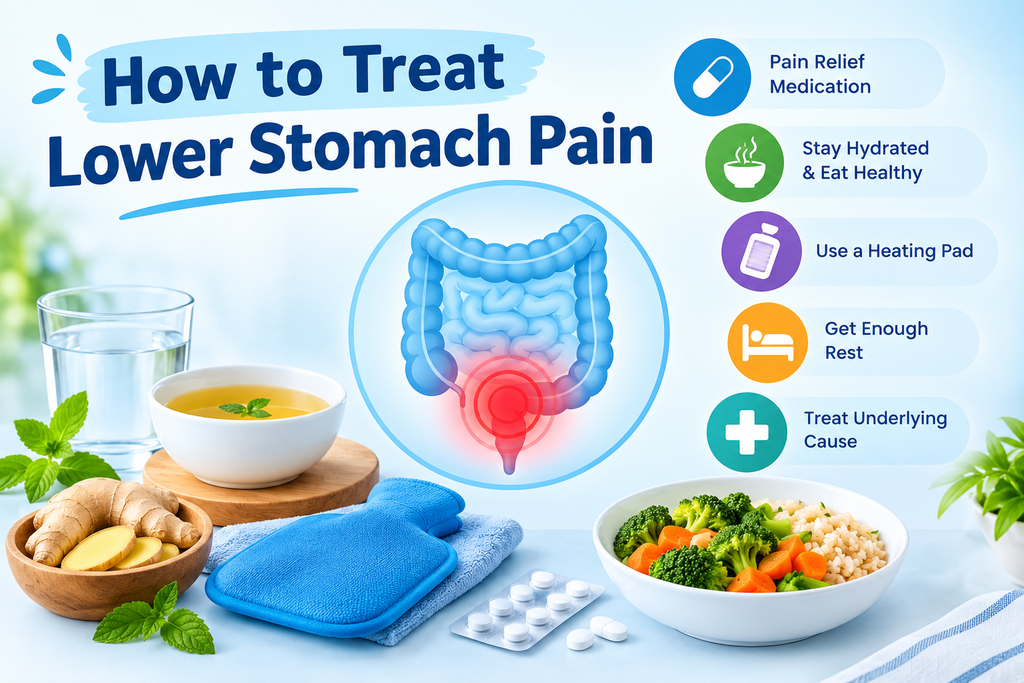
How to Treat Lower Stomach Pain
Treatment depends on the underlying cause. Mild discomfort that is clearly improving may sometimes be managed with simple supportive measures, but unexplained or persistent pain should not be ignored.
1. Drink Enough Water
Regular hydration supports normal bowel function and can help prevent dehydration, especially if you have mild digestive symptoms. If you are vomiting repeatedly or cannot keep fluids down, seek medical care.
2. Choose Gentle, Balanced Foods
If you feel mildly uncomfortable, try smaller meals and foods you usually tolerate well. Avoid foods that consistently worsen your symptoms.
There is no single diet that treats every cause of abdominal pain. Severe pain should not be managed by changing your diet alone.
3. Try Gentle Movement
A short, gentle walk may help some people with gas or constipation. Stop if movement increases the pain, and seek medical advice if the discomfort is unexplained.
4. Use Warmth Carefully
A warm—not excessively hot—compress may help typical menstrual cramps or mild muscle soreness. Avoid using heat as a substitute for medical assessment when the cause of the pain is uncertain.
5. Speak to a Healthcare Professional About Medication
The right medicine depends on the cause of the pain. Do not take antibiotics without medical advice, and check with a clinician or pharmacist before using painkillers or laxatives, particularly if the pain is severe or unexplained.
If the pain keeps returning, worsens, or does not improve, arrange a medical evaluation.
When Should You Seek Medical Help?
Although some causes of abdominal discomfort are mild, others need urgent treatment.
Seek emergency medical care immediately if you experience:
- Sudden or severe abdominal pain
- A hard, rigid, or extremely tender abdomen
- Vomiting blood or passing bloody or black stools
- Inability to pass stool or gas, especially with vomiting
- Difficulty breathing, chest pain, fainting, or collapse
- Severe abdominal pain when pregnancy is possible
Seek prompt medical assessment if pain is getting worse, moving to the lower right side, recurring frequently, or occurring with fever, urinary symptoms, unexplained weight loss, or unusual vaginal bleeding. Pregnancy accompanied by abdominal pain also requires prompt assessment.
These warning signs are important because the intensity of the pain alone cannot reliably determine how serious the condition is.
If you experience persistent or severe lower stomach pain, read this helpful guide from the NHS on stomach ache to learn about possible causes and when to seek medical attention.
How Is the Cause of Lower Stomach Pain Diagnosed?
A healthcare professional may ask where the pain started, how long it has lasted, what it feels like, and whether eating, movement, urination, or bowel movements affect it.
Depending on your symptoms, the assessment may include:
- A physical examination
- Urine or blood tests
- Pregnancy testing when appropriate
- Stool testing in selected cases
- Ultrasound or other imaging tests when needed
Not everyone requires every test. The appropriate investigation depends on your medical history and examination findings.
Frequently Asked Questions
1. What is the most common cause of lower stomach pain?
Common causes include gas, constipation, and digestive problems. However, urinary infections, appendicitis, and pelvic conditions can also cause pain, so persistent or worsening symptoms should be assessed.
2. Why does my lower stomach hurt on the right side?
Possible causes include constipation, intestinal problems, kidney stones, and appendicitis. Pain that becomes progressively worse or moves to the lower right side needs urgent medical assessment.
3. Can constipation cause lower stomach pain?
Yes. Constipation can cause cramps, bloating, and pressure in the lower abdomen. Severe pain accompanied by vomiting or an inability to pass gas requires urgent medical care.
4. Can lower stomach pain be related to a urinary infection?
Yes. A urinary tract infection can cause lower abdominal discomfort, frequent urination, and burning when passing urine. A healthcare professional can assess whether testing or treatment is needed.
5. When should I worry about lower stomach pain?
You should be concerned if the pain is sudden, severe, worsening, persistent, or accompanied by fever, repeated vomiting, bleeding, fainting, or possible pregnancy. Seek emergency care for serious warning signs rather than waiting for the pain to pass.
If you want to learn more about the possible causes, symptoms, and treatment options, read our detailed guide on Stomach Pain.
Final Thoughts
Lower stomach pain can result from something relatively minor, such as gas or constipation, but it may also indicate a condition that needs medical treatment. Pay attention to where the pain occurs, how long it lasts, and whether other symptoms develop.
Simple supportive measures may help mild discomfort, but they cannot replace a proper diagnosis. If the pain is severe, worsening, persistent, or accompanied by warning signs, seek medical care promptly.
Medical Disclaimer
This article is for educational purposes only and does not replace professional medical advice, diagnosis, or treatment. Always consult a qualified healthcare professional about persistent or concerning symptoms.
