
A healthy mind is an important part of living a happy, balanced, and meaningful life. The way we think, feel, and respond to everyday situations can affect our relationships, work, sleep, and overall well-being. Just as we take care of our bodies, we also need to give attention to our mental health.
Modern life can be stressful. Work responsibilities, family commitments, financial concerns, and daily challenges can sometimes leave us feeling tired or overwhelmed. The good news is that small, consistent habits can help support a healthier mindset.
In this article, you will discover practical ways to support a healthy mind, manage everyday stress, and build habits that encourage emotional well-being.
Table of Contents
What Is a Healthy Mind?
A healthy mind does not mean feeling happy every moment or never experiencing stress. Instead, it means being able to understand your emotions, manage everyday challenges, make thoughtful decisions, and maintain meaningful relationships.
People with good mental well-being can still experience sadness, worry, or frustration. The important thing is learning healthy ways to respond to these feelings and knowing when to ask for support.
Developing a healthy mind takes time, patience, and regular attention to your emotional needs.
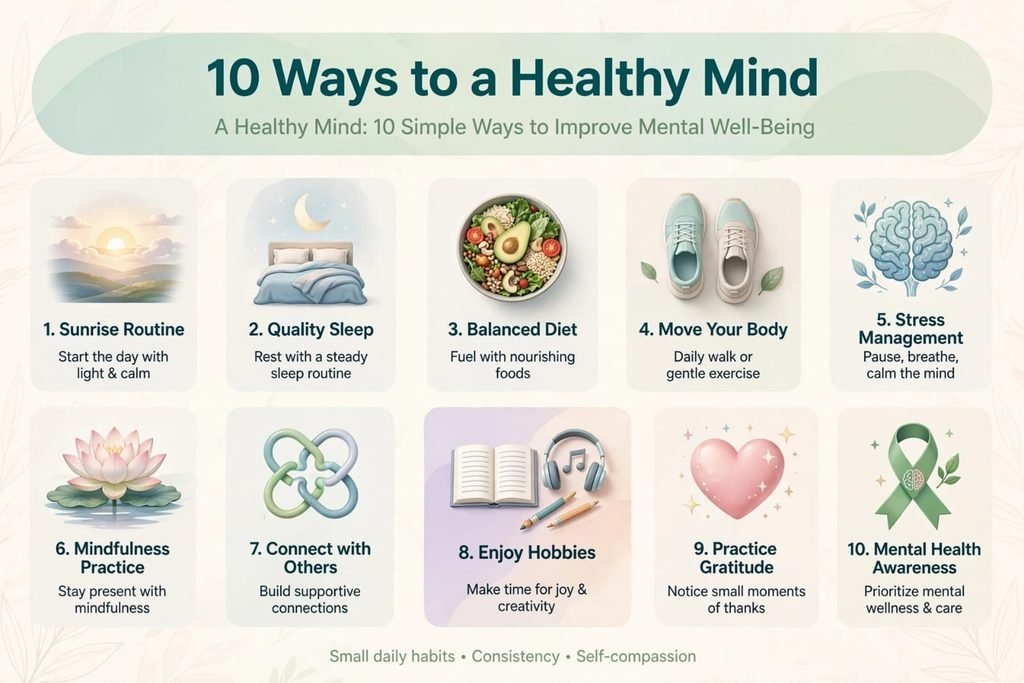
10 Simple Ways to Maintain a Healthy Mind
1. Start Your Day with a Positive Routine
The way you begin your morning can influence how you approach the rest of the day. Instead of immediately checking your phone or worrying about your responsibilities, give yourself a few quiet minutes.
You can start with gentle stretching, drinking a glass of water, writing down your priorities, or spending time near a window.
A simple morning routine can help you feel more organized and prepared for daily challenges. Remember that building a healthy mind does not require a perfect routine. Start with one habit that feels manageable.
2. Get Enough Quality Sleep
Sleep plays an important role in emotional balance, concentration, and memory. Poor sleep can make everyday problems feel more difficult and may affect your mood.
Most adults need around seven to nine hours of sleep each night, although individual needs can vary.
To support better sleep:
- Go to bed and wake up at consistent times.
- Reduce screen use before bedtime.
- Keep your bedroom quiet and comfortable.
- Avoid drinking caffeine late in the day.
- Create a relaxing bedtime routine.
Good sleep habits can support a healthy mind and help you feel more refreshed throughout the day.
3. Eat a Balanced and Nutritious Diet
Food provides nutrients that support the brain and the rest of the body. A balanced diet can contribute to overall well-being and help maintain steady energy levels.
Include a variety of fruits, vegetables, whole grains, beans, nuts, healthy fats, and protein-rich foods in your daily meals.
Try not to rely too heavily on highly processed snacks or sugary drinks. You do not need to follow a strict diet to support your mental well-being. Small, realistic changes can make healthy eating easier to maintain.
4. Make Physical Activity Part of Your Day
Regular physical activity can support mood, sleep, and overall health. You do not have to join a gym or follow an intense exercise program to enjoy its benefits.
Walking, cycling, dancing, gardening, or doing gentle exercises at home are useful ways to get moving.
Start with an activity you enjoy and increase it gradually. Even a short walk can provide a helpful break from work or stressful thoughts.
Combining regular movement with other positive habits can help support a healthy mind and a healthier lifestyle.
5. Learn to Manage Everyday Stress
Stress is a normal part of life, but ongoing stress can affect sleep, concentration, and emotional well-being. Learning how to respond to stress can help you handle difficult situations more effectively.
Try these simple techniques:
- Take slow, comfortable breaths.
- Break large tasks into smaller steps.
- Take short breaks during busy periods.
- Spend time doing an enjoyable activity.
- Talk to someone you trust about your concerns.
You may not be able to control every stressful situation, but you can develop healthier ways to manage your response.
6. Practice Mindfulness and Relaxation
Mindfulness means paying attention to the present moment without immediately judging your thoughts or feelings. It can help you notice when your mind is becoming overwhelmed.
Begin with five minutes of quiet breathing. Sit comfortably, breathe naturally, and gently bring your attention back to your breathing whenever your thoughts wander.
You can also try prayer, meditation, journaling, or spending a few minutes in nature if these activities suit your preferences.
The purpose is not to stop every thought. Instead, the goal is to create a little space between what you feel and how you respond.
7. Stay Connected with Supportive People
Healthy relationships can provide comfort, encouragement, and a sense of belonging. Talking with a trusted friend or family member may help you see a problem from a different perspective.
Make time for meaningful conversations, even when your schedule is busy. You could share a meal, call someone you care about, or take a walk together.
It is also important to maintain healthy boundaries. You do not need to agree with everyone or solve every person’s problems.
Supportive relationships can play a valuable role in maintaining a healthy mind and improving your quality of life.
8. Reduce Excessive Screen Time
Phones, social media, and online entertainment can be useful, but spending too much time on screens may interfere with sleep, concentration, and real-life interactions.
Constantly comparing your life with carefully selected online posts can also affect how you feel about yourself.
Consider setting limits on unnecessary screen time. Keep your phone away during meals, turn off unneeded notifications, and make time for activities that do not involve a screen.
Reading, cooking, walking, or learning a new skill can help you build a more balanced daily routine.
9. Practice Gratitude and Self-Compassion
It is easy to focus on mistakes, disappointments, and unfinished tasks. However, recognizing small positive moments may help you develop a more balanced perspective.
At the end of each day, write down three things you appreciated. They might include a helpful conversation, a good meal, or completing a difficult task.
Self-compassion is equally important. Instead of criticizing yourself for every mistake, try to speak to yourself with the same patience you would offer a close friend.
You can learn from your mistakes without treating yourself harshly. This approach can support confidence and emotional resilience.
10. Make Time for Rest and Enjoyable Activities
Rest is not a waste of time. Constantly working without taking breaks can leave you feeling exhausted and less able to concentrate.
Choose activities that help you relax and feel connected to your interests. You might listen to music, read a book, cook a favorite meal, spend time outdoors, or work on a creative hobby.
Set realistic expectations for yourself. You do not have to be productive every minute of the day.
A healthy mind benefits from a balanced routine that includes responsibilities, relationships, movement, and time to recharge.

Signs That Your Mental Well-Being Needs Attention
Everyone experiences difficult days. However, ongoing changes in your thoughts, feelings, or behavior may indicate that you need additional support.
Some signs to pay attention to include:
- Persistent sadness, anxiety, or irritability.
- Difficulty sleeping or sleeping much more than usual.
- Losing interest in activities you once enjoyed.
- Trouble concentrating or completing everyday tasks.
- Withdrawing from friends and family.
- Feeling overwhelmed for an extended period.
These signs do not automatically mean you have a mental health condition. If they persist, become severe, or interfere with daily life, consider speaking with a qualified healthcare professional.
Seeking help is a positive step toward taking care of yourself.
For more information about managing stress and supporting mental well-being, explore these helpful mental well-being resources from the World Health Organization (WHO).
Common Habits That Can Affect a Healthy Mind
Some everyday habits may make mental well-being more difficult to maintain when they become frequent or excessive.
Ignoring your emotions: Pretending that nothing is wrong may prevent you from recognizing what you need. Try acknowledging your feelings and discussing them with someone you trust.
Comparing yourself with others: Everyone has different circumstances and challenges. Focus on your own progress instead of measuring your worth against someone else’s life.
Neglecting sleep: An irregular sleep schedule can affect mood and concentration. Create a consistent bedtime routine whenever possible.
Taking on too much: Trying to do everything at once can increase stress. Prioritize important tasks and learn to say no when necessary.
Avoiding support: You do not have to manage every challenge alone. Reaching out to trusted people or a mental health professional can make a difference.
Changing these habits gradually is often more realistic than trying to change everything at once.
Taking care of your overall well-being also includes paying attention to digestive discomfort. Read our guide on relief from heartburn to learn about common triggers and practical ways to manage heartburn.
Frequently Asked Questions
1. What is the best way to maintain a healthy mind?
There is no single solution that works for everyone. Regular sleep, balanced meals, physical activity, stress management, supportive relationships, and time for relaxation can all contribute to mental well-being.
2. Can exercise help improve mental well-being?
Yes. Regular physical activity can support mood, sleep, and stress management. Choose an activity that suits your fitness level and begin at a comfortable pace.
3. How does sleep affect the mind?
Sleep supports attention, memory, emotional regulation, and daily functioning. Consistent sleep habits can help you feel more rested and better prepared to handle everyday challenges.
4. Does a healthy mind mean never feeling stressed?
No. Stress and difficult emotions are normal parts of life. Good mental well-being involves developing ways to manage challenges and seeking help when necessary.
5. When should I seek professional help?
Consider speaking with a qualified healthcare professional if emotional difficulties persist, become overwhelming, or interfere with your relationships, sleep, work, or daily activities.
Final Thoughts
A healthy mind develops through small, consistent actions rather than overnight changes. Getting enough sleep, eating nutritious foods, staying active, maintaining supportive relationships, and making time for relaxation can all contribute to better overall well-being.
Start by choosing one or two habits that fit your daily routine. As these habits become easier, you can gradually introduce others.
Remember that looking after your mental health is just as important as caring for your physical health. If you are struggling emotionally, asking for help is a sign of strength, not weakness.
Disclaimer: This article is for general educational purposes only and is not a substitute for professional medical advice, diagnosis, or treatment.
