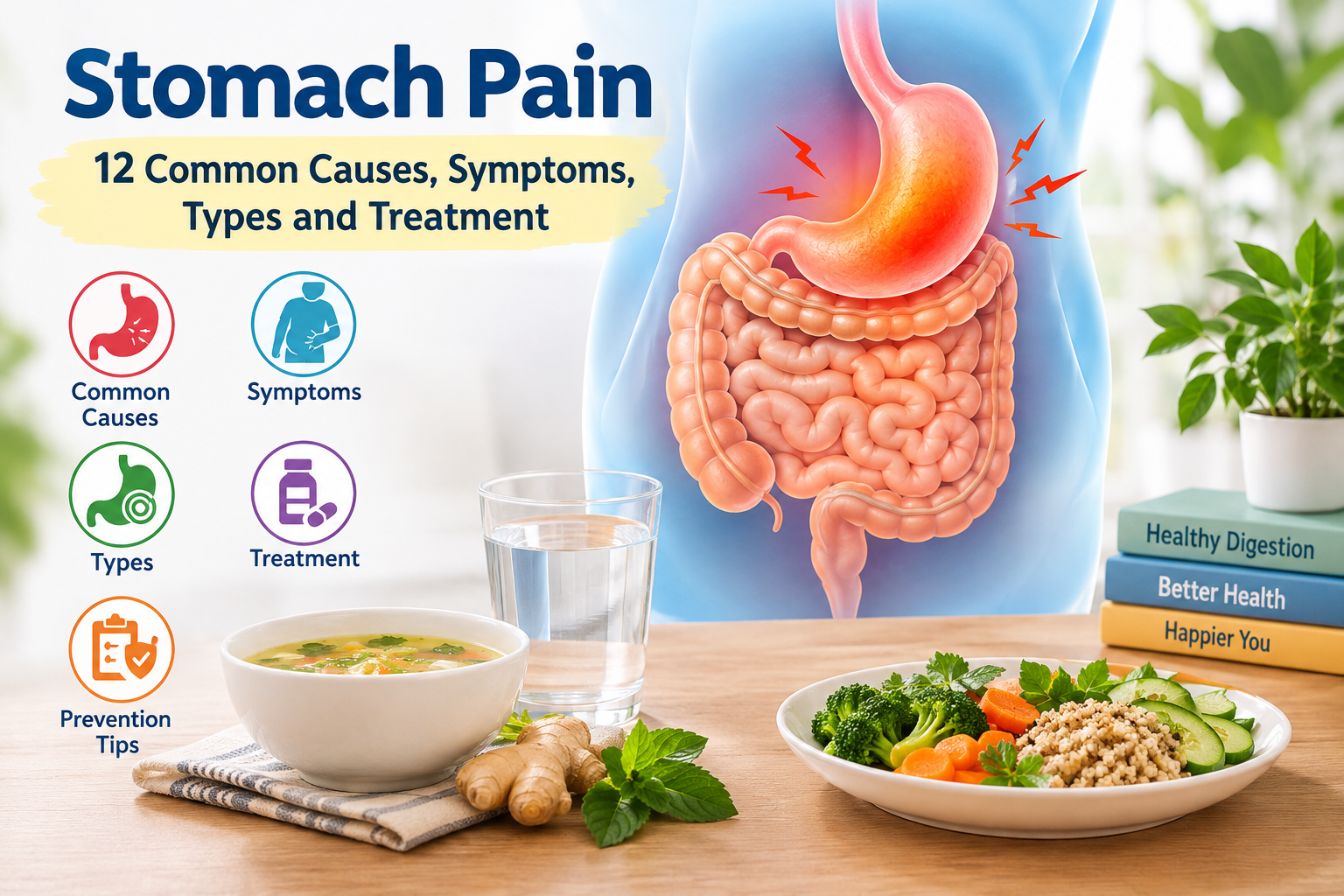
Stomach discomfort is a common problem that can affect people of all ages. It may occur after eating, during digestion, or because of an underlying health condition. Sometimes, the discomfort is mild and goes away on its own, while in other cases, it may require medical attention.
Stomach Pain can feel like cramps, burning, pressure, bloating, or sharp discomfort in different parts of the abdomen. Understanding its possible causes and accompanying symptoms can help you decide what steps to take.
In this article, we will explore 12 common causes, different types, symptoms, treatment options, and practical ways to support digestive health.
Table of Contents
What Is Stomach Pain?
Stomach discomfort refers to pain or uneasiness felt anywhere in the area between the chest and pelvis. Although people often use the term stomach pain for all abdominal discomfort, the actual cause may involve the stomach, intestines, gallbladder, appendix, or other nearby organs.
The location, severity, duration, and timing of the discomfort can provide useful clues about its cause. However, symptoms alone cannot always identify the exact problem.
12 Common Causes of Stomach Pain
1. Gas and Bloating
Gas can build up in the digestive tract when you swallow air or when intestinal bacteria break down certain foods. This may cause pressure, fullness, cramps, and bloating.
Eating too quickly, drinking carbonated beverages, and consuming gas-producing foods can contribute to the problem.
2. Indigestion
Indigestion may cause upper abdominal discomfort, fullness after meals, nausea, or a burning sensation. It can occur after eating large meals, consuming fatty foods, or eating too quickly.
Frequent indigestion may sometimes be associated with acid reflux, stomach irritation, or other digestive conditions.
3. Constipation
Constipation occurs when bowel movements become infrequent or difficult to pass. It can lead to abdominal cramps, bloating, and a feeling of heaviness.
Low fibre intake, insufficient fluids, limited physical activity, and certain medicines can contribute to constipation.
4. Food Intolerance
Some people have difficulty digesting particular foods. For example, lactose intolerance can cause gas, diarrhoea, bloating, and cramps after consuming milk or dairy products.
Keeping a food diary may help identify patterns. Avoid eliminating major food groups without appropriate nutritional advice.
5. Acid Reflux
Acid reflux occurs when stomach contents flow back into the oesophagus. Common symptoms include heartburn, a sour taste in the mouth, and discomfort in the upper abdomen or chest.
Large meals and lying down soon after eating may worsen symptoms in some people.
6. Stomach Infection
Viral or bacterial infections can cause abdominal cramps, nausea, vomiting, diarrhoea, and sometimes fever. Contaminated food or water may be responsible for certain infections.
Rest and appropriate fluid replacement are important, but severe dehydration, blood in the stool, or persistent symptoms require medical assessment.
7. Gastritis
Gastritis is inflammation of the stomach lining. It may cause upper abdominal discomfort, nausea, reduced appetite, or a feeling of fullness.
Possible causes include Helicobacter pylori infection and frequent use of certain pain-relieving medicines, such as ibuprofen. Treatment depends on the underlying cause.
8. Peptic Ulcers
Peptic ulcers are open sores that develop in the lining of the stomach or the upper part of the small intestine. They may cause burning or gnawing pain in the upper abdomen.
Common causes include H. pylori infection and certain anti-inflammatory medicines. A healthcare professional can recommend appropriate testing and treatment.
9. Irritable Bowel Syndrome (IBS)
IBS is a digestive condition that may cause recurring cramps, bloating, constipation, diarrhoea, or alternating bowel habits. Symptoms can sometimes become worse during periods of stress or after particular foods.
A clinician can help assess symptoms and develop a suitable management plan.
10. Gallstones
Gallstones are hardened deposits that form in the gallbladder. When they block a bile duct, they may cause pain in the upper-right abdomen, sometimes after a heavy meal.
Pain accompanied by fever, yellowing of the skin or eyes, or persistent vomiting needs urgent medical evaluation.
11. Appendicitis
Appendicitis is inflammation of the appendix and can become a medical emergency. Pain may begin around the belly button and later move to the lower-right abdomen.
Other symptoms may include loss of appetite, nausea, vomiting, and fever. Suspected appendicitis requires urgent medical care rather than home treatment.
12. Urinary Tract or Kidney Problems
Urinary tract infections may cause discomfort in the lower abdomen, painful urination, and a frequent urge to urinate. Kidney stones can cause severe pain in the side or back that may spread towards the lower abdomen or groin.
Fever, chills, blood in the urine, or severe pain should be assessed promptly by a healthcare professional.
Common Types of Stomach Pain
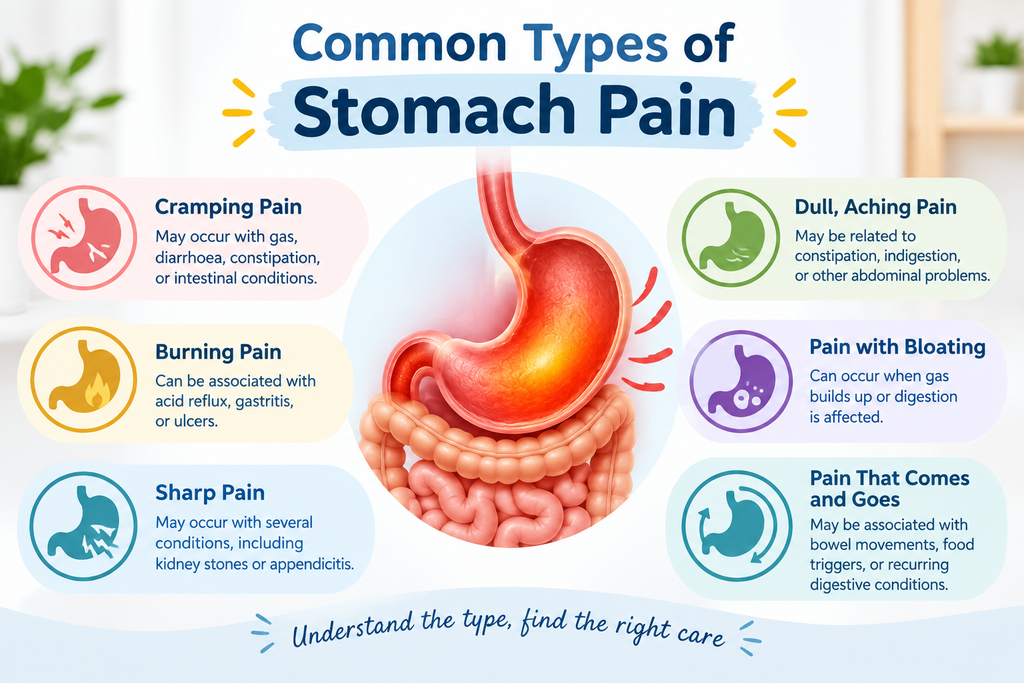
Different types of discomfort may suggest different causes, although they do not confirm a diagnosis.
- Cramping pain: May occur with gas, diarrhoea, constipation, or intestinal conditions.
- Burning pain: Can be associated with acid reflux, gastritis, or ulcers.
- Sharp pain: May occur with several conditions, including kidney stones or appendicitis.
- Dull, aching pain: May be related to constipation, indigestion, or other abdominal problems.
- Pain with bloating: Can occur when gas builds up or digestion is affected.
- Pain that comes and goes: May be associated with bowel movements, food triggers, or recurring digestive conditions.
Common Symptoms That May Occur With Stomach Pain
The symptoms accompanying abdominal discomfort can help a healthcare professional understand what might be happening. They may include:
- Nausea or vomiting.
- Bloating and excessive gas.
- Diarrhoea or constipation.
- Loss of appetite.
- Fever or chills.
- Heartburn or a burning sensation.
- Changes in bowel movements.
- Discomfort during urination.
The combination of symptoms matters more than any single symptom. Seek medical advice if the problem is persistent, keeps returning, or becomes worse.
How to Treat Stomach Pain Safely
Treatment depends on the cause, so there is no single remedy that works for every condition.
1. Drink Enough Fluids
Water and suitable oral rehydration solutions can help replace fluids lost through vomiting or diarrhoea. Take small, frequent sips if you feel nauseated.
2. Eat Smaller Meals
Smaller meals may reduce discomfort associated with overeating or indigestion. Eat slowly and notice whether particular foods consistently trigger symptoms.
3. Choose Gentle Foods When Needed
If you have temporary digestive upset, try foods that you can comfortably tolerate, such as rice, toast, bananas, or soup. Return to a balanced diet as your appetite improves.
4. Avoid Personal Food Triggers
Spicy foods, fatty meals, caffeine, and fizzy drinks can aggravate symptoms in some people. You do not need to avoid every one of these foods unless they trigger your symptoms or a clinician advises you to do so.
5. Try Gentle Movement
A short, gentle walk may help with gas or constipation. Avoid strenuous activity if you feel unwell or experience significant pain.
6. Use Medicines Carefully
Some over-the-counter medicines may help specific digestive problems, but the correct choice depends on the cause. Avoid taking antibiotics without a prescription, and do not use painkillers such as ibuprofen if you suspect a stomach ulcer or bleeding without medical advice.
7. Get Medical Advice When Necessary
If discomfort is severe, persistent, recurring, or associated with unexplained weight loss or changes in bowel habits, arrange a medical assessment. Treatment may require specific medicines, tests, or another intervention.
When Is Stomach Pain an Emergency?
Seek emergency medical care if you experience:
- Sudden, severe, or rapidly worsening abdominal pain.
- A rigid or very tender abdomen.
- Vomiting blood or material that looks like coffee grounds.
- Bloody or black, tar-like stools.
- Fainting, confusion, or difficulty breathing.
- Severe abdominal pain with persistent vomiting.
- Pain with fever and yellowing of the skin or eyes.
Do not delay care if appendicitis or another serious abdominal condition is suspected. If you are pregnant or may be pregnant and develop significant abdominal pain, seek prompt medical advice.
For more information about common causes, symptoms, and warning signs of stomach pain, visit the NHS Inform guide to stomach ache and abdominal pain.
How to Prevent Digestive Discomfort
Although not every cause can be prevented, healthy habits may reduce some digestive problems.
- Eat a balanced diet with adequate fibre.
- Drink enough water throughout the day.
- Wash your hands before preparing or eating food.
- Handle and cook food safely.
- Eat slowly and avoid regularly overeating.
- Stay physically active according to your abilities.
- Limit foods and drinks that consistently trigger symptoms.
- Avoid unnecessary use of medicines that may irritate the stomach.
- Seek medical advice for recurring digestive symptoms.
Frequently Asked Questions (FAQs)
1. What are the most common causes of stomach pain?
Common causes include gas, indigestion, constipation, food intolerance, acid reflux, and stomach infections. However, persistent or severe symptoms may indicate a condition that requires medical treatment.
2. What can I do at home for mild stomach discomfort?
For mild symptoms, you may try drinking water, eating smaller meals, avoiding known food triggers, and resting. Seek medical care if symptoms worsen, persist, or are accompanied by warning signs.
3. When should I worry about abdominal pain?
Sudden severe pain, blood in vomit or stool, a rigid abdomen, fainting, or pain accompanied by serious symptoms requires urgent medical attention.
4. Can stress cause stomach discomfort?
Stress can affect digestion and may worsen symptoms of conditions such as irritable bowel syndrome. However, you should not automatically assume that recurring or severe pain is caused by stress.
5. How long does stomach pain usually last?
The duration depends on the cause. Mild gas or indigestion may settle relatively quickly, while infections and other conditions may last longer. Pain that persists, returns frequently, or worsens should be assessed by a healthcare professional.
If you want to learn more about abdominal discomfort, explore our detailed guide on Abdomen Pain: Causes, Symptoms, Types, and Treatment to understand its common causes and available treatment options.
Final Thoughts
Stomach Pain can develop for many reasons, ranging from temporary gas and indigestion to conditions that require urgent treatment. Paying attention to the location, severity, duration, and associated symptoms can help you decide what to do next.
Simple dietary and lifestyle changes may help with mild digestive discomfort, but home remedies are not suitable for every cause. If symptoms are severe, persistent, or unusual, consult a qualified healthcare professional for an accurate diagnosis and appropriate care.
Disclaimer: This article is for general educational purposes only and is not a substitute for professional medical advice, diagnosis, or treatment.
