
Muscle discomfort can affect almost anyone, whether it develops after exercise, a long day at work, or a period of illness. Sometimes the pain disappears after rest, while in other cases, it may continue for several days and interfere with daily activities. Understanding the possible causes can help you choose the right steps to feel better.
Muscle aches and pains can occur in one area of the body or affect several muscle groups at once. The discomfort may feel like soreness, tenderness, stiffness, or a dull ache. Although many cases are mild, persistent or severe pain should not be ignored.
In this guide, you will learn about common causes, symptoms, home care options, prevention tips, and situations when medical attention may be necessary.
Table of Contents
What Are Muscle Aches and Pains?
Muscle pain, also known as myalgia, is discomfort that develops in one or more muscles. It may begin suddenly after physical activity or gradually develop because of stress, illness, or repetitive movements.
Some people experience mild soreness that improves within a day or two. Others may notice stiffness, tenderness when touching a muscle, or discomfort while walking, lifting objects, or climbing stairs.
The location and severity of the pain often provide useful clues about its cause. However, symptoms alone cannot always identify the underlying problem.
Common Causes of Muscle Aches and Pains
Several factors can contribute to muscle discomfort. The following are some of the most common possibilities.
1. Overuse and Physical Activity
Exercise, heavy lifting, gardening, and other physically demanding activities can put extra stress on muscles. This may cause soreness, particularly when you begin a new workout or increase your exercise intensity.
Delayed-onset muscle soreness often develops several hours after unfamiliar or intense exercise and may last a few days.
What may help: Reduce strenuous activity temporarily, move gently, and allow your muscles enough time to recover.
2. Muscle Strain or Minor Injury
A muscle strain occurs when muscle fibers are stretched too far or torn. It can happen during sports, sudden movements, lifting heavy objects, or everyday activities.
Possible symptoms include localized pain, swelling, tenderness, bruising, and difficulty moving the affected area.
Avoid activities that increase the pain. Significant swelling, severe pain, or difficulty using the injured muscle may require medical assessment.
3. Stress and Muscle Tension
Emotional stress can cause people to tighten their muscles without realizing it. The neck, shoulders, and back are common areas where tension develops.
When stress continues, this tightness may contribute to discomfort and stiffness.
Relaxation exercises, gentle stretching, regular movement, and adequate sleep may help reduce tension-related soreness.
4. Viral Infections
Some viral infections, including influenza, can cause widespread muscle discomfort. People may also experience fever, tiredness, headache, chills, or other symptoms.
If muscle pain develops with an illness, rest and adequate fluid intake may support recovery. Seek medical advice if symptoms are severe, worsen, or do not improve as expected.
5. Dehydration
Your body needs enough fluids to maintain normal functions, especially during hot weather or physical activity. Losing too much fluid through sweating, vomiting, or diarrhea can contribute to weakness and muscle cramps.
Drink fluids regularly and replace fluids lost during exercise. People who have been advised to restrict fluids because of a medical condition should follow their healthcare professional’s guidance.
6. Poor Sleep and Insufficient Recovery
Sleep allows your body to recover from daily physical demands. Poor sleep, long working hours, and repeated strenuous activity without adequate recovery may contribute to fatigue and muscle discomfort.
Try to maintain a consistent sleep schedule and avoid pushing through persistent pain during workouts.
7. Certain Medications or Medical Conditions
Some medications, including certain cholesterol-lowering medicines called statins, can cause muscle symptoms in some people. Other medical conditions may also contribute to ongoing muscle pain.
If discomfort begins after starting a new medicine or changing a dose, contact your healthcare professional. Do not stop prescribed medication without discussing it with them.
Common Symptoms of Muscle Aches and Pains
Symptoms can vary depending on the cause, the affected muscle, and the severity of the problem.
Common symptoms include:
- A dull, aching sensation in the muscles
- Tenderness when touching the affected area
- Stiffness after resting or waking up
- Pain during movement or physical activity
- Muscle cramps or tightness
- Reduced flexibility or range of motion
- Tiredness or weakness accompanying an illness
Localized soreness after exercise is different from unexplained pain throughout the body. If symptoms are persistent, recurrent, or accompanied by unusual weakness, a medical evaluation can help determine the cause.

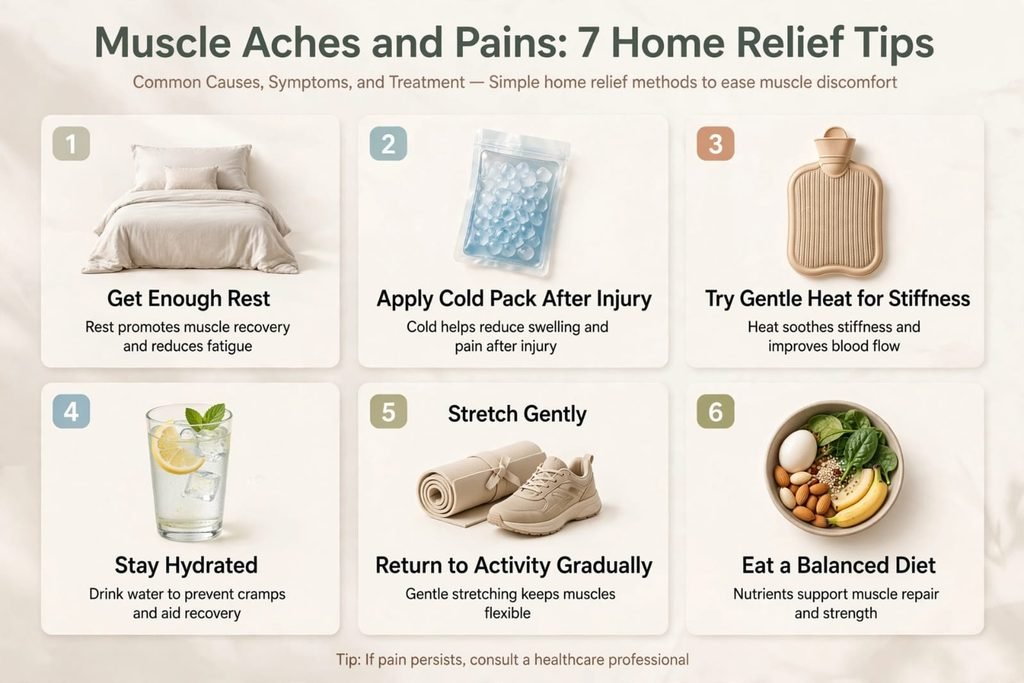
How to Relieve Muscle Aches and Pains at Home
For mild soreness caused by exercise or everyday activities, simple self-care measures may provide relief. The best approach depends on what is causing the discomfort.
1. Get Enough Rest
Give the affected muscles time to recover. Avoid heavy lifting, intense workouts, or repetitive movements that make the pain worse.
Rest does not always mean remaining completely inactive. Gentle movement may help prevent stiffness when it is comfortable and appropriate.
2. Apply a Cold Pack After an Injury
If muscle pain follows a recent strain or minor injury, a cold pack wrapped in a towel may help reduce discomfort and swelling.
Apply it for approximately 15–20 minutes at a time. Never place ice directly on your skin.
3. Try Gentle Heat for Stiffness
Warm showers or a comfortably warm compress may help relax tight muscles and ease stiffness.
Avoid applying heat to an area that is significantly swollen immediately after an injury. Stop if the heat increases discomfort.
4. Stay Hydrated
Drink enough water throughout the day, especially during hot weather or exercise. If you have lost fluids through sweating or illness, replacing them can be helpful.
Water needs vary according to activity, climate, and individual health. Electrolyte drinks are not necessary for everyone and may be unsuitable for some people with medical conditions.
5. Stretch Gently
Gentle stretching may improve flexibility and reduce stiffness when performed comfortably. Move slowly and avoid bouncing or forcing a muscle into a painful position.
Stop any stretch that causes sharp pain. Avoid stretching an injured muscle aggressively while it is healing.
6. Eat a Balanced Diet
Your muscles need adequate nutrition to function and recover. Include a variety of foods that provide protein, vitamins, minerals, and energy.
Helpful food choices include eggs, beans, lentils, yogurt, fish, nuts, fruits, vegetables, and whole grains. A balanced diet supports general health, but a particular food will not necessarily treat the underlying cause of muscle pain.
7. Return to Activity Gradually
Once the discomfort begins to improve, gradually resume your normal activities. Start with lighter exercise and increase the intensity according to your comfort and recovery.
Pushing too hard too soon may worsen an injury or prolong soreness.
When Should You See a Doctor?
Many mild cases improve with time and appropriate self-care. However, unexplained or persistent muscle aches and pains may require professional assessment.
Arrange a medical appointment if:
- The pain lasts longer than expected or keeps returning.
- You experience persistent muscle weakness.
- The affected area becomes increasingly swollen or red.
- You develop a rash, fever, or other unusual symptoms.
- The discomfort begins after starting a new medication.
- Muscle pain interferes with walking, sleeping, or normal daily activities.
Seek urgent medical attention if muscle pain occurs with chest pain, difficulty breathing, fainting, or sudden severe weakness. Severe muscle pain accompanied by dark, tea-colored urine, particularly after intense exercise, can indicate serious muscle damage and requires immediate assessment.
These warning signs should not be managed with home remedies alone.
For more information about muscle-related conditions and their symptoms, visit MedlinePlus’s guide to muscle disorders
How to Prevent Muscle Aches and Pains
Although not every cause can be prevented, healthy daily habits may reduce the risk of exercise-related soreness and muscle strain.
Consider the following tips:
- Warm up before exercise: Begin with a few minutes of easy movement before increasing intensity.
- Increase exercise gradually: Avoid suddenly increasing workout duration, distance, or weight.
- Maintain good posture: Adjust your working position and take movement breaks during long periods of sitting.
- Drink enough fluids: Pay attention to hydration during exercise and hot weather.
- Get sufficient sleep: Give your body time to recover from physical activity.
- Use proper lifting techniques: Keep loads manageable and avoid sudden twisting movements.
- Take recovery days: Alternate demanding workouts with lighter activities or rest when needed.
Consistent habits can help support muscle health and make physical activity more comfortable.
If you are also experiencing discomfort in your lower abdomen, learn more about the common causes, symptoms, and treatment of lower stomach pain.
Frequently Asked Questions
1. What is the most common cause of muscle pain?
Common causes include physical overuse, unfamiliar exercise, muscle strain, and tension. Infections, certain medicines, and medical conditions can also cause muscle discomfort.
2. How long do muscle aches usually last?
Mild exercise-related soreness often improves within a few days. Pain from an injury or another medical problem may last longer. Persistent or worsening symptoms should be assessed by a healthcare professional.
3. Is walking good for sore muscles?
Gentle walking may help reduce stiffness when soreness is mild and movement is comfortable. Avoid strenuous activity if walking increases the pain, and seek medical advice if you have a significant injury.
4. Should I use heat or ice for muscle pain?
Cold packs may help with recent injuries and swelling, while gentle heat may ease stiffness or muscle tension. The appropriate choice depends on the cause of the pain.
5. Can dehydration cause muscle aches?
Dehydration can contribute to muscle cramps and other symptoms, especially after heavy sweating or fluid loss. However, persistent muscle pain may have another cause and should not automatically be attributed to dehydration.
6. When are muscle aches a sign of something serious?
Severe or unexplained pain, significant weakness, major swelling, or dark urine after strenuous exercise may indicate a serious problem. Muscle pain with chest pain or difficulty breathing requires urgent medical attention.
Conclusion
Muscle aches and pains can develop because of exercise, muscle strain, stress, dehydration, infections, or other health conditions. Mild soreness may improve with rest, gentle movement, hydration, and appropriate use of cold or heat.
Pay attention to how long the discomfort lasts and whether other symptoms appear. If the pain is severe, persistent, unexplained, or accompanied by warning signs, seek medical advice instead of relying solely on home care.
Developing healthy exercise habits, eating a balanced diet, and allowing enough recovery time can help support your muscles and overall well-being.
Health Disclaimer: This article is for educational purposes only and is not a substitute for professional medical advice, diagnosis, or treatment. Consult a qualified healthcare professional about persistent or severe symptoms.
