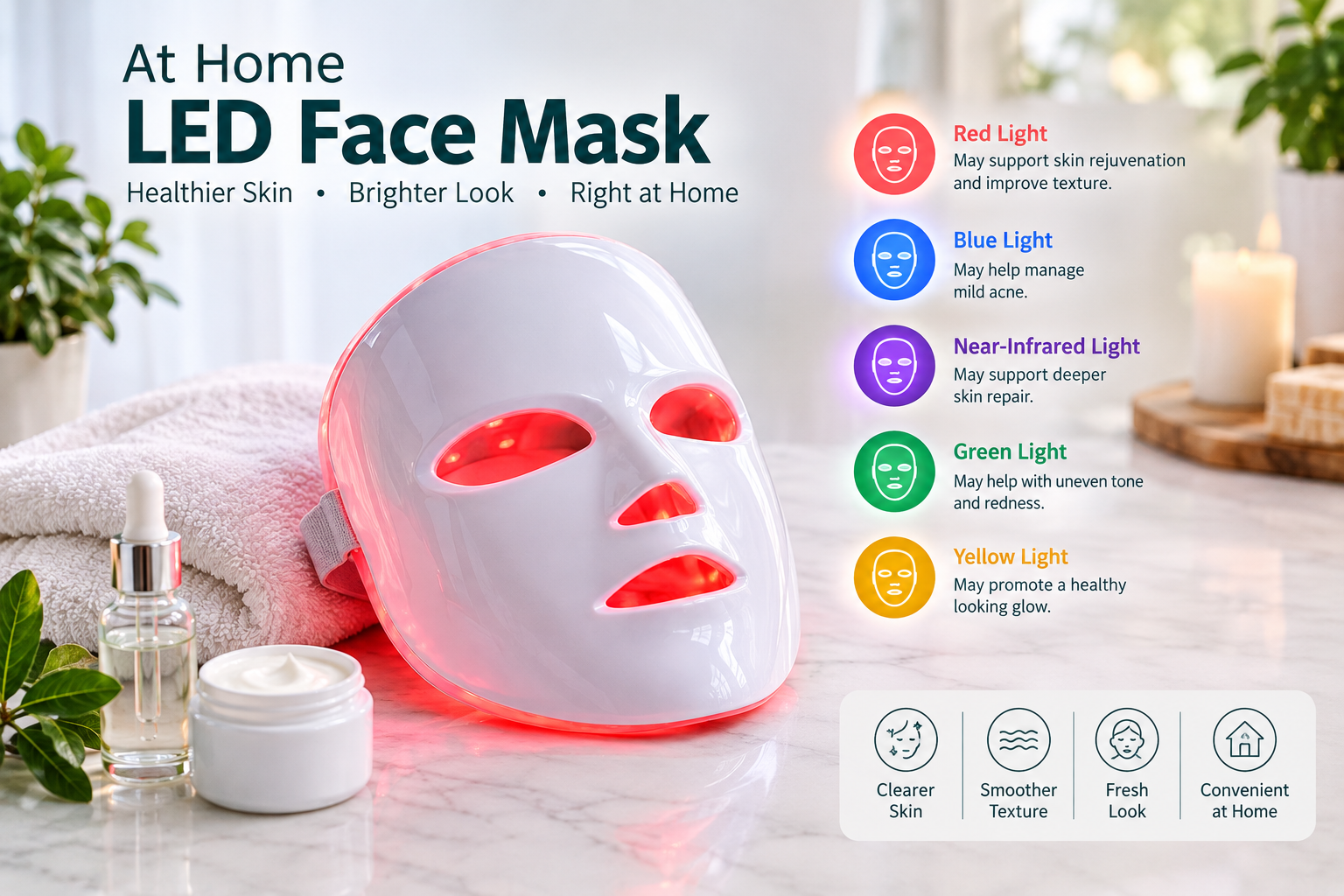
An at home LED face mask has become an interesting option for people who want to improve their skincare routine without visiting a beauty clinic regularly. These wearable devices use specific wavelengths of light to target selected skin concerns, including mild acne and visible signs of aging. However, choosing the right device and understanding its limitations are important before adding it to your routine.
Unlike ordinary face masks made with creams or natural ingredients, an LED mask works through light exposure rather than a layer of skincare product. Its performance depends on the type of light, device quality, treatment settings, and consistency of use.
This guide explains how LED face masks work, their possible benefits, how to use one responsibly, and the mistakes that may prevent you from getting the results you expect.
Table of Contents
What Is an At Home LED Face Mask?
An LED face mask is an electronic skincare device designed to deliver light to the facial skin. LED stands for light-emitting diode, a technology that produces light at selected wavelengths. Different wavelengths interact with the skin in different ways, which is why manufacturers create masks with different colours and treatment modes.
Most home-use models are designed for people who want to address specific concerns, such as mild inflammatory acne or the appearance of fine lines. Some devices combine more than one wavelength in a single session.
An at home LED face mask is not the same as a medical laser. LED devices generally distribute light across a broader area, while lasers produce a more concentrated beam. Home masks also tend to operate at lower treatment intensities than professional equipment.
The important point is that a mask should be selected according to its intended use and supporting evidence, not simply its appearance or number of light colours.
How Does an LED Face Mask Work?
When a mask is switched on, its LEDs deliver light to the skin for a specified period. The skin absorbs some of this light, and the resulting biological response depends on the wavelength and amount of energy delivered.
This process is often called photobiomodulation when specific light exposure influences cellular activity.
For skincare, researchers have investigated how certain wavelengths may affect inflammation, acne-related processes, and features associated with skin aging. However, results from one device cannot automatically be applied to every product available online.
The design, wavelength accuracy, output intensity, and treatment schedule all matter. A mask that produces impressive-looking lights does not necessarily provide an effective treatment.
Potential Benefits of Using an At Home LED Face Mask
An LED mask may support a skincare routine when the device is suitable for the user’s concern and used according to its instructions.
1. May Help Manage Mild Acne
Blue-light devices are commonly marketed for acne because blue light can affect certain acne-associated bacteria. Some devices combine blue and red light to target more than one aspect of inflammatory acne.
Research supports potential benefits for selected acne lesions, but home devices do not treat every type of acne equally. Blackheads, whiteheads, deep cysts, and severe nodules may require other treatments.
People with persistent, painful, or scarring acne should seek advice from a qualified healthcare professional instead of relying on a mask alone.
2. May Improve the Appearance of Fine Lines
Red-light therapy has been studied for changes in the appearance of fine lines, skin texture, and elasticity. Some research suggests that suitable home-use devices may produce modest improvements over time.
These changes are not immediate, and results vary between individuals. An LED mask should not be expected to remove deep wrinkles or produce results equivalent to a surgical procedure.
3. May Support a More Even-Looking Skin Texture
Some people explore light therapy because they want their skin to look smoother. Certain devices have shown promising results for selected skin-aging features, but the evidence depends on the treatment settings and the outcome being measured.
Uneven texture can also result from acne scarring, irritation, dryness, or other skin conditions. Identifying the cause is more useful than assuming every texture concern will respond to LED treatment.
4. Offers a Convenient Home Skincare Option
One practical advantage is that a wearable mask can be used at home without scheduling regular clinic visits. A suitable device may fit into a simple routine for people who can follow its recommended schedule consistently.
Convenience, however, does not guarantee effectiveness. A lower-cost mask with unclear technical specifications may offer less reliable results than a properly evaluated device.
5. Can Complement an Existing Skincare Routine
For some users, LED treatment may complement basic skincare or a clinician-recommended treatment plan. It should not replace prescribed acne medicines, sunscreen, moisturiser, or other treatments that are already needed.
The best routine is one that addresses the actual skin concern without adding unnecessary products or procedures.
Different LED Light Colours and Their Uses
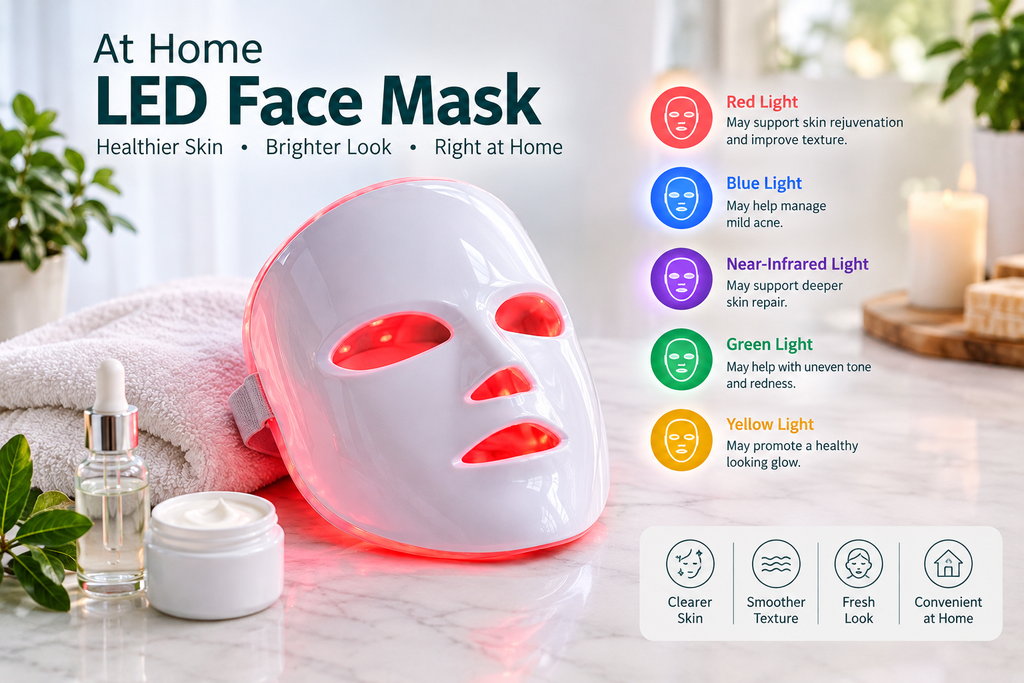
LED mask manufacturers often advertise several colours. Their purposes are not interchangeable, and the evidence differs between wavelengths.
Red Light
Red light is commonly used in devices intended to improve the appearance of fine lines and selected skin-aging features. It has also been studied for its effects on inflammation and tissue responses.
Results depend on the device’s specifications and the treatment protocol. Red light should not be considered a replacement for sun protection or established dermatological care.
Blue Light
Blue light is mainly associated with devices designed to help manage certain acne lesions. It may be useful for selected cases of mild inflammatory acne, but it is not a complete treatment for every acne type.
Visible light can also affect pigmentation in some individuals. People who develop dark marks easily should seek professional guidance before using a device that includes blue light.
Near-Infrared Light
Near-infrared light is invisible to the human eye and is included in some devices intended for skin rejuvenation. It differs from visible red light in wavelength and tissue penetration.
Its presence does not automatically make a mask more effective. The overall device design, output, and evidence for the intended use still need to be considered.
Green, Yellow, and Other Colours
Some manufacturers advertise green, yellow, or additional light settings for concerns such as uneven tone or redness. Evidence for these claims varies, and marketing descriptions do not necessarily demonstrate a meaningful clinical benefit.
Choose a device based on credible evidence for your specific concern rather than assuming that more colours mean better results.
How to Use an At Home LED Face Mask Safely
A consistent and sensible routine is more useful than frequent, unsupervised treatment. Follow these steps before and during use.
Step 1: Check the Device Instructions
Read the manufacturer’s guidance before your first session. Confirm which skin concerns the device is designed to address, the recommended duration, and whether protective eyewear is required.
Look for clear technical information, a traceable manufacturer, and appropriate regulatory clearance for the intended use in your market.
Step 2: Cleanse Your Face Gently
Remove makeup, sunscreen, excess oil, and surface dirt with a gentle cleanser. Pat the skin dry unless the instructions specify otherwise.
Avoid applying unapproved products beneath the mask. Some ingredients may irritate the skin or alter how comfortable the treatment feels.
Step 3: Inspect Your Skin
Do not begin treatment over irritated, broken, or recently burned skin unless a qualified clinician has advised you to do so. If your skin is already inflamed, introducing a new device may make it harder to identify the cause of further irritation.
Step 4: Position the Mask Correctly
Place the mask as directed, ensuring that it sits securely without unnecessary pressure. Use the recommended eye protection whenever the manufacturer requires it.
Do not stare directly into powerful LEDs or assume that closed eyelids provide sufficient protection.
Step 5: Follow the Recommended Treatment Time
Use the device for the specified duration and frequency. Longer sessions do not necessarily improve results and may increase discomfort or other unwanted effects.
Avoid creating your own treatment schedule by copying instructions from a different mask.
Step 6: Keep the Rest of Your Routine Simple
After treatment, use a gentle moisturiser if needed. Continue your normal daytime sun-protection routine, including broad-spectrum sunscreen.
If you use prescription acne products, retinoids, or other potentially irritating treatments, ask a dermatologist or pharmacist whether your particular combination is appropriate.
For more information about the potential benefits and safety of at-home LED treatments, read this guide to red light therapy for skin published by the American Academy of Dermatology.
How Often Should You Use an LED Face Mask?
There is no single schedule suitable for every LED mask. Recommended frequency and session length depend on the device, its output, and the purpose of treatment.
Some products are designed for short sessions several times per week, while others have different instructions. Follow the exact guidance supplied with your device rather than increasing the frequency because results seem slow.
Allow enough time to evaluate changes. Taking a photograph in similar lighting every few weeks can help you assess whether your skin is improving. Keep your cleanser, moisturiser, and other skincare habits reasonably consistent so that you can better judge the mask’s contribution.
If the device causes persistent redness, discomfort, swelling, or a rash, stop using it and seek appropriate medical advice.
How to Choose a Suitable LED Face Mask
Before purchasing a device, consider the following practical factors.
Clear intended purpose: Choose a mask specifically designed and evaluated for the concern you want to address.
Reliable technical details: Look for disclosed wavelengths, treatment duration, and relevant safety information. Vague claims about powerful light or advanced technology are not enough.
Regulatory status: Check the device’s clearance or registration where applicable. In the United States, FDA clearance is different from FDA approval and does not guarantee a particular cosmetic result.
Eye safety: Confirm whether the design includes suitable eye protection and whether additional protection is required.
Comfort and fit: A mask should be easy to position and use without excessive pressure. An uncomfortable device may be difficult to use consistently.
Realistic claims: Be cautious of promises to erase wrinkles immediately, cure all acne, or remove pigmentation permanently.
Warranty and support: A traceable seller, clear return policy, and accessible manufacturer support can help you make a more informed purchase.
Common Mistakes to Avoid
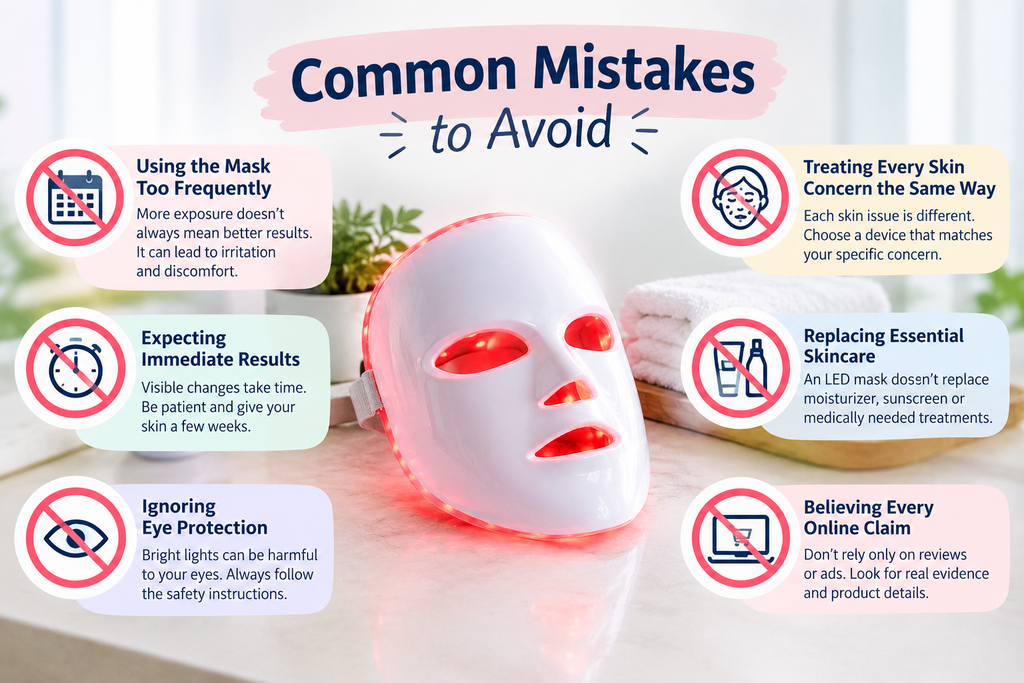
Using the Mask Too Frequently
More exposure is not necessarily better. Excessive use can increase discomfort and make irritation more likely.
Expecting Immediate Results
Changes in skin appearance usually require time, and some users may notice little improvement. Evaluate results gradually instead of judging the device after one or two sessions.
Ignoring Eye Protection
Bright treatment lights can pose a risk to the eyes, depending on the device and exposure. Follow the manufacturer’s specific safety instructions every time.
Treating Every Skin Concern With the Same Device
A mask intended for mild acne may not be appropriate for melasma, deep scarring, or another skin disorder. Match the device to the concern it has been designed to address.
Replacing Essential Skincare
LED treatment does not replace moisturising, sun protection, gentle cleansing, or medically indicated treatment. A basic, consistent routine remains important.
Believing Every Online Claim
Before-and-after photographs, influencer endorsements, and customer reviews cannot establish that a device will produce the same result for you. Look for credible evidence and transparent product information.
Who Should Seek Medical Advice Before Using an LED Mask?
Although many home-use LED devices are designed for consumer use, they are not appropriate for everyone without additional guidance.
Consult a dermatologist before starting if you have a condition that makes you sensitive to light, take medication that increases photosensitivity, have a history of significant pigment changes, or are receiving treatment for a skin disorder.
People with darker skin tones who are prone to melasma or persistent dark marks should be particularly careful about visible-light treatments and should discuss potential pigmentary effects with a dermatologist.
If you have unexplained skin lesions, rapidly changing spots, severe acne, or persistent inflammation, obtain a proper diagnosis rather than attempting to treat the problem with a cosmetic device.
At Home LED Face Mask vs. Professional LED Treatment
Both approaches use light-based technology, but they are not necessarily equivalent.
Home masks offer convenience and allow people to follow a treatment routine independently. Professional treatment may provide access to different equipment, tailored settings, and clinical assessment.
Professional devices can deliver different levels of energy, so the results and safety profile of a clinic treatment should not be assumed to apply to a home product. Similarly, buying an expensive mask does not guarantee better outcomes.
The right option depends on the skin concern, the strength of the available evidence, the cost, and whether professional assessment is needed.
How to Track Your Results More Accurately
A simple observation routine can help you decide whether a mask is worth continuing.
- Take a clear photograph before beginning, using consistent lighting and camera distance.
- Record your current skincare products and any prescribed treatments.
- Follow the device’s recommended schedule without increasing exposure.
- Review photographs after several weeks rather than checking repeatedly every day.
- Record any irritation, unusual pigmentation, or discomfort.
- Discuss disappointing results or worsening symptoms with a qualified professional.
This approach helps separate gradual changes from differences caused by lighting, camera angles, or temporary skin fluctuations.
Frequently Asked Questions
1. Does an at home LED face mask really work?
Some home-use LED masks have evidence supporting modest improvements in selected concerns, including certain acne lesions and visible signs of skin aging. Effectiveness varies with the device, wavelength, treatment settings, and individual skin characteristics.
2. Can I use an LED face mask every day?
Only if the specific device’s instructions recommend daily use. Other masks require less frequent sessions. Do not exceed the prescribed duration or frequency in an attempt to accelerate results.
3. Is red light or blue light better for the face?
Neither is universally better. Red light is commonly studied for visible signs of skin aging, while blue light is used in some devices for selected acne lesions. The best option depends on your concern and the evidence supporting the device.
4. Can an LED mask remove acne scars?
An LED mask should not be expected to remove established, indented acne scars. Some devices may help with active inflammatory acne, but scarring often requires a different treatment approach.
5. Can an LED face mask cause side effects?
Possible side effects include temporary redness, irritation, discomfort, or pigment changes in susceptible individuals. Eye safety is also important. Stop treatment if you experience a concerning reaction and seek medical advice when needed.
6. Should I apply serum before using an LED mask?
Follow the device instructions. Using a clean, dry face is a sensible default when the manufacturer does not recommend another approach. Do not apply strong active ingredients before treatment without checking whether the combination is suitable.
7. How long does it take to notice a difference?
The timeframe varies by device and skin concern. Any improvement may develop gradually over several weeks, and some people may not see a meaningful change. Avoid products promising guaranteed overnight results.
8. Can an LED mask replace sunscreen?
No. An LED mask does not replace broad-spectrum sunscreen or other sun-protection habits. Continue protecting your skin from ultraviolet radiation as part of your daily routine.
Final Thoughts
An at home LED face mask can be a convenient addition to a skincare routine when it is chosen carefully and used according to reliable instructions. Research suggests that certain devices may offer modest benefits for selected acne and skin-aging concerns, but performance differs between products.
Focus on the intended use, technical specifications, eye safety, and realistic expectations before making a purchase. For persistent acne, pigmentation problems, or unexplained skin changes, professional guidance is more appropriate than relying on a cosmetic device alone.
Disclaimer: This article is for general educational purposes only and is not a substitute for personalised medical advice. Consult a qualified dermatologist if you are unsure whether LED light therapy is suitable for your skin.
