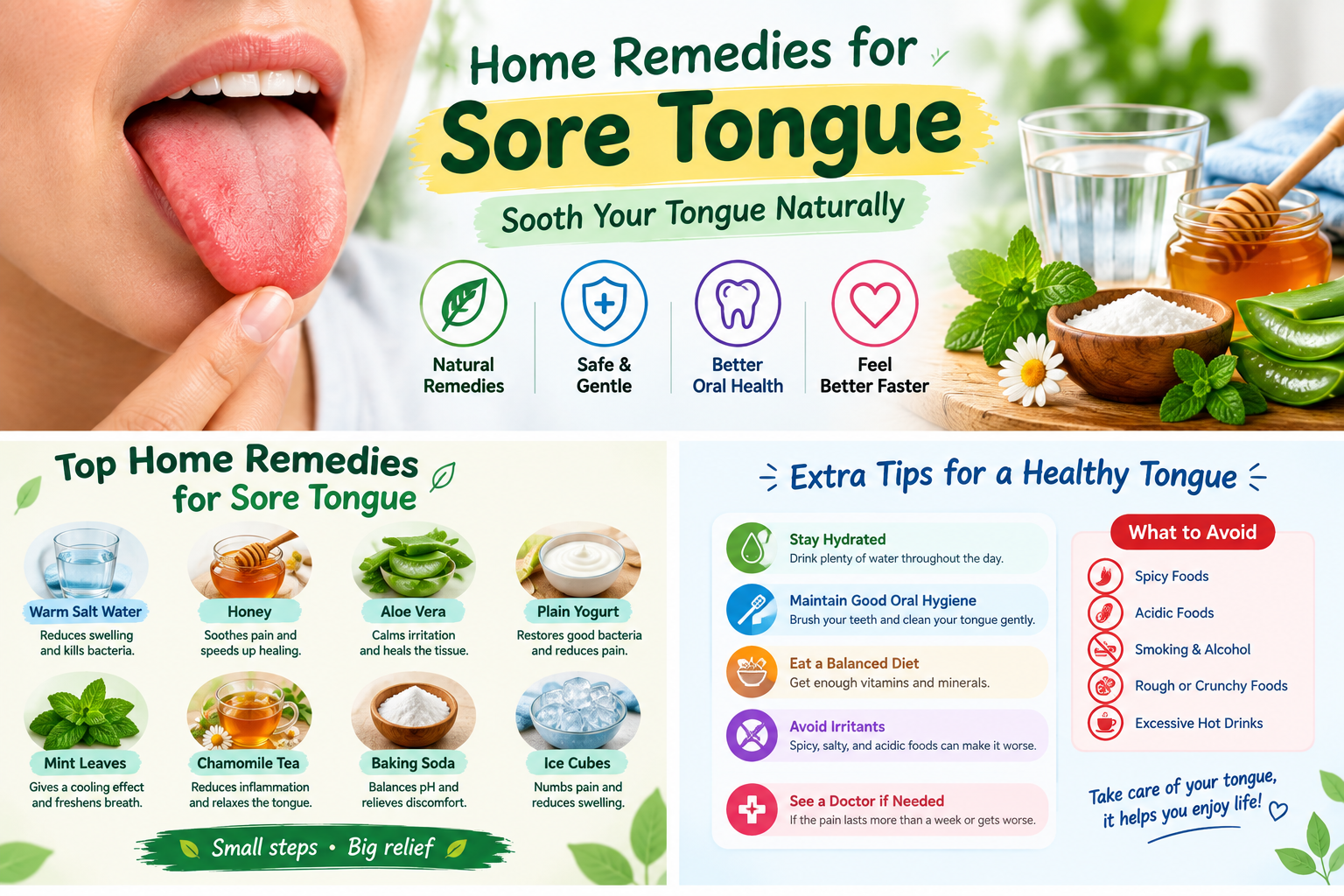
A sore tongue can make everyday activities like eating, drinking and talking uncomfortable. It may happen after accidentally biting or burning your tongue, eating irritating foods, having a mouth ulcer, or because of another underlying condition.
The good news is that many mild cases improve with simple self-care. In this guide, we’ll look at home remedies for sore tongue, things you can avoid, common causes, and signs that mean you should speak with a doctor or dentist.
Important: Home remedies may help relieve discomfort, but they do not treat every possible cause of tongue pain.
Table of Contents
What Causes a Sore Tongue?
A sore tongue can have several possible causes.Common ones include:
- Accidentally biting the tongue
- Burning the tongue with hot food or drinks
- Mouth ulcers
- Irritation from spicy, acidic or very hot foods
- Dry mouth
- Oral infections such as oral thrush
- Dental problems or irritation from dentures or dental appliances
- Certain nutritional deficiencies
- Some inflammatory or other medical conditions
The right treatment depends on the cause. For example, a tongue that hurts after eating very hot food may simply need time to heal, while persistent pain or unusual patches may require professional evaluation.knowing the cause will help you choose the right home remedies for sore tongue.
10 Home Remedies for Sore Tongue
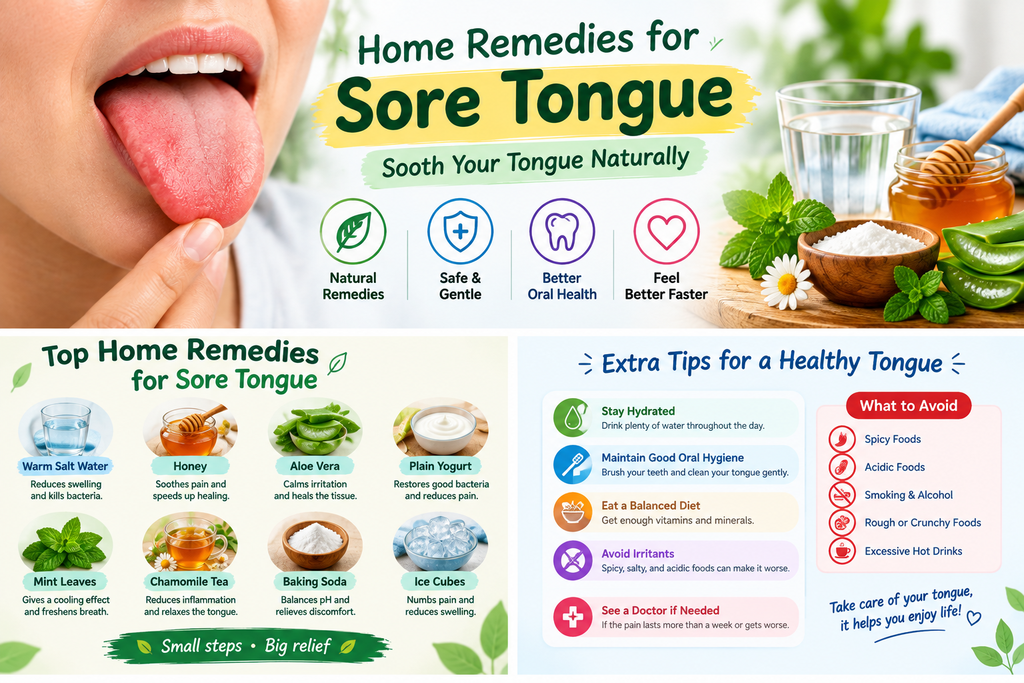
1. Rinse With Warm Salt Water
A simple salt-water rinse can be useful when your mouth or tongue feels irritated.
How to make a salt-water rinse
Mix about ½ teaspoon of salt in a glass of warm water. Swish the solution gently around your mouth and then spit it out. Do not swallow it.
The NHS recommends a salt-water mouth rinse as one of the self-care options for mouth ulcers.
2. Drink Cool Water
Drinking cool water is one of the simplest home remedies for sore tongue. If your tongue is sore or has been irritated by hot food or drinks, cool water may help make it feel more comfortable.
Take small sips throughout the day to help keep your mouth hydrated.
For a burned tongue, Cleveland Clinic also recommends cool drinks or ice chips for relief.
3. Avoid Spicy Foods
Spicy foods can make an already irritated tongue feel worse.
While your tongue is sore, consider temporarily avoiding:
- Hot peppers
- Very spicy sauces
- Strongly seasoned foods
- Very hot meals
Once your tongue feels better, you can gradually return to your normal diet if these foods were not the original cause.
4. Avoid Acidic Foods and Drinks
Acidic foods and drinks may irritate sensitive areas inside the mouth.
You may want to reduce foods and drinks such as:
- Citrus fruits
- Orange juice
- Tomato-based foods
- Fizzy drinks
- Very acidic sauces
NHS guidance for sore or white tongue recommends avoiding spicy, acidic and very hot foods and drinks when they irritate the tongue.
5. Choose Soft Foods
If chewing hurts, choose softer foods for a few days.
Examples include:
- Yogurt
- Oatmeal
- Mashed vegetables
- Soft rice
- Smooth soups that are not very hot
- Soft fruits
Avoid rough or crunchy foods that may rub against a sore area.
For mouth ulcers, NHS guidance recommends softer foods and avoiding rough, crunchy foods while the area heals.
6. Use a Soft-Bristled Toothbrush
Using a soft toothbrush is also among the gentle home remedies for sore tongue .Good oral hygiene is important, but brushing too aggressively can irritate a sore tongue or mouth.
Use a soft-bristled toothbrush and brush gently.
Keeping your mouth clean can help reduce irritation and supports good oral health.
7. Keep Your Mouth Hydrated
Dry mouth can make oral discomfort worse.
Drink enough water throughout the day and take regular small sips if your mouth feels dry.
Staying hydrated is also one of the simple self-care measures recommended for some tongue and mouth problems.
8. Avoid Smoking and Alcohol
Smoking can irritate the mouth and tongue. Alcohol can also make irritation worse, especially when the tissues are already sensitive.
If your tongue is sore, avoiding smoking and alcohol while it heals can help reduce additional irritation. NHS guidance specifically recommends avoiding smoking and alcohol with a sore or white tongue.
9. Check Your Toothpaste
Some people find that certain toothpaste ingredients irritate their mouth.
NHS guidance suggests avoiding toothpaste containing sodium lauryl sulfate (SLS) if you have a sore or white tongue or recurrent mouth ulcers.
If you notice that your tongue becomes irritated after using a particular toothpaste, consider discussing alternatives with your dentist or pharmacist.
10. Give Your Tongue Time to Heal
Sometimes the best remedy is simply giving the irritated tissue time to recover.
A minor burn, bite or mouth ulcer may improve naturally. Try to avoid whatever caused the irritation and keep your mouth comfortable while the area heals.
Most ordinary mouth ulcers clear within 1 to 2 weeks.
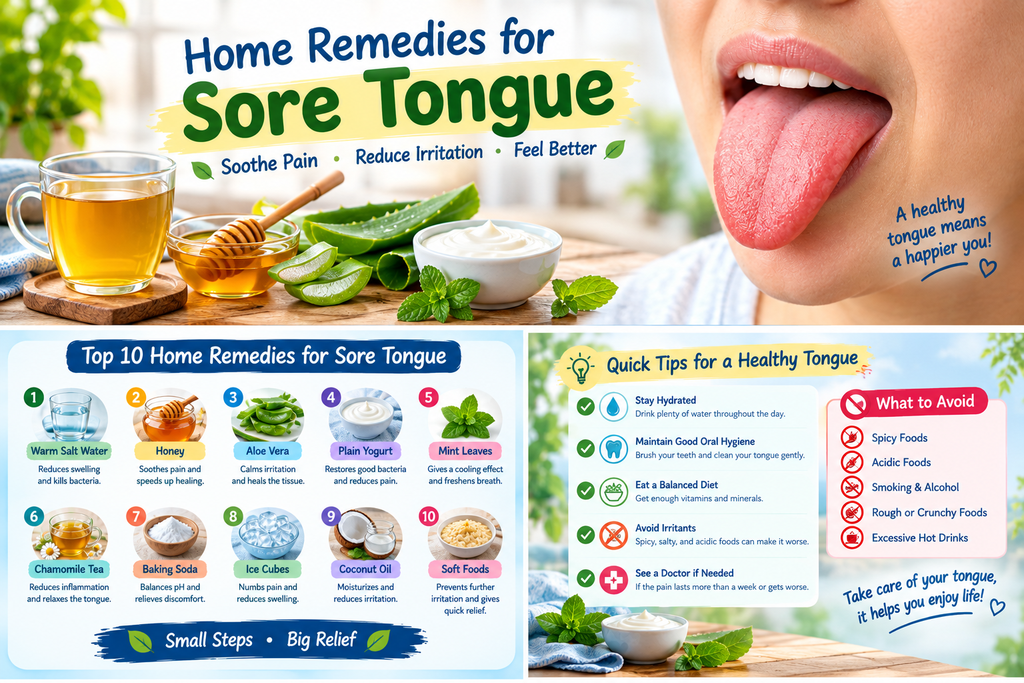
Home Remedies for Sore Tongue After a Burn
If your tongue became sore after eating or drinking something very hot, the first step is to stop eating the hot food or drink.
What may help
- Sip cool water
- Try small ice chips
- Avoid spicy and acidic foods
- Eat soft foods
- Avoid very hot food and drinks
- Maintain gentle oral hygiene
Most minor tongue burns heal on their own. Cleveland Clinic notes that many tongue burns improve within about one to two weeks.
Home Remedies for Sore Tongue From a Mouth Ulcer
A mouth ulcer can appear on the tongue and may cause a small, painful sore.
To make the area more comfortable:
- Rinse with warm salt water
- Avoid spicy and acidic foods
- Avoid very hot drinks
- Choose soft foods
- Use a soft toothbrush
- Drink cool drinks
Most mouth ulcers heal without treatment within one or two weeks.
What Should You Avoid With a Sore Tongue?
While your tongue is healing, try to avoid things that increase irritation.
Avoid:
- Very spicy foods
- Very hot food and drinks
- Acidic foods and drinks
- Rough or crunchy foods
- Smoking
- Alcohol
- Aggressive brushing
If a particular food, toothpaste or mouthwash consistently makes your symptoms worse, stop using it and ask a healthcare professional for advice.
For more medical information, you can read the NHS guide on sore tongue.
When Should You See a Doctor or Dentist?
Most mild tongue soreness is not serious, but persistent or unusual symptoms should not be ignored.
See a doctor or dentist if:
- Your tongue pain does not go away or gets worse
- You have persistent white patches
- You have a mouth ulcer lasting longer than 3 weeks
- A sore becomes increasingly painful, red or swollen
- You have repeated mouth ulcers
- You have difficulty eating or drinking
- You have significant swelling of the tongue
- You have other unexplained symptoms
NHS guidance recommends medical or dental assessment for tongue pain that does not go away or gets worse and for persistent white patches. It also recommends assessment of mouth ulcers lasting longer than three weeks.
Get Urgent Help for Severe Tongue Swelling
A suddenly swollen tongue can sometimes occur with an allergic reaction and may affect breathing.
If your tongue or mouth suddenly becomes very swollen and you are having trouble breathing or swallowing, seek emergency medical care immediately.
Frequently Asked Questions About Sore Tongue
What is the fastest home remedy for a sore tongue?
There is no single remedy that works fastest for every cause. For mild irritation, cool drinks, avoiding irritating foods and gentle oral care may help relieve discomfort while the tongue heals.
Does salt water help a sore tongue?
A warm salt-water rinse can help with discomfort from some mouth sores and ulcers. Mix about half a teaspoon of salt into a glass of warm water, rinse gently and spit it out.
Can I drink cold water with a sore tongue?
Yes. Cool drinks may help soothe an irritated or burned tongue. Drinking enough water can also help prevent dehydration and dry mouth.
Should I avoid spicy food when my tongue hurts?
Yes. Spicy foods can irritate sensitive mouth tissues and may increase discomfort. It is reasonable to avoid them temporarily while your tongue heals.
How long does a sore tongue usually last?
It depends on the cause. A minor burn or irritation may improve within several days, while mouth ulcers commonly heal within one to two weeks. Persistent symptoms should be checked by a healthcare professional.
Why is my tongue sore and white?
A sore or white tongue can have several causes, including irritation, mouth ulcers, oral thrush and other conditions. It is better not to self-diagnose based only on appearance. Persistent white patches should be evaluated by a doctor or dentist.
Final Thoughts
There are several simple home remedies for sore tongue that may help reduce irritation and make you more comfortable. Cool drinks, warm salt-water rinses, soft foods, gentle brushing and avoiding spicy, acidic and very hot foods are practical options for mild symptoms.
However, a sore tongue can have many different causes. If the pain continues, becomes worse, or you notice persistent white patches, swelling or a mouth ulcer that lasts longer than three weeks, speak with a doctor or dentist rather than relying only on home remedies.
For daily healthy eating, you should also follow these healthy food tips for a better lifestyle.
Disclaimer: This article is for general educational purposes and does not replace medical diagnosis or treatment. If you have severe, persistent or worsening symptoms, seek advice from a qualified healthcare professional.
