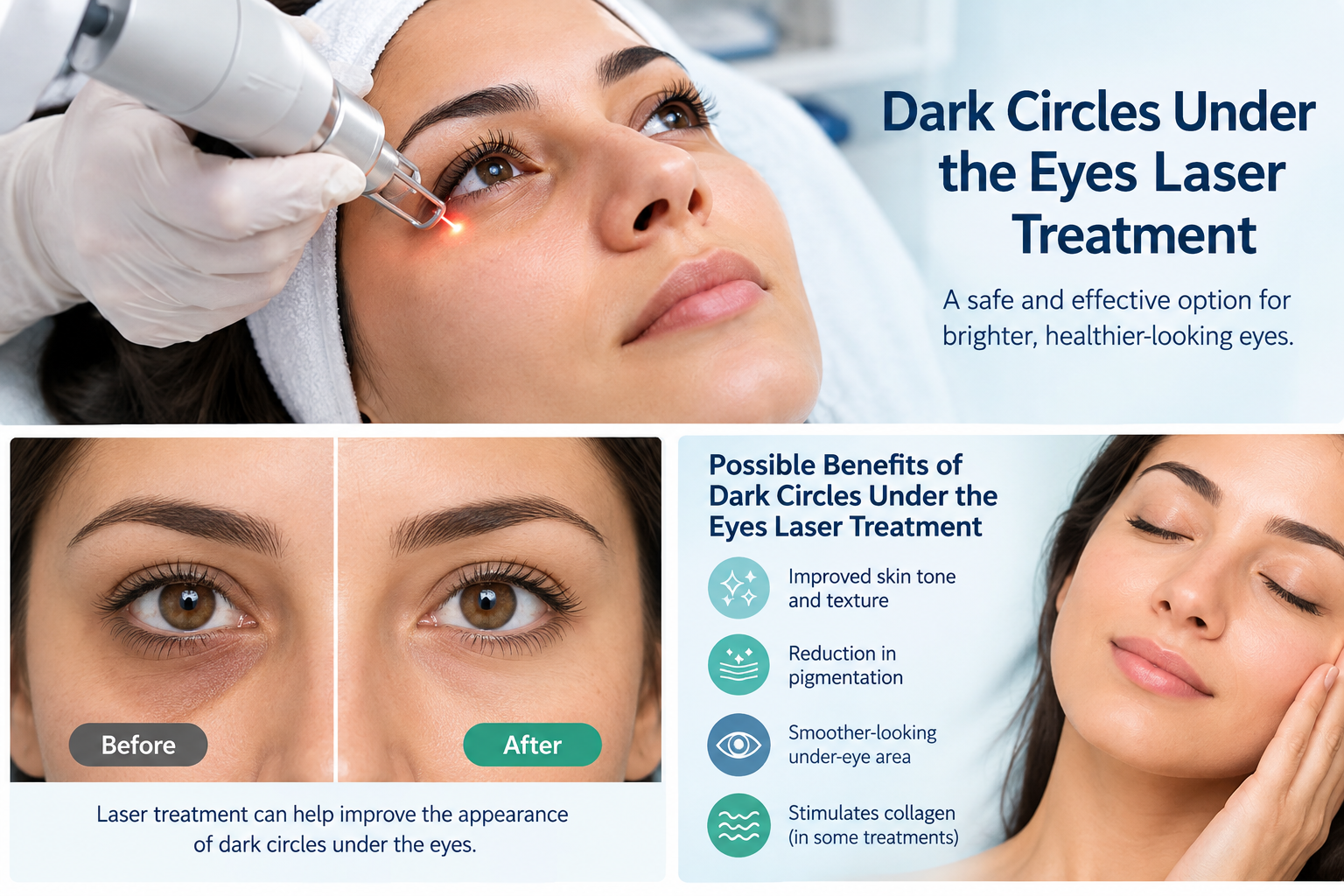
Dark Circles Under the Eyes Laser Treatment: Benefits, Risks & Results
Dark circles under the eyes are very common and can happen for many different reasons, including genetics, aging, lack of sleep, allergies, dehydration, pigmentation and changes in the skin around the eyes. Because the cause is not the same for everyone, treatment also depends on what is causing the dark appearance.
One option some people consider is dark circles under the eyes laser treatment. Laser procedures may help improve certain types of pigmentation and skin texture, but they are not a guaranteed solution for every type of dark circle.
This guide explains how laser treatment works, who may benefit, possible risks, recovery and other options to discuss with a qualified dermatologist.
Table of Contents
What Causes Dark Circles Under the Eyes?
Before considering dark circles under the eyes laser treatment, it is important to understand the possible cause.
Common causes include:
- Genetics and family history
- Aging and thinner skin
- Hyperpigmentation
- Lack of sleep
- Allergies
- Frequent eye rubbing
- Dehydration
- Sun exposure
- Tear-trough hollows that create shadows
- Lifestyle factors such as smoking
For extra care for dry and rough skin, you can also read our guide on Medline Remedy Specialized Skin Cream.
What Is Dark Circles Under the Eyes Laser Treatment?
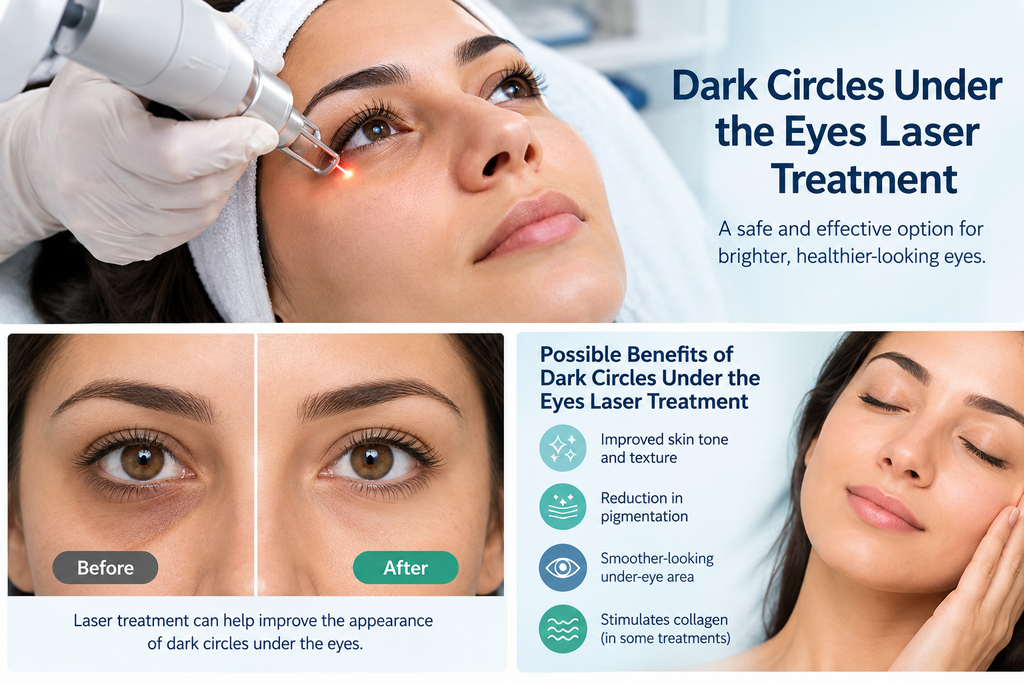
Dark circles under the eyes laser treatment uses concentrated light energy to target specific concerns in the skin around the eyes.
Depending on the treatment and the patient’s skin concerns, laser or light-based procedures may be used to address pigmentation, uneven skin texture or signs of aging. Some laser procedures also stimulate collagen and can make treated skin appear smoother and firmer.
However, there is no single laser that works for every type of dark circle. A dermatologist should first determine whether pigmentation, visible blood vessels, thin skin, hollowness or another factor is contributing to the appearance.
How Does Laser Treatment Work?
During dark circles under the eyes laser treatment, a dermatologist or qualified laser professional directs controlled light energy toward the treatment area.
The exact procedure depends on the laser or light-based technology being used. Some treatments are designed to affect pigmentation, while others are used for skin resurfacing and collagen stimulation.
The goal may be to improve the appearance of the under-eye skin rather than completely eliminate dark circles.
Potential Benefits of Laser Treatment
Depending on the cause of the dark circles and the treatment selected, possible benefits may include:
1. Improved Skin Tone
Some laser treatments can target pigmentation and may help improve uneven skin color.
2. Smoother-Looking Skin
Certain resurfacing procedures can improve skin texture and stimulate new collagen production.
3. Reduction in the Appearance of Pigmentation
When pigmentation is a major contributor, a suitable laser or light-based procedure may reduce its appearance.
4. Treatment of Fine Lines
Some laser resurfacing procedures are also used for fine lines and wrinkles around or under the eyes.
Is Laser Treatment Suitable for Everyone?
Not necessarily.
The right treatment depends on your skin type, the cause of your dark circles, the condition of the skin around your eyes and your medical history.
For example, some laser procedures carry a greater risk of hyperpigmentation in people with darker skin tones. Cleveland Clinic specifically notes that darker skin can have increased risk of hyperpigmentation with certain laser and light-based facial treatments.
That is why an in-person assessment by a qualified dermatologist is important before choosing dark circles under the eyes laser treatment.
What Happens During the Treatment?
The exact process varies depending on the laser technology.
Generally, the provider will:
- Examine the skin around your eyes.
- Determine the likely cause of the dark circles.
- Discuss suitable treatment options.
- Prepare and protect the treatment area.
- Apply the selected laser or light-based treatment.
- Give you aftercare instructions.
Some non-ablative laser treatments can involve little or no downtime, while some ablative resurfacing procedures require more recovery.
Possible Side Effects and Risks
For more information about laser treatments and their uses, see our recommended dermatology resource: Laser Treatments for Skin Conditions.American Academy of Dermatology – Laser Treatments Cleveland Clinic – Dark Circles Under the Eyes Like other cosmetic procedures, dark circles under the eyes laser treatment can have potential side effects.
Depending on the treatment, these may include:
- Redness
- Swelling
- Temporary irritation
- Skin sensitivity
- Changes in pigmentation
- Burning or discomfort
- Longer recovery with some resurfacing procedures
The risk profile depends on the specific laser, treatment settings and your skin type.
Because the skin around the eyes is delicate, treatment should be performed by an appropriately qualified professional with experience treating the eye area.
How Long Does Recovery Take?
Recovery depends on the type of laser used.
Some non-ablative treatments may have minimal downtime, while more intensive resurfacing treatments can require a longer recovery period.
Your provider should explain:
- How long redness may last
- When you can return to normal activities
- What skincare products to avoid
- How to protect your skin from the sun
- When follow-up appointments are needed
Do not assume that every laser treatment has the same recovery period.
Laser Treatment vs Other Dark Circle Treatments
Laser therapy is only one possible treatment.
Depending on the cause, a dermatologist may discuss other options such as:
Topical Treatments
Certain topical products may help address pigmentation or improve the appearance of the skin.
Chemical Peels
Chemical peels can be used to address pigmentation and other skin concerns in appropriate patients.
Dermal Fillers
If hollowness or tear troughs create shadows under the eyes, fillers may sometimes be considered to restore volume.
Blepharoplasty
When excess skin or fat contributes to under-eye bags and shadows, eyelid surgery may be an option for some people.
The most appropriate option depends on the underlying cause rather than simply the presence of dark circles.
Can You Reduce Dark Circles Naturally?
Not every person needs a cosmetic procedure.
Simple habits may help reduce or prevent some contributors to dark circles. These include getting enough sleep, protecting your skin from the sun, staying hydrated and avoiding frequent eye rubbing.
A cold compress may temporarily reduce puffiness, although it does not necessarily address the underlying cause of pigmentation.
How Much Does Dark Circles Under the Eyes Laser Treatment Cost?
The cost of dark circles under the eyes laser treatment can vary significantly.
Factors that can affect the price include:
- Type of laser or light treatment
- Number of sessions required
- Clinic location
- Provider’s experience
- Extent of the treatment
- Whether other treatments are combined with laser therapy
Because prices vary by location and treatment plan, it is better to ask a qualified clinic for an individual consultation and written price estimate rather than relying on a single general price.
Questions to Ask Your Dermatologist
Before starting treatment, consider asking:
- What is causing my dark circles?
- Which treatment is suitable for my skin type?
- What type of laser will be used?
- How many sessions might I need?
- What results are realistic?
- What are the possible side effects?
- How much downtime should I expect?
- What should I do before and after treatment?
- What alternatives are available?
These questions can help you understand whether laser treatment is appropriate for your particular situation.
When Should You See a Doctor?
Dark circles are usually not a serious medical problem. However, if discoloration or swelling suddenly appears around only one eye, or you notice other unusual symptoms, it is sensible to speak with a healthcare professional.
If allergies, eczema, irritation or another condition is contributing to the appearance, treating the underlying problem may be more useful than focusing only on cosmetic treatment.
FAQs About Dark Circles Under the Eyes Laser Treatment
Is dark circles under the eyes laser treatment permanent?
Not necessarily. Results depend on the cause of the dark circles, the treatment used and individual skin characteristics. Aging, genetics and other factors can continue to affect the under-eye area.
Does laser treatment completely remove dark circles?
Laser treatment may improve certain types of pigmentation or skin texture, but it cannot be expected to completely remove every type of dark circle.
Is laser treatment safe for darker skin?
Some laser procedures may carry a higher risk of pigmentation changes in darker skin. A qualified dermatologist should evaluate your skin type and choose an appropriate treatment approach.
How many laser sessions are needed?
There is no single number that applies to everyone. The number of sessions depends on the laser used, the cause of the dark circles and your response to treatment.
Are there alternatives to laser treatment?
Yes. Depending on the cause, options can include topical treatments, chemical peels, fillers or eyelid surgery.
Final Thoughts
Dark circles under the eyes laser treatment may be an option for some people, particularly when pigmentation or certain skin-texture concerns contribute to the appearance. However, dark circles have many possible causes, so the right treatment should be based on an individual assessment.
Before undergoing any laser procedure around the eyes, consult a qualified dermatologist or appropriately trained medical professional. Ask about the specific laser, expected results, possible risks, recovery time and alternatives.
Medical Disclaimer
This article is for general educational purposes only and does not replace professional medical advice, diagnosis or treatment. Cosmetic laser procedures should be discussed with a qualified healthcare professional who can assess your individual skin and medical history.
