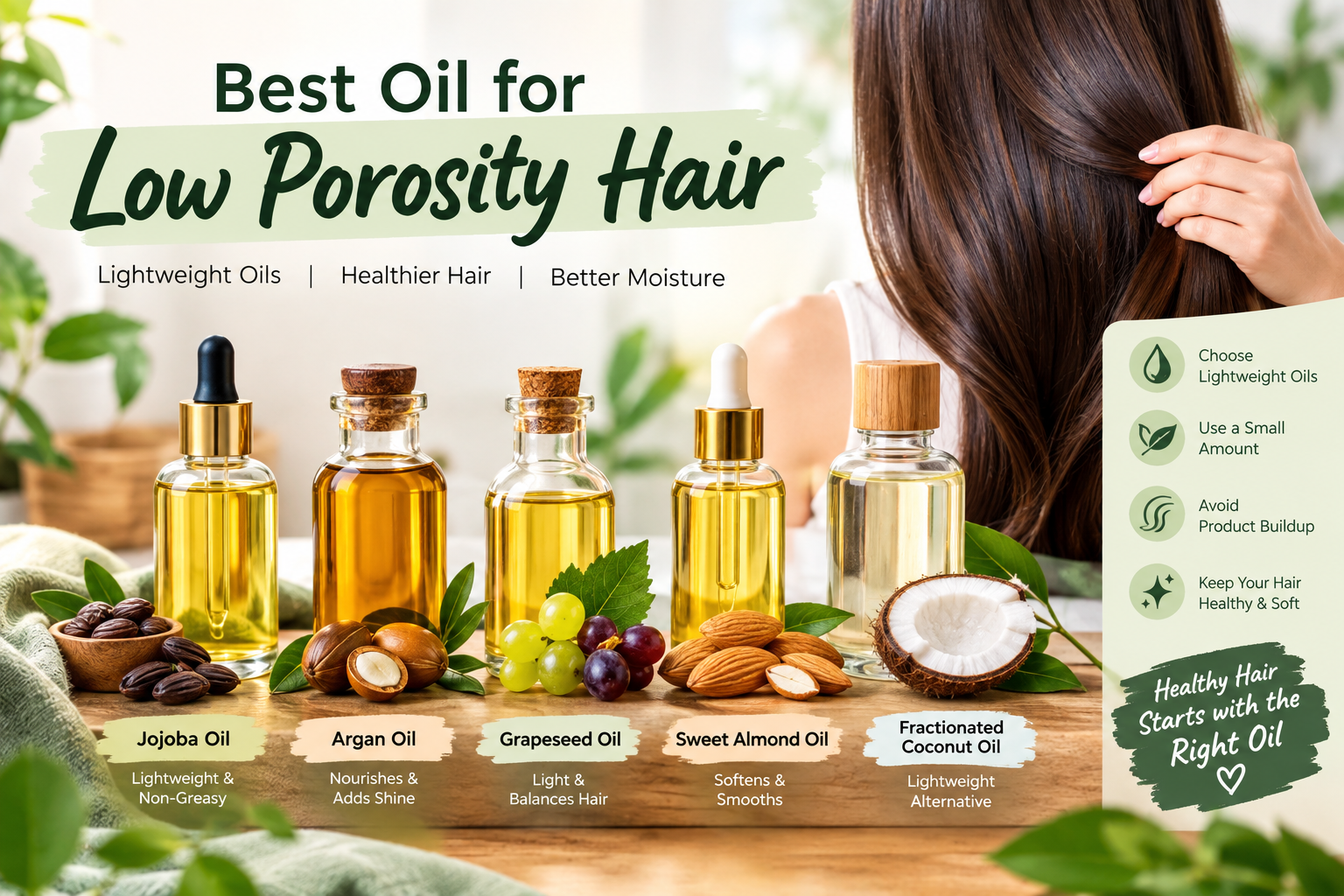
Finding the best oil for low porosity hair can be confusing because low porosity hair does not absorb moisture and hair products as easily as other hair types. Heavy oils may sit on the surface of the hair and make it look greasy or weighed down.
The good news is that lightweight oils can be easier to use. With the right oil, the right amount, and a simple routine, you can help your hair feel softer, smoother, and more manageable.
In this guide, we will discuss suitable oils for low porosity hair, how to use them, common mistakes, and tips for choosing an oil according to your hair type.
Table of Contents
What Is Low Porosity Hair?
Low porosity hair has a tightly packed cuticle layer. This can make it more difficult for water and hair products to enter the hair shaft.
Some common signs of low porosity hair include:
- Hair takes a long time to become completely wet.
- Water may sit on the surface before being absorbed.
- Hair products can build up easily.
- Heavy oils may make the hair greasy.
- Hair can take a long time to dry.
- Some conditioners and creams may feel like they simply sit on the hair.
Knowing your hair porosity can help you choose products that are easier for your hair to handle.
What Is the Best Oil for Low Porosity Hair?
There is no single oil that works perfectly for everyone. However, lightweight oils are often a practical starting point for low porosity hair.
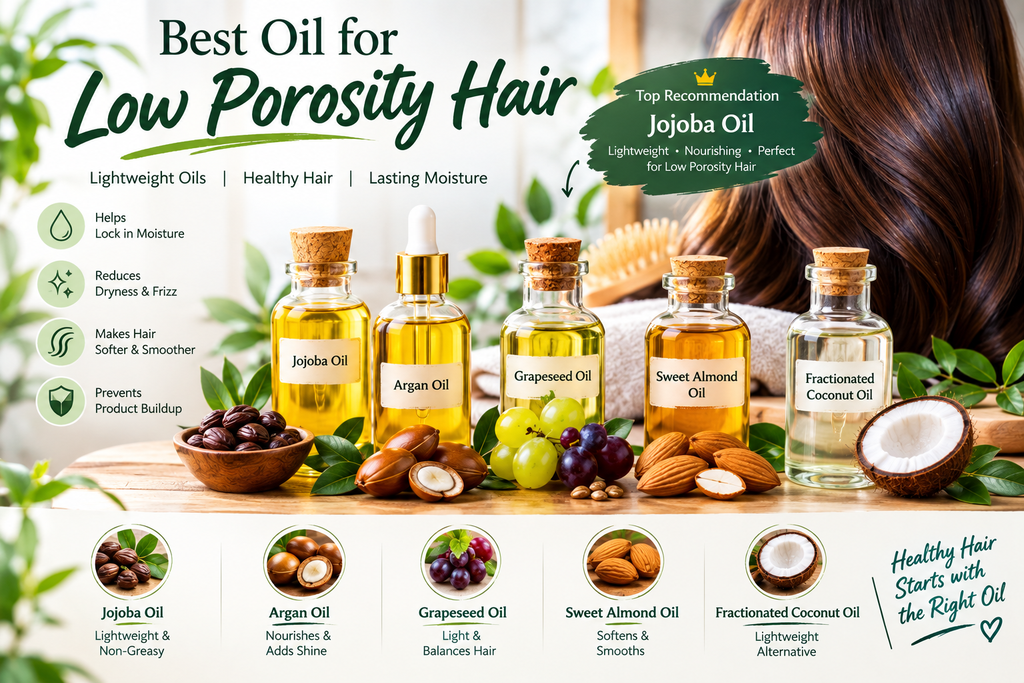
The best oil for low porosity hair is usually one that feels comfortable on your hair without leaving excessive buildup. Jojoba oil, argan oil, and grapeseed oil are some lightweight options people commonly consider.
Your hair texture also matters. Fine hair may need only a few drops, while thicker hair may tolerate a little more.
1. Jojoba Oil
Jojoba oil is a popular lightweight oil used in hair-care products. Its texture makes it a good option for people who do not want a heavy coating on their hair.
For someone searching for the best oil for low porosity hair, jojoba oil can be worth trying because a small amount can help improve the feel and appearance of the hair without making it excessively oily.
Apply a few drops to damp hair, focusing mainly on the mid-lengths and ends.
2. Argan Oil
Argan oil is another popular choice for hair care. It contains fatty acids and vitamin E and is often used to help improve the appearance of dry, frizzy, or rough-looking hair.
If you are looking for the best oil for low porosity hair, argan oil may be a useful option because it can be applied in a very small quantity.
Start with two or three drops and spread the oil between your palms before applying it to your hair.
3. Grapeseed Oil
Grapeseed oil has a relatively lightweight texture and is commonly included in hair-care products.
It can be particularly useful for people who find heavier oils difficult to wash out. A small amount can be applied to the ends or dry areas of the hair.
When choosing the best oil for low porosity hair, grapeseed oil is another option you can test as part of a simple routine.
4. Sweet Almond Oil
Sweet almond oil is another oil commonly used for hair care. It can help make hair feel smoother and softer.
However, it may feel heavier than some lightweight oils. If you have fine low porosity hair, begin with a very small amount and see how your hair responds.
Avoid applying a large quantity simply because your hair feels dry.
5. Fractionated Coconut Oil
Coconut oil is widely used in hair care, but regular coconut oil can feel heavy for some people with low porosity hair.
Fractionated coconut oil has a lighter texture and may be easier to incorporate into a hair-care routine.
However, everyone’s hair responds differently. If coconut oil makes your hair feel stiff, coated, or difficult to wash, consider using a lighter alternative.
How to Choose the Best Oil for Low Porosity Hair
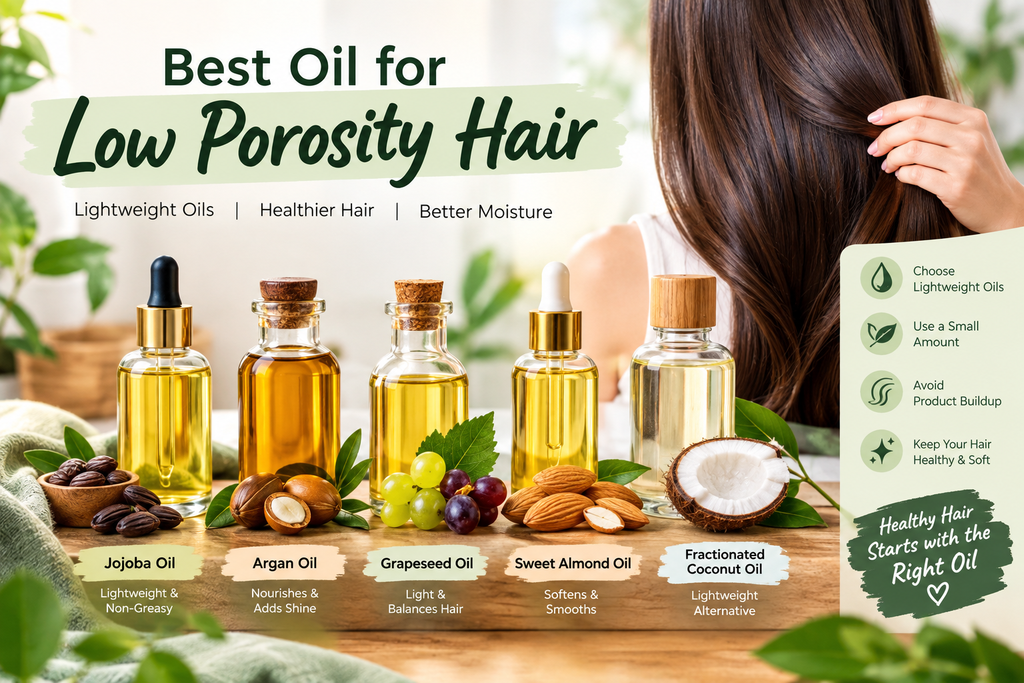
Choosing an oil should depend on how your hair responds rather than simply following a popular recommendation.
Choose a Lightweight Oil
Low porosity hair can be prone to buildup, so lightweight oils may be easier to manage.
Start With a Small Amount
More oil does not necessarily mean better results. Start with a few drops and increase the amount only if necessary.
Consider Your Hair Texture
Fine hair can become weighed down quickly, while thicker hair may tolerate a slightly larger amount.
Watch for Buildup
If your hair becomes dull, sticky, greasy, or coated, you may be using too much oil or too many styling products.
How to Use Oil on Low Porosity Hair
Using the best oil for low porosity hair is only one part of an effective routine. Application also matters.
Step 1: Clean Your Hair
Start with freshly washed hair according to your normal hair-care routine.
Step 2: Use Slightly Damp Hair
Applying a small amount of oil to slightly damp hair can help your hair feel smoother.
Step 3: Warm the Oil Between Your Hands
Place a few drops in your palms and gently rub your hands together.
Step 4: Apply to the Lengths and Ends
Distribute the oil mainly through the mid-lengths and ends. Avoid using a large amount directly on the scalp unless the product is specifically intended for scalp use.
Step 5: Avoid Over-Oiling
If your hair looks greasy or feels heavy, use less oil next time.
Should You Oil Low Porosity Hair Before or After Washing?
Both methods can be used, depending on your hair’s needs.
Before Washing
A small amount of oil can be applied before shampooing and then washed out during your normal cleansing routine.
This approach may be useful if your hair tends to feel dry after washing.
After Washing
You can also apply a few drops after washing, especially to the ends. This can help improve the hair’s appearance and make it feel smoother.
If you are testing the best oil for low porosity hair, try one method at a time so you can easily see how your hair responds.
For more information about hair oiling and how to use hair oils properly, visit the Cleveland Clinic guide on hair oiling.
Common Mistakes to Avoid
Using Too Much Oil
Applying a large amount can leave low porosity hair greasy and difficult to cleanse.
Oiling Every Day
Daily oiling is not necessary for everyone. Excessive use can contribute to buildup.
Mixing Too Many Products
Using several oils, creams, leave-in conditioners, and styling products at the same time can make it difficult to identify what works for your hair.
Ignoring Your Hair’s Response
If an oil makes your hair feel heavy, stiff, sticky, or coated, reduce the amount or try another lightweight option.
How Often Should You Oil Low Porosity Hair?
There is no universal schedule for everyone. You may start with once a week and observe how your hair responds.
If your hair remains soft and comfortable, you can continue with the same routine. If it becomes greasy or heavy, reduce the amount or frequency.
The best oil for low porosity hair is not necessarily the oil you use most often. The goal is to find a product and routine that your hair tolerates well.
Best Oils for Different Low Porosity Hair Needs
| Hair Need | Oil to Consider |
|---|---|
| Lightweight moisture | Jojoba oil |
| Dry-looking hair | Argan oil |
| Fine hair | Grapeseed oil |
| Smoother-looking hair | Sweet almond oil |
| Alternative to regular coconut oil | Fractionated coconut oil |
These are general options rather than guaranteed solutions. Your hair texture and individual response should guide your choice.
Frequently Asked Questions
What is the best oil for low porosity hair?
Jojoba, argan, and grapeseed oils are lightweight options that many people consider suitable for low porosity hair. Start with a small amount and see how your hair responds.
Is coconut oil good for low porosity hair?
Coconut oil can work for some people, but it may feel heavy for others. If regular coconut oil leaves your hair coated or stiff, consider a lighter alternative.
Can I oil low porosity hair every day?
Daily oiling is generally unnecessary. Using a small amount once a week may be a reasonable starting point, but your hair’s response should determine your routine.
Should I apply oil to wet or dry hair?
A small amount can be applied to slightly damp hair after washing. You can also apply a few drops to dry ends when needed.
Is argan oil good for low porosity hair?
Argan oil is a lightweight option that can be used in small amounts. It may help improve the appearance and feel of dry or frizzy hair.
Final Thoughts
Choosing the best oil for low porosity hair is mainly about finding a lightweight product that does not leave your hair excessively greasy or coated.
Jojoba oil, argan oil, and grapeseed oil are useful options to consider. Start with a small amount, avoid excessive product buildup, and give your hair time to show you what works.
Remember that low porosity hair can respond differently from person to person. A simple routine with the right amount of product is often easier to manage than using several heavy oils and treatments together.
For more natural skincare and beauty ideas, check out our guide on natural beauty tips for women Philippines.
