Hair fall can happen for many different reasons, including stress, genetics, nutritional problems, hormonal changes, scalp conditions, and hair damage. Choosing the best oil for hairfall can be a useful part of a gentle hair-care routine, but no single oil can treat every cause of hair loss.
Hair oils can help condition the hair, reduce dryness, improve manageability, and protect the hair shaft from some types of damage. However, persistent or sudden hair loss may require professional evaluation to identify the underlying cause.
In this guide, we will discuss popular oils for hair fall, how to use them, which oil is a practical starting choice, common mistakes to avoid, and when you should consider seeing a dermatologist.
Table of Contents
What Causes Hair Fall?
Before choosing the best oil for hairfall, it is important to understand that hair fall can have many causes.
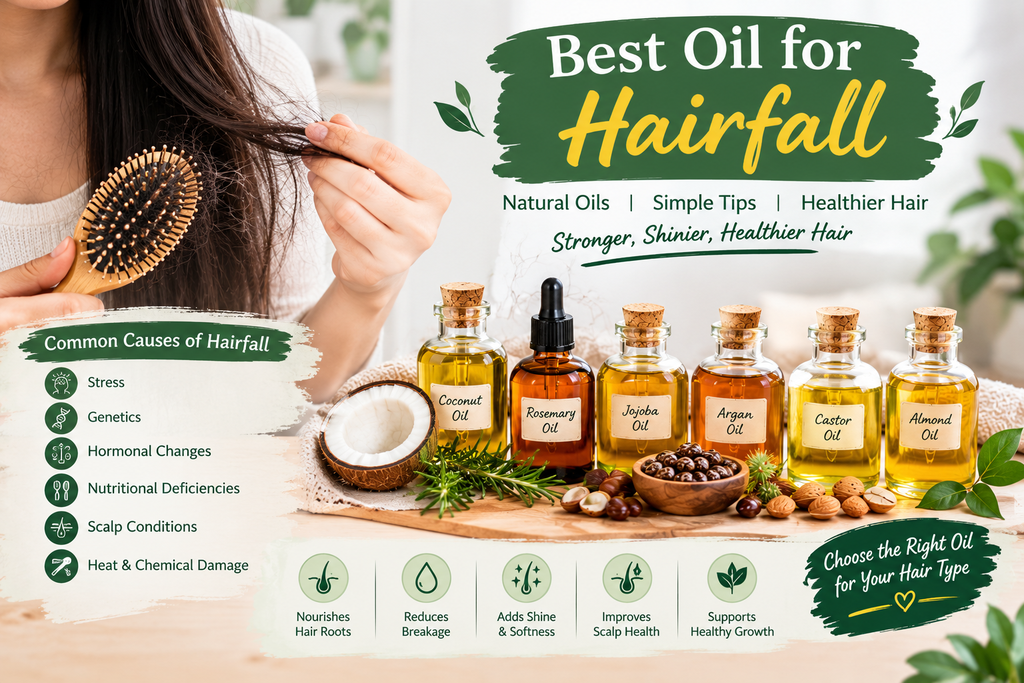
Common factors include:
- Stress
- Hereditary hair loss
- Hormonal changes
- Nutritional deficiencies
- Certain illnesses
- Scalp conditions
- Tight hairstyles
- Excessive heat styling
- Chemical hair treatments
- Frequent hair breakage
Because the cause matters, oiling alone may not solve persistent hair loss.
What Is the Best Oil for Hairfall?
There is no single oil that is guaranteed to work for everyone. However, some oils are commonly used to condition the scalp and hair.
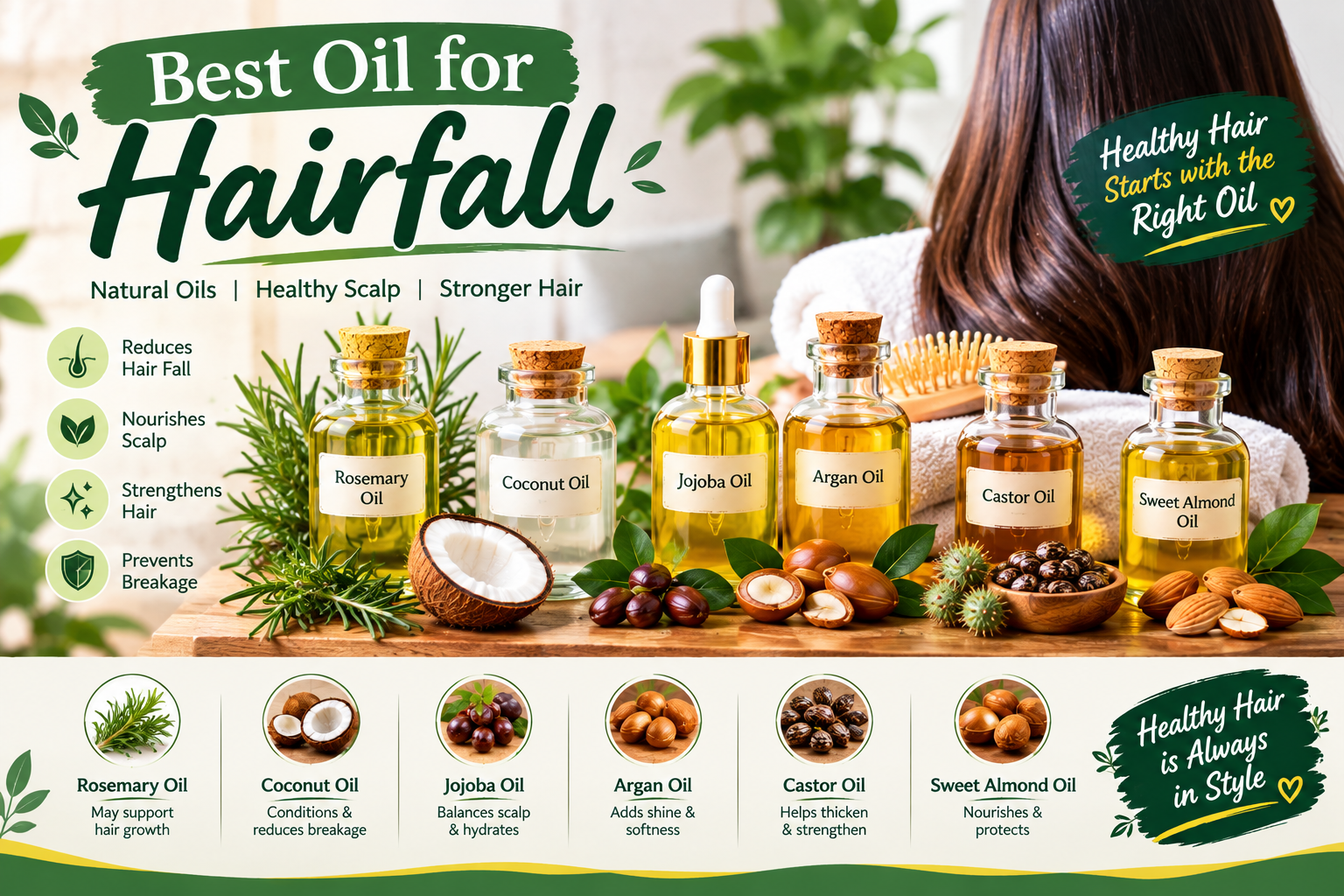
Popular options include:
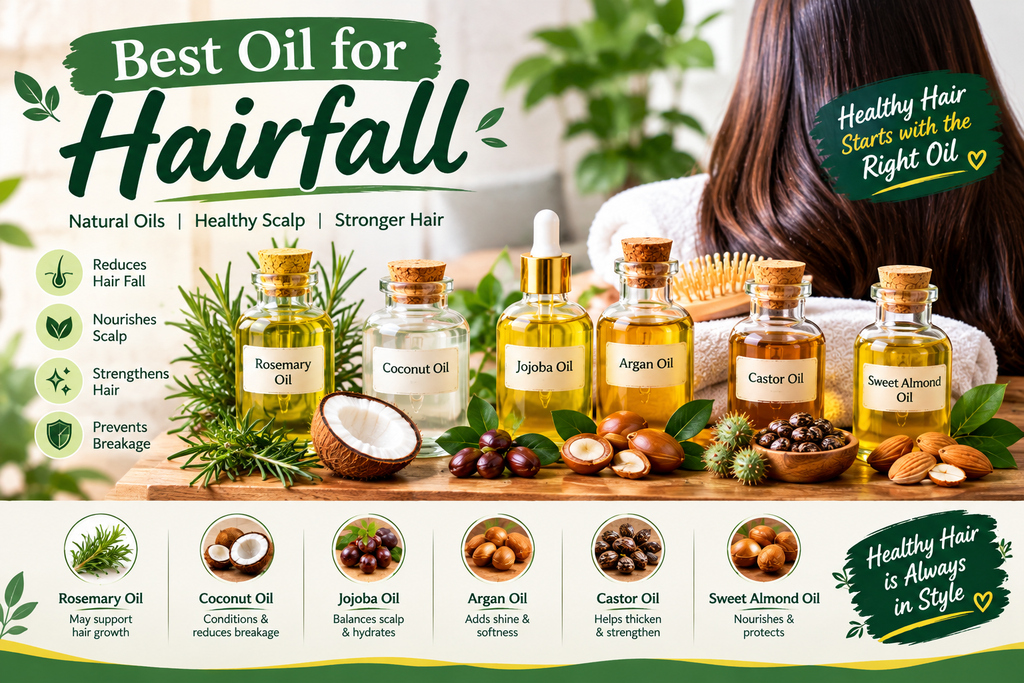
- Rosemary oil
- Coconut oil
- Jojoba oil
- Argan oil
- Castor oil
- Almond oil
If you are searching for the best oil for hairfall, rosemary oil is one option that has received scientific interest, while coconut oil is widely used for conditioning and protecting the hair shaft.
Our Clear Oil Recommendation: Rosemary Oil
If you want one clear recommendation, rosemary oil is our top oil to consider for hair fall, particularly when used correctly as part of a broader hair-care routine.
Some research has investigated rosemary oil for hair growth, but it should not be treated as a guaranteed cure for every type of hair loss.
Because rosemary is an essential oil, it should be properly diluted with a suitable carrier oil before scalp application. Never apply concentrated rosemary essential oil directly to your scalp.
1. Rosemary Oil
Rosemary oil is one of the most commonly discussed natural oils for hair growth and hair fall.
It is usually used by mixing a small amount of rosemary essential oil with a carrier oil such as jojoba or coconut oil.
If you are choosing the best oil for hairfall, rosemary oil can be considered when used safely and consistently.
Stop using it if you experience burning, redness, itching, or other irritation.
2. Coconut Oil
Coconut oil is widely used in hair care. It can help condition the hair and may reduce protein loss from the hair shaft.
It is especially useful for dry or damaged hair that tends to break easily.
However, coconut oil mainly supports the condition of the hair itself. It should not be considered a guaranteed treatment for hair loss caused by hormonal, genetic, or medical conditions.
3. Jojoba Oil
Jojoba oil has a relatively lightweight texture and is commonly used in hair-care products.
It can help condition the hair and may be suitable for people who dislike heavy oils.
Jojoba oil can also be used as a carrier oil when diluting essential oils such as rosemary oil.
4. Argan Oil
Argan oil is another popular choice for dry or frizzy hair. It can help make the hair feel smoother and improve its appearance.
If your hair fall is partly related to breakage from dryness or excessive styling, conditioning the hair with a suitable oil may help reduce further mechanical damage.
However, argan oil does not treat every underlying cause of hair loss.
5. Castor Oil
Castor oil is frequently promoted as a natural hair-growth oil because of its thick texture.
It can help coat and condition the hair, but there is limited evidence that castor oil itself can reliably stimulate new hair growth.
If you use it, start with a small amount because its thick consistency can be difficult to wash out.
6. Sweet Almond Oil
Sweet almond oil is commonly used to soften and condition the hair.
It can be useful for people with dry-looking hair, particularly when applied to the lengths and ends.
As with other oils, it should be viewed as a hair-care product rather than a guaranteed treatment for medical hair loss.
How to Use Hair Oil Safely
Using the best oil for hairfall is only part of a good routine. Correct application is also important.
Step 1: Choose a Suitable Carrier Oil
If you are using rosemary essential oil, dilute it with a carrier oil such as jojoba or coconut oil.
Step 2: Perform a Small Patch Test
Before applying a new oil mixture to your entire scalp, test a small amount on a limited area of skin.
Step 3: Massage Gently
Apply the diluted oil to the scalp and massage gently with your fingertips.
Avoid aggressive rubbing or scratching.
Step 4: Leave It for a Comfortable Period
You do not need to leave oil on your scalp overnight if your scalp becomes irritated or greasy. Follow the instructions of the product you are using.
Step 5: Wash Thoroughly
Use a suitable shampoo to remove excess oil without aggressively scrubbing the scalp.
How Often Should You Oil Your Hair?
There is no universal schedule for everyone.
You might begin with oiling once or twice a week and observe how your scalp and hair respond.
If your scalp becomes greasy, itchy, irritated, or develops buildup, reduce the frequency or stop using the product.
The best oil for hairfall is not necessarily the oil you apply most often. Consistency and proper hair care are more important than excessive oiling.
For more information about rosemary oil and safe hair-care use, read this guide from Cleveland Clinic on rosemary oil for hair.
Common Mistakes When Using Hair Oil
Applying Essential Oil Directly
Never assume that an essential oil is safe to apply directly to the scalp. Concentrated essential oils can cause irritation.
Using Too Much Oil
More oil does not mean better results. Excess oil can make your scalp greasy and difficult to cleanse.
Scrubbing the Scalp Aggressively
A strong massage can irritate the scalp and may contribute to mechanical hair damage.
Expecting Instant Results
Hair growth is a gradual process. Do not expect a natural oil to produce overnight changes.
Ignoring the Cause of Hair Loss
If your hair is falling out because of an underlying medical or nutritional issue, oil alone may not address the problem.
Oil vs Hair Breakage: What Is the Difference?
It is important to understand the difference between hair shedding and hair breakage.
Hair shedding occurs when hairs naturally leave the follicle.
Hair breakage happens when the hair shaft breaks because of factors such as dryness, heat, chemical treatments, or mechanical damage.
Hair oils can help condition and protect the hair shaft, which may help with breakage. They do not necessarily treat the underlying cause of follicle-related hair loss.
Healthy Habits to Support Hair Health
Along with using the best oil for hairfall, consider these everyday habits:
- Eat a balanced diet.
- Include enough protein in your meals.
- Avoid very tight hairstyles.
- Reduce excessive heat styling.
- Handle wet hair gently.
- Keep your scalp clean.
- Get adequate sleep.
- Manage ongoing stress.
- Avoid unnecessary chemical treatments.
These habits can support overall hair health but cannot guarantee prevention of every type of hair loss.
When Should You See a Dermatologist?
You should consider professional evaluation if your hair loss is sudden, severe, persistent, or unusual.
Seek professional advice if you notice:
- Bald patches
- Rapid thinning
- A widening part
- Significant scalp itching or inflammation
- Hair loss accompanied by other symptoms
- Persistent shedding that does not improve
A dermatologist can help identify the cause and recommend an appropriate treatment.
Frequently Asked Questions
What is the best oil for hairfall?
Rosemary oil is a popular option to consider, particularly when properly diluted with a carrier oil. Coconut, jojoba, argan, castor, and almond oils are also commonly used for hair care.
Can rosemary oil stop hair fall?
Rosemary oil has been studied for hair growth, but it should not be considered a guaranteed solution for every type of hair loss. The underlying cause of hair fall matters.
Can coconut oil reduce hair fall?
Coconut oil can help condition and protect the hair shaft, which may help reduce breakage. However, it does not necessarily treat medical or genetic causes of hair loss.
How often should I oil my hair?
Many people can start with once or twice a week. Adjust the frequency according to your scalp and hair’s response.
Can I apply rosemary oil directly to my scalp?
Concentrated rosemary essential oil should not be applied directly to the scalp. Dilute it with an appropriate carrier oil and stop using it if irritation occurs.
If you have low porosity hair and want to choose the right oil, check out our complete guide on Best Oil for Low Porosity Hair.
Final Thoughts
Choosing the best oil for hairfall depends on your hair type, scalp condition, and the reason behind your hair loss. Rosemary oil is a reasonable option to consider, while coconut, jojoba, argan, castor, and almond oils can provide different conditioning benefits.
Remember that hair oil is only one part of a healthy hair-care routine. If your hair loss is sudden, severe, or persistent, identifying the underlying cause is more important than simply trying different oils.
Start with a small amount, use oils safely, avoid excessive application, and give your hair and scalp time to respond.
