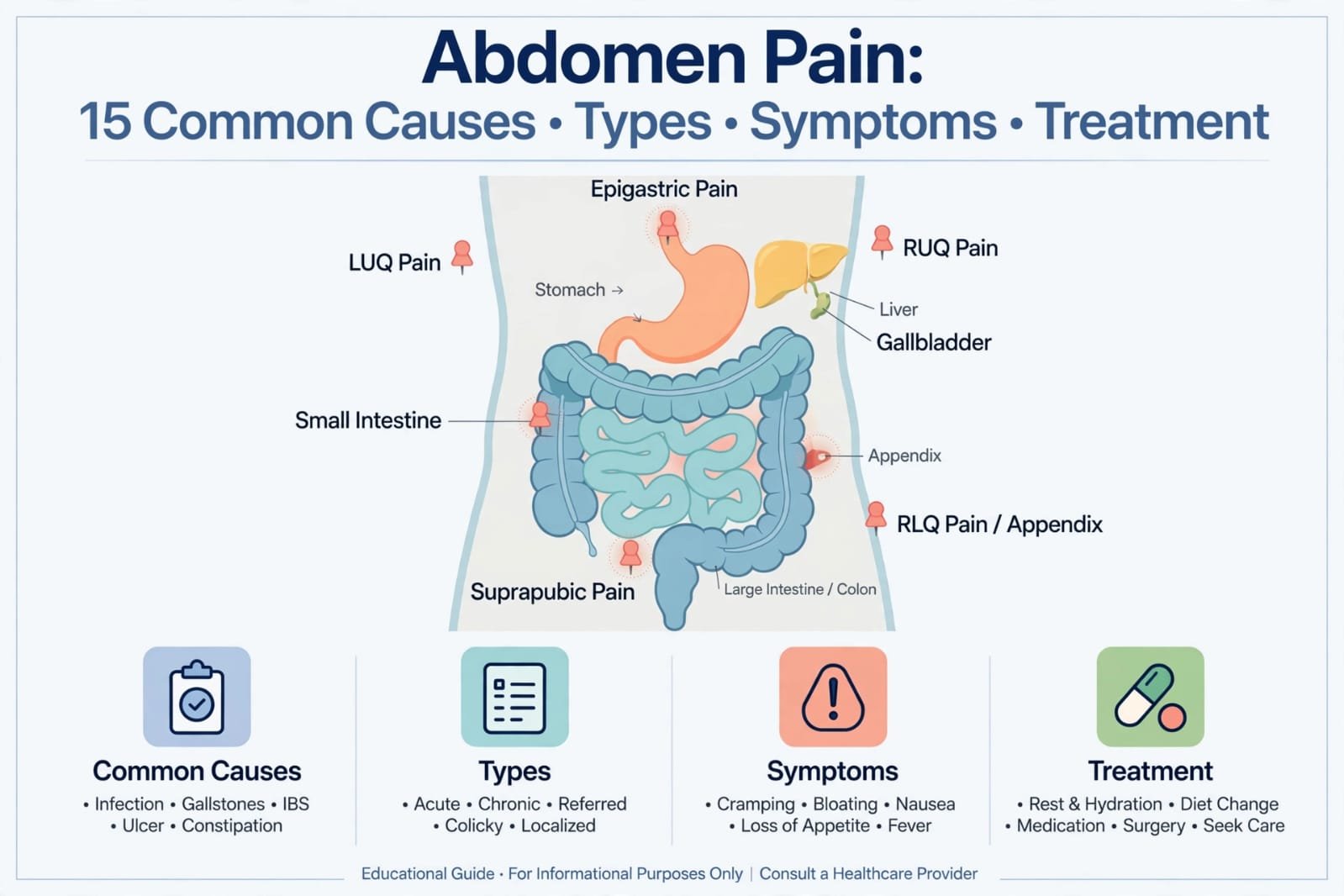
Abdomen pain is a common health concern that can affect people of all ages. It may feel like a mild ache, a sharp pain, burning, pressure, or cramps in the area between the chest and pelvis. Sometimes, the discomfort goes away on its own, while other cases may require medical attention.
Understanding the possible causes, symptoms, and treatment options can help you decide when to seek professional care. Digestive problems are common reasons for abdominal discomfort, but infections and conditions affecting organs such as the appendix, gallbladder, kidneys, or reproductive system can also cause pain.
In this guide, you will learn about 15 common causes, different types of pain, associated symptoms, treatment options, home care, and warning signs that should never be ignored.
Table of Contents
What Is Abdomen Pain?
Abdomen pain refers to discomfort anywhere between the lower chest and the pelvis. The abdomen contains several important organs, including the stomach, intestines, liver, pancreas, gallbladder, kidneys, and bladder.
The location and intensity of the pain may provide clues about its cause, but symptoms alone cannot confirm a diagnosis. Some minor conditions cause considerable discomfort, while serious illnesses may initially produce mild symptoms.
Pain can develop suddenly or gradually. It may last for a short time, return repeatedly, or continue for weeks. Identifying when the pain begins, where it occurs, and which other symptoms appear can help a healthcare professional determine the underlying problem.
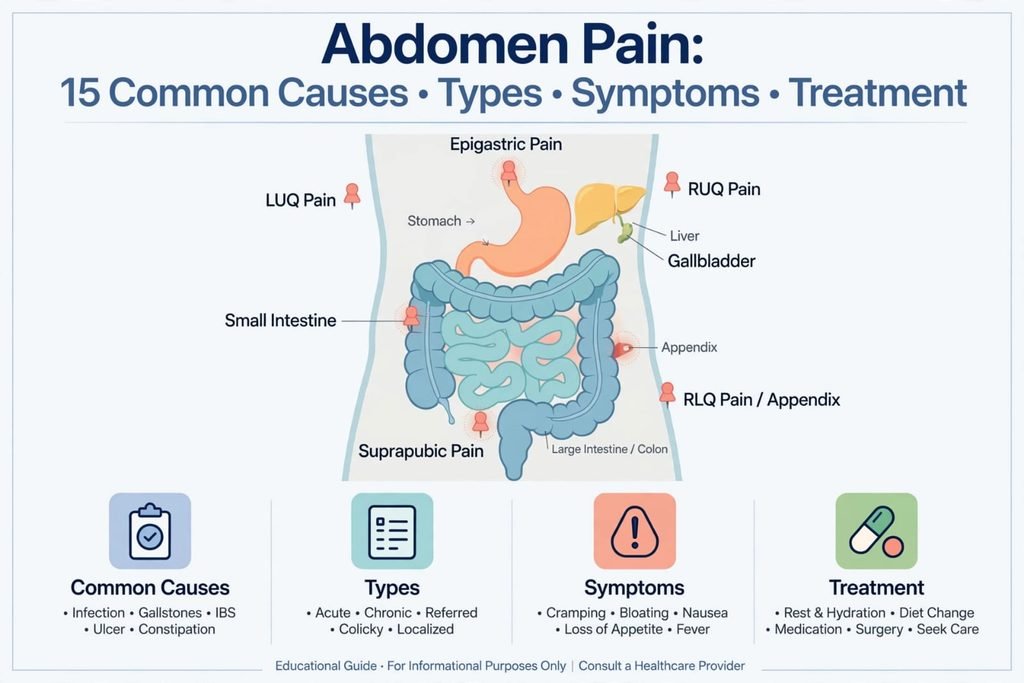
15 Common Causes of Abdomen Pain
There are many possible reasons for abdominal discomfort. The following are 15 common or important causes to understand.
1. Gas and Bloating
Gas develops when air is swallowed or bacteria break down certain foods in the digestive system. Trapped gas can cause pressure, bloating, and cramps.
Common symptoms:
- A feeling of fullness or swelling
- Passing gas more frequently
- Mild cramps that move around the abdomen
- Relief after passing gas or having a bowel movement
What may help: Eat slowly, avoid carbonated drinks if they trigger symptoms, and take a gentle walk after meals. Seek medical advice if the pain is severe or persistent.
2. Indigestion
Indigestion, also known as dyspepsia, can occur after eating too much, eating quickly, or consuming foods that trigger symptoms. It may also be associated with acid reflux or other digestive conditions.
Common symptoms:
- Discomfort in the upper abdomen
- Feeling full too quickly
- Nausea or bloating
- Burning or discomfort after meals
What may help: Try smaller meals and identify foods that worsen symptoms. A pharmacist or healthcare professional can advise whether an appropriate indigestion medicine may help.
3. Constipation
Constipation occurs when bowel movements become less frequent or stools become hard and difficult to pass. It can cause pressure and cramping in the lower abdomen.
Common symptoms:
- Hard or dry stools
- Straining during bowel movements
- Bloating
- Feeling that the bowel has not emptied completely
What may help: Drink enough water, increase dietary fibre gradually, and remain physically active. Persistent constipation or constipation accompanied by vomiting, severe pain, or an inability to pass gas needs prompt medical assessment.
4. Food Poisoning
Food poisoning can develop after eating or drinking something contaminated with harmful bacteria, viruses, or toxins. Symptoms may begin within hours or take longer to appear, depending on the cause.
Common symptoms:
- Stomach cramps
- Diarrhea
- Nausea and vomiting
- Fever in some cases
What may help: Take frequent small sips of fluids. An oral rehydration solution may help replace lost fluids and salts. Seek medical advice for bloody diarrhea, high fever, dehydration, severe pain, or vomiting that prevents you from keeping fluids down.
5. Gastroenteritis
Gastroenteritis is inflammation of the stomach and intestines, often caused by a viral infection. It is sometimes called a stomach bug.
Common symptoms:
- Watery diarrhea
- Abdominal cramps
- Vomiting or nausea
- Reduced appetite and tiredness
What may help: Rest and replace lost fluids. Wash your hands thoroughly to reduce the spread of infection. Contact a healthcare professional if symptoms are severe, persistent, or accompanied by signs of dehydration.
6. Irritable Bowel Syndrome (IBS)
Irritable bowel syndrome is a digestive condition that can affect bowel habits and cause recurring abdominal discomfort. Its symptoms may be triggered by certain foods, stress, or changes in routine.
Common symptoms:
- Repeated abdominal cramps
- Diarrhea, constipation, or both
- Excessive gas and bloating
- Changes in bowel movements
What may help: Keep a food and symptom diary, maintain regular meals, and discuss suitable dietary changes with a healthcare professional. Persistent symptoms should be assessed rather than automatically attributed to IBS.
7. Acid Reflux
Acid reflux happens when stomach contents flow back into the esophagus. It usually causes symptoms in the chest or upper abdomen and may worsen after meals or when lying down.
Common symptoms:
- Heartburn
- A sour taste in the mouth
- Burning discomfort after eating
- Symptoms that worsen when lying flat
What may help: Avoid lying down immediately after meals and identify foods that trigger your symptoms. Recurrent symptoms may require medical assessment and appropriate treatment.
8. Stomach Ulcers
Stomach ulcers are open sores in the lining of the stomach. They may be associated with Helicobacter pylori infection or the use of certain anti-inflammatory medicines.
Common symptoms:
- Burning or aching upper abdominal discomfort
- Nausea
- Feeling full or bloated
- Pain that may change around mealtimes
What may help: Treatment depends on the cause and may include acid-reducing medicines, antibiotics for confirmed H. pylori infection, or changes to medicines that contribute to ulcers. Never stop prescribed medication without medical advice.
Vomiting blood or passing black, tarry stools can indicate serious bleeding and requires emergency care.
9. Urinary Tract Infection (UTI)
A urinary tract infection can affect the bladder and cause discomfort in the lower abdomen. If the infection reaches the kidneys, symptoms may become more serious.
Common symptoms:
- Pain or burning during urination
- Frequent or urgent urination
- Lower abdominal discomfort
- Cloudy urine or blood in the urine
What may help: Seek medical advice for testing and appropriate treatment. Antibiotics may be needed for a bacterial infection. Fever, chills, or pain in the back or side can indicate a more serious infection.
10. Kidney Stones
Kidney stones are hard deposits of minerals that form in the kidneys. Pain may develop when a stone moves into the urinary tract.
Common symptoms:
- Severe pain in the side or back
- Pain that spreads toward the lower abdomen or groin
- Nausea or vomiting
- Blood in the urine
What may help: Treatment depends on the stone’s size, location, and associated complications. Some stones pass naturally, while others require medical procedures. Severe pain, fever, or difficulty passing urine needs urgent medical assessment.
11. Gallstones
Gallstones are hardened deposits that form in the gallbladder. Some people have no symptoms, while others develop episodes of pain when a stone blocks a bile duct.
Common symptoms:
- Pain in the upper-right abdomen
- Discomfort after a heavy or fatty meal
- Nausea or vomiting
- Pain that may spread to the back or right shoulder
What may help: Medical assessment is important if gallstones cause symptoms. Treatment may include surgery to remove the gallbladder, depending on the situation.
Severe or prolonged pain accompanied by fever or yellowing of the skin or eyes requires urgent medical attention.
12. Appendicitis
Appendicitis is inflammation of the appendix and can become a medical emergency. Pain often begins near the belly button and moves toward the lower-right abdomen, although symptoms can vary.
Common symptoms:
- Pain that gradually becomes worse
- Reduced appetite
- Nausea or vomiting
- Fever or pain that worsens with movement
What may help: Seek emergency medical assessment if appendicitis is suspected. Treatment commonly involves surgery, although selected cases may be managed with antibiotics under medical supervision. Do not try to treat suspected appendicitis at home.
13. Pancreatitis
Pancreatitis is inflammation of the pancreas, an organ involved in digestion and blood sugar regulation. Gallstones and heavy alcohol use are among its possible causes.
Common symptoms:
- Severe pain in the upper abdomen
- Pain spreading to the back
- Nausea and vomiting
- Fever or a tender abdomen
What may help: Suspected acute pancreatitis requires urgent hospital assessment. Treatment may include fluids, pain management, monitoring, and treatment of the underlying cause.
14. Menstrual Cramps and Other Pelvic Conditions
Menstrual cramps occur when the uterus contracts during a menstrual period. Other pelvic conditions, including endometriosis, ovarian cysts, and pelvic infections, can also cause lower abdominal pain.
Common symptoms:
- Cramping in the lower abdomen
- Pain that spreads to the lower back
- Discomfort around menstruation
- Pelvic pain or unusual bleeding, depending on the cause
What may help: Mild menstrual cramps may improve with a warm compress and suitable pain relief recommended by a healthcare professional. Severe, new, or recurring pelvic pain needs assessment.
If pregnancy is possible and abdominal pain occurs with vaginal bleeding, dizziness, fainting, or shoulder-tip pain, seek emergency care because an ectopic pregnancy is one possible cause.
15. Inflammatory Bowel Disease (IBD)
Inflammatory bowel disease includes Crohn’s disease and ulcerative colitis. These conditions cause ongoing inflammation in parts of the digestive tract.
Common symptoms:
- Repeated abdominal cramps
- Persistent diarrhea
- Blood or mucus in the stool
- Fatigue or unexplained weight loss
What may help: A healthcare professional may recommend blood tests, stool tests, imaging, or endoscopy. Treatment may involve anti-inflammatory medicines, immune-targeting treatments, dietary support, or surgery in selected cases.
Types of Abdomen Pain
The way pain feels can provide useful information, although it cannot identify the cause on its own.
1. Sharp Pain
Sharp pain may feel sudden, stabbing, or intense. It can occur with conditions such as appendicitis, kidney stones, or other abdominal problems. Sudden or severe sharp pain needs urgent medical assessment.
2. Dull or Aching Pain
Dull pain is often described as a persistent ache or pressure. It may occur with constipation, indigestion, or other conditions. Pain that continues or becomes worse should be checked.
3. Cramping Pain
Cramping pain often comes and goes in waves. Gas, diarrhea, menstrual cramps, and bowel conditions can cause this pattern.
4. Burning Pain
Burning discomfort in the upper abdomen may be associated with indigestion, acid-related conditions, or stomach ulcers. A healthcare professional can help determine the cause.
5. Colicky Pain
Colicky pain rises and falls in intensity, sometimes becoming severe before easing again. Kidney stones and gallstones are possible causes.
Symptoms That May Occur With Abdominal Pain
Additional symptoms can help a healthcare professional understand what is happening. Depending on the underlying cause, you may experience:
- Nausea or vomiting
- Diarrhea or constipation
- Bloating or excessive gas
- Fever or chills
- Loss of appetite
- Pain or burning during urination
- Blood in the stool or urine
- Unexplained weight loss
- Pelvic discomfort or unusual vaginal bleeding
Keep track of when symptoms started, where the pain occurs, and whether eating, movement, urination, or bowel movements affect it.
How Is Abdomen Pain Diagnosed?
A healthcare professional will usually ask about your symptoms, medical history, medicines, and the location and severity of the pain. They may examine your abdomen to check for swelling, tenderness, or other signs.
Depending on the suspected cause, investigations may include:
Blood tests: These can help identify signs of infection, inflammation, or problems involving certain organs.
Urine tests: These may help detect urinary tract infections, kidney stones, or other urinary problems.
Stool tests: These can help investigate some infections or digestive conditions.
Ultrasound: This imaging test may be used to examine organs such as the gallbladder, kidneys, and pelvic organs.
CT scans or other imaging: These may be needed when a more detailed assessment is necessary.
Endoscopy or colonoscopy: These procedures may be recommended to examine parts of the digestive tract when appropriate.
Not everyone needs every test. The choice depends on the symptoms, examination findings, and suspected condition.

Abdomen Pain Treatment Options
Treatment depends on the underlying cause rather than the location of the pain alone.
Treatment for Mild Digestive Discomfort
For mild symptoms without warning signs, a healthcare professional or pharmacist may recommend suitable treatment for gas, indigestion, or constipation. Dietary adjustments may also help when a specific food or eating habit triggers symptoms.
Treatment for Infections
Some infections improve with supportive care, including fluids and rest. Bacterial infections may require antibiotics, but antibiotics do not treat viral infections and should only be used when appropriate.
Treatment for Kidney or Gallstones
Some stones can pass without a procedure, while others require medication, surgery, or another medical intervention. The decision depends on the stone’s size, location, and complications.
Treatment for Chronic Digestive Conditions
Conditions such as IBS and inflammatory bowel disease may require an ongoing management plan. This can include dietary changes, medicines, and follow-up appointments.
Treatment for Emergency Conditions
Appendicitis, severe pancreatitis, intestinal obstruction, internal bleeding, and certain pregnancy-related conditions may require urgent hospital treatment.
For more information about possible causes of abdominal discomfort and when to seek medical care, read this helpful guide from MedlinePlus on abdominal pain.
Home Care Tips for Mild Abdominal Discomfort
Home care may help with minor, short-lived symptoms, but it should not replace medical assessment when warning signs are present.
- Drink fluids: Take small, frequent sips of water if you feel mildly unwell.
- Choose simple meals: Eat smaller portions and choose foods you tolerate comfortably.
- Avoid personal triggers: Limit greasy meals, carbonated drinks, or other foods that seem to worsen your symptoms.
- Rest when needed: Avoid strenuous activity while recovering from mild discomfort.
- Track your symptoms: Record the location, duration, severity, and any associated symptoms.
- Use medicines carefully: Ask a healthcare professional or pharmacist before taking pain relievers, laxatives, or other medicines, especially when the cause is unclear.
Do not rely on home remedies if the pain is severe, worsening, or accompanied by concerning symptoms.
When Should You Seek Medical Help?
Abdomen pain can sometimes indicate a serious condition, even if it initially seems mild. Get emergency medical help if you experience:
- Sudden, severe, or rapidly worsening pain
- A hard, swollen, or extremely tender abdomen
- Vomiting blood or passing bloody or black, tarry stools
- Persistent vomiting or an inability to keep fluids down
- Chest pain, difficulty breathing, fainting, or confusion
- Inability to pass stool or gas, especially with vomiting
- Severe pain with fever or signs of dehydration
- Abdominal pain during a possible pregnancy, especially with bleeding or dizziness
Arrange a medical appointment if the discomfort persists, repeatedly returns, interferes with daily activities, or occurs with unexplained weight loss, changes in bowel habits, or urinary symptoms.
Do not delay urgent care while trying home treatments.
Frequently Asked Questions (FAQs)
1. What are the most common causes of abdominal pain?
Common causes include gas, indigestion, constipation, food poisoning, gastroenteritis, and irritable bowel syndrome. However, appendicitis, kidney stones, gallstones, and other conditions can also cause pain.
2. Where is abdominal pain usually located?
Pain can occur in the upper, lower, left, or right abdomen, or across the entire area. The location may provide clues about the cause, but a medical assessment may be necessary to identify it.
3. How can I relieve mild abdominal discomfort at home?
For mild symptoms without warning signs, you may try drinking fluids, resting, eating smaller meals, and avoiding foods that trigger discomfort. Seek medical advice if symptoms persist or worsen.
4. Can stress cause abdominal pain?
Yes. Stress can affect digestion and may worsen symptoms in people with conditions such as irritable bowel syndrome. However, persistent or severe pain should not automatically be blamed on stress.
5. When is abdominal pain an emergency?
Sudden or severe pain, a rigid or very tender abdomen, vomiting blood, bloody or black stools, fainting, difficulty breathing, or severe pain during a possible pregnancy requires urgent medical attention.
6. Can abdominal pain go away on its own?
Mild discomfort caused by gas or temporary indigestion may improve without specific treatment. However, pain that persists, returns frequently, or occurs with other symptoms should be assessed by a healthcare professional.Vitamin D deficiency can affect bone health and may cause bone pain and muscle weakness. Learn more about Vitamin D Deficiency Disease and its common symptoms, causes, and treatment.
Final Thoughts
Abdominal discomfort can have many causes, ranging from temporary digestive problems to conditions that require urgent treatment. Paying attention to the location, duration, severity, and associated symptoms can help you recognize when medical advice is needed.
Although simple home care may help mild symptoms, it is important not to ignore persistent or worsening pain. A healthcare professional can identify the underlying cause and recommend appropriate treatment.
Medical disclaimer: This article is for general educational purposes only and does not replace professional medical advice, diagnosis, or treatment. Seek medical care when symptoms are severe, persistent, or concerning.
