
Dry, rough, flaky, or itchy skin is a common problem that can affect the face, hands, arms, legs, and other areas of the body. Weather, hot showers, harsh soaps, low humidity, and frequent washing can all contribute to dry skin.
The good news is that many mild cases can improve with simple changes to your daily skincare routine. If you are looking for dry skin treatment at home, the most important steps are keeping your skin moisturized, avoiding irritating products, and protecting your skin from excessive water and heat.
In this guide, you’ll learn simple ways to help soothe dry skin and keep it feeling softer and more comfortable.
Table of Contents
What Causes Dry Skin?
Dry skin happens when the skin loses too much water. Common causes include:
- Cold or dry weather
- Low humidity
- Long or hot showers
- Frequent bathing
- Harsh soaps or cleansers
- Over-scrubbing the skin
- Certain skincare products
- Aging
- Some skin conditions, such as eczema or psoriasis
- Some medications
Dry skin may feel tight, rough, itchy, flaky, or uncomfortable. In more severe cases, the skin can crack and even bleed.
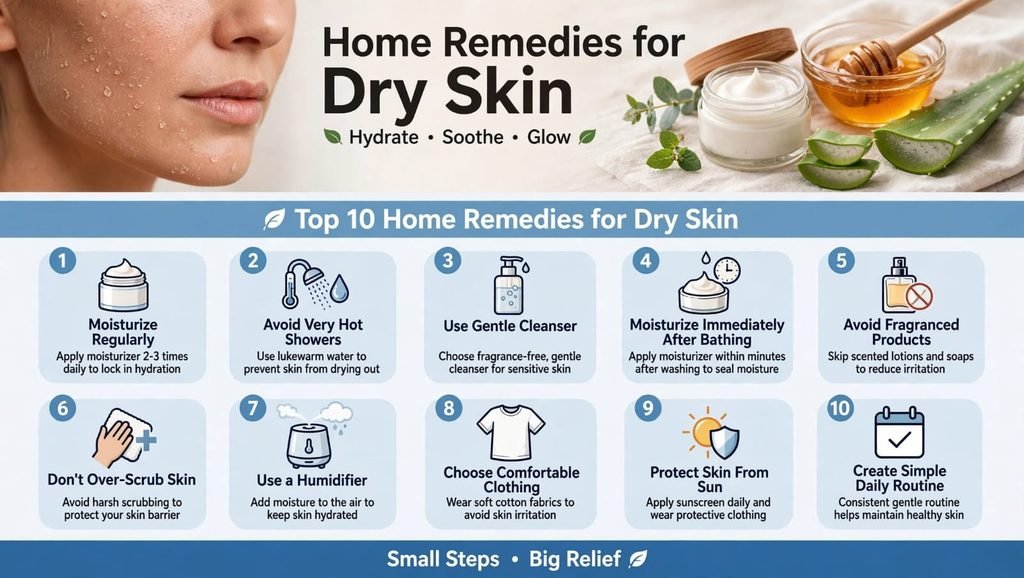
10 Dry Skin Treatment at Home Tips
1. Moisturize Your Skin Regularly
Moisturizer is one of the most important parts of dry skin treatment at home.
Apply a fragrance-free cream or ointment regularly, especially when your skin feels dry. Dermatologists generally recommend creams and ointments over lighter lotions for very dry skin because they can help hold moisture in the skin.
Useful moisturizing ingredients may include:
- Petrolatum
- Glycerin
- Ceramides
- Shea butter
- Dimethicone
- Hyaluronic acid
Apply moisturizer while your skin is still slightly damp after bathing to help lock in moisture.
2. Avoid Very Hot Showers
A long, hot shower may feel relaxing, but hot water can remove natural oils from the skin and make dryness worse.
Instead:
- Use warm or lukewarm water.
- Keep showers relatively short.
- Avoid spending a long time soaking in hot water.
- Gently pat your skin dry instead of rubbing it.
The American Academy of Dermatology recommends keeping baths and showers around 5–10 minutes and using warm rather than hot water.
3. Use a Gentle Cleanser
Harsh soaps and strongly fragranced products can irritate dry skin.
Choose a gentle, fragrance-free cleanser designed for dry or sensitive skin. You don’t necessarily need to create a thick lather over your entire body.
If your skin becomes tighter or more irritated after cleansing, consider switching to a gentler product.
4. Moisturize Immediately After Bathing
One simple dry skin treatment at home habit is to moisturize soon after you finish bathing.
After your shower:
- Gently pat your skin with a towel.
- Leave your skin slightly damp.
- Apply a fragrance-free cream or ointment.
- Reapply whenever your skin feels dry.
This helps reduce water loss from the skin’s surface.
5. Avoid Fragranced Skincare Products
Fragrance can irritate dry or sensitive skin.
When choosing a cleanser, moisturizer, or body wash, look for products labeled “fragrance-free.”
The term “unscented” does not always mean that a product contains no fragrance ingredients, so fragrance-free is generally the clearer choice for very dry or sensitive skin.
6. Don’t Over-Scrub Dry Skin
When skin becomes flaky, you may feel tempted to scrub it away.
However, aggressive scrubbing can further irritate dry skin and remove protective oils.
Instead:
- Avoid rough scrubbing.
- Avoid harsh exfoliation when your skin is irritated.
- Use a gentle cleanser.
- Focus on moisturizing regularly.
If your skin is very dry, improving moisture may be more helpful than trying to remove every flake.
7. Use a Humidifier
Dry indoor air can contribute to dry and itchy skin.
A humidifier can add moisture to the air, particularly when indoor heating or naturally dry weather makes the air less humid.
Keeping indoor humidity comfortable may help reduce moisture loss from the skin.
8. Protect Your Skin From the Sun
Sun exposure can contribute to skin damage and dryness.
When spending time outdoors, protect exposed skin with a broad-spectrum sunscreen with SPF 30 or higher, along with shade and protective clothing when appropriate.
9. Choose Comfortable Clothing
Some fabrics can irritate already-dry or sensitive skin.
Soft, breathable fabrics such as cotton may be more comfortable. If a particular fabric causes itching or irritation, consider avoiding direct contact with it.
Also, choose gentle laundry products if your skin is sensitive.
10. Create a Simple Daily Skincare Routine
A consistent routine can make dry skin treatment at home easier.
Morning
- Use a gentle cleanser if needed.
- Apply a fragrance-free moisturizer.
- Apply broad-spectrum SPF 30 or higher when going outdoors.
Evening
- Gently cleanse your skin.
- Pat your skin dry.
- Apply a thicker cream or ointment to dry areas.
- Reapply moisturizer to especially dry spots if needed.
The goal is not to use many products. A simple, consistent routine can be easier on dry skin. For more dermatologist-recommended tips on managing dry skin, see the Dermatologists’ Tips for Relieving Dry Skin guide from the American Academy of Dermatology.
Dry Skin Treatment at Home for the Face
Facial skin can be especially sensitive, so avoid using harsh ingredients or aggressive scrubs.
For dry facial skin:
- Use a gentle cleanser.
- Avoid very hot water.
- Apply moisturizer while the skin is slightly damp.
- Choose fragrance-free products.
- Avoid excessive exfoliation.
- Use sunscreen during the day.
If you have acne-prone skin, look for a moisturizer labeled non-comedogenic so it is less likely to clog pores.

Dry Skin Treatment at Home for Hands
Frequent handwashing can make the hands dry and cracked.
To help:
- Use a gentle cleanser.
- Avoid very hot water.
- Pat hands dry instead of rubbing.
- Apply moisturizer after washing.
- Use a thicker cream or ointment at night if your hands are very dry.
Moisturizing after handwashing is particularly useful for maintaining the skin barrier.
What Should You Avoid for Dry Skin?
If your skin is dry, try to avoid:
- Very hot showers
- Long baths
- Harsh soaps
- Strongly fragranced products
- Aggressive scrubbing
- Excessive exfoliation
- Products that sting or irritate your skin
If a skincare product consistently causes burning, stinging, or irritation, stop using it and consider discussing it with a dermatologist.
How Long Does It Take for Dry Skin to Improve?
Mild dry skin can improve after you change your skincare routine and moisturize consistently. The American Academy of Dermatology notes that when self-care is effective, improvement may be seen within about two weeks.
However, the exact time varies depending on the cause and severity of the dryness.
If your skin continues to be very dry despite proper skincare, another condition may be contributing to the problem.
When Should You See a Dermatologist?
Home care may not be enough if your dry skin is severe or persistent.
Consider seeing a dermatologist if:
- Dryness does not improve with regular skincare.
- Your skin becomes very painful.
- Your skin is severely itchy.
- Cracks are deep or bleeding.
- You develop open sores.
- Your skin becomes inflamed.
- Large areas become scaly or peel.
- You suspect you may have eczema, psoriasis, or another skin condition.
Persistent or severe dryness can sometimes be related to an underlying medical condition or medication, so professional evaluation may be helpful.
Frequently Asked Questions
1. What is the best dry skin treatment at home?
Regularly applying a fragrance-free cream or ointment, especially after bathing, is one of the most useful home-care steps. Using warm rather than hot water and avoiding harsh skincare products can also help.
2. How can I treat dry skin naturally at home?
A simple routine can include gentle cleansing, regular moisturizing, avoiding hot showers, protecting your skin from the sun, and using a humidifier when indoor air is dry.
3. Is petroleum jelly good for dry skin?
Petrolatum-based products can help reduce water loss from the skin and are commonly recommended for very dry skin.
4. How often should I moisturize dry skin?
Moisturize whenever your skin feels dry and especially after bathing or washing your hands. Very dry skin may need moisturizer several times a day.
5. When should I see a doctor for dry skin?
If dry skin continues despite self-care, becomes painful, cracks or bleeds, develops open sores, or is associated with significant irritation, consult a healthcare professional.
Final Thoughts
Finding the right dry skin treatment at home does not have to mean using many expensive products. A simple routine can make a significant difference: use a gentle cleanser, avoid very hot and long showers, moisturize regularly, protect your skin from the sun, and avoid products that irritate your skin.
If your dryness is severe, persistent, painful, or associated with cracks, bleeding, or other skin changes, it is better to speak with a dermatologist rather than relying only on home treatment.
If you have low porosity hair and want to choose the right oil, check out our complete guide on Best Oil for Low Porosity Hair.
Medical Disclaimer
This article is for general educational purposes only and is not a substitute for professional medical advice, diagnosis, or treatment. If you have severe, persistent, painful, or worsening skin symptoms, consult a qualified healthcare professional.
FAQs
1. What is the best dry skin treatment at home?
Regularly using a fragrance-free moisturizer, avoiding very hot showers, and using gentle skincare products are simple ways to help relieve dry skin.
2. How can I treat dry skin naturally at home?
You can help manage dry skin by taking short lukewarm showers, moisturizing while the skin is slightly damp, staying away from harsh soaps, and keeping indoor air comfortably humid.
3. How often should I moisturize dry skin?
Apply moisturizer whenever your skin feels dry, especially after bathing or washing your hands. Very dry skin may need moisturizing several times a day.
