
As temperatures fall, your skin may lose its usual softness and develop rough patches, visible flakes, or an uncomfortable feeling of tightness. These changes can be especially noticeable on the face, hands, and lower legs. Winter skincare often requires a few adjustments because cold weather, dry indoor air, and everyday washing habits can affect the skin’s natural protective barrier.
Understanding dryness of skin in winter can help you identify what your skin needs and avoid habits that make discomfort worse. You do not necessarily need a complicated skincare routine or expensive beauty products. Simple changes, such as adjusting your bathing temperature and choosing a suitable moisturizer, may help your skin retain moisture.
This guide explains the common causes of winter dryness, the moisturizing ingredients worth considering, practical prevention methods, and signs that may require professional attention.
Table of Contents
What Happens to Your Skin During Winter?
Your skin has a natural outer barrier that helps retain moisture and defend against everyday environmental irritants. It contains skin cells and natural lipids that help keep moisture inside while protecting against environmental irritants.
When this barrier loses moisture or becomes irritated, the surface may feel rough, look flaky, or become itchy. Some people experience occasional tightness, while others develop persistent dry patches that need extra care.
Your winter skincare needs depend on your surroundings and daily habits. Looking at factors such as bathing practices, indoor heating, and the products you use can help you decide which changes are most likely to benefit your skin.

6 Common Causes of Dryness of Skin in Winter
Understanding the possible triggers can make it easier to choose the right skincare habits.
1. Low Humidity and Chilly Weather
During colder weather, the amount of moisture available in the surrounding air is often lower. This dry environment can encourage water to escape from the skin’s surface, leaving it less supple than usual.
The effects may become noticeable after spending time outside or moving between cold outdoor conditions and heated indoor spaces. Areas that remain uncovered, such as the face and hands, can be particularly uncomfortable.
What may help: Apply a suitable moisturizer regularly and cover exposed skin when the weather is cold or windy.
2. Excessively Hot Showers
Hot water can feel comforting during winter, but prolonged exposure may remove some of the oils that help protect the skin. Repeated hot showers can leave your body feeling tight and rough after bathing.
Lukewarm water is usually sufficient for everyday washing and is less likely to strip away the skin’s protective oils than very hot water.
Keep showers relatively short and gently pat your skin dry with a soft towel. Applying moisturizer shortly afterward can help reduce moisture loss.
3. Dry Indoor Air
Heating systems can make indoor spaces comfortable while lowering their relative humidity. If you spend many hours in a heated room, your skin may become increasingly dry.
A humidifier can help add moisture to indoor air when humidity is low. Wash and maintain your humidifier as directed by its manufacturer, and replace the water as recommended. Regular care helps limit the buildup of unwanted microorganisms inside the device.
Avoid allowing excessive indoor humidity to build up, because persistent dampness can encourage mold growth.
4. Cleansers That Irritate the Skin
Some soaps, fragranced cleansers, and strong exfoliating products can leave the skin irritated or excessively dry. Using several active skincare products together may also cause problems, particularly if your skin is already sensitive.
Try choosing a gentle, fragrance-free cleanser and avoid scrubbing dry areas aggressively. If a product repeatedly causes burning, redness, or itching, stop using it and consider professional advice if the reaction persists.
5. Clothing and Environmental Friction
Rough fabrics, tight collars, and repeated rubbing can make irritated skin feel worse. Wool and other coarse materials may bother people who have sensitive skin.
Windy winter conditions can increase discomfort on uncovered skin, particularly around the cheeks, lips, and hands. Covering these areas and applying a suitable moisturizer before going outdoors may help protect them.
Comfortable clothing with a soft layer next to the skin may reduce unnecessary friction.
6. Existing Skin Conditions
People who have eczema or naturally sensitive skin may experience more irritation when winter weather and dry indoor air affect their skin barrier.
Persistent dryness may also be associated with certain medications or other health conditions. If the problem repeatedly returns, becomes severe, or does not improve with ordinary skincare, a healthcare professional can help identify the underlying cause.
8 Practical Ways to Protect Your Skin in Winter
These everyday measures can help maintain moisture and make your winter skincare routine easier to follow.
1. Lock In Moisture Immediately After Washing
After washing your face or taking a shower, gently remove excess water with a soft towel. Apply your moisturizer before your skin becomes completely dry. This simple step helps reduce moisture loss and leaves the skin feeling more comfortable.
Choose a moisturizer that feels comfortable and provides enough protection for your skin. Creams and ointments are often useful for areas that become particularly rough or flaky.
When choosing a winter moisturizer, consider formulas containing glycerin to attract moisture, ceramides to support the skin’s natural barrier, or petrolatum to help prevent water loss. Each supports skin hydration in a different way.
2. Find a Moisturizing Formula That Matches Your Skin’s Needs
The texture of your moisturizer matters because different skin types have different needs. A rich formula may suit rough, flaky areas, while a lighter product can feel more comfortable on skin that becomes oily during the day.
Here are some options to consider:
- For severely dry areas: Choose a richer cream or ointment that helps form a protective layer and slows the loss of moisture from the skin.
- For combination skin: Apply a more nourishing product to tight or flaky areas and use a lighter, non-comedogenic moisturizer on oilier parts of your face if needed.
- For sensitive skin: Consider fragrance-free formulas with ingredients designed to support the skin barrier.
- For dry hands: Keep a hand cream nearby and apply it after washing your hands.
When updating your skincare routine, add only one unfamiliar product at a time. Give your skin an opportunity to adjust and discontinue the product if you notice a persistent rash, burning sensation, or other signs of irritation.
3. Make Bathing Less Drying
Your bathing routine can influence how comfortable your skin feels for the rest of the day.
Consider these adjustments:
- Use lukewarm water instead of very hot water.
- Keep your shower short and avoid unnecessary soaking.
- Use a mild cleanser rather than harsh soap.
- Pat your skin dry instead of rubbing vigorously.
- Moisturize your face and body after washing.
You do not need to scrub away every dry patch. Rough exfoliation may damage an already irritated surface and make flaking more noticeable.
4. Protect Your Face and Hands Outdoors
Cold winds and repeated exposure to harsh weather can make uncovered skin feel uncomfortable. Protect your hands with suitable gloves and use a soft scarf or other comfortable covering when needed.
Apply moisturizer before going outside, especially to areas that frequently become dry. If your lips become chapped, consider using a simple lip balm that does not contain ingredients that sting or irritate them.
Broad-spectrum sunscreen with SPF 30 or higher is also useful for exposed skin during winter. Sun protection remains important on cloudy days and during outdoor activities.
5. Improve the Comfort of Your Indoor Environment
If indoor air feels excessively dry, a clean humidifier may help make your surroundings more comfortable.
Use the device according to its instructions, change the water as recommended, and clean it regularly. Avoid placing yourself directly in front of a heater for long periods if doing so leaves your skin feeling tight.
These adjustments may support your skincare routine, although individual results depend on the environment and the condition of your skin.
6. Give Your Hands Extra Attention
Hands are frequently exposed to water, soaps, cleaning products, and outdoor weather. As a result, they can become rough or develop painful cracks during winter.
Apply a suitable hand cream after washing, paying attention to the backs of your hands and the areas around your knuckles. For household cleaning, protective gloves can reduce contact with irritating detergents.
If gloves make your hands sweaty or uncomfortable, remove them when appropriate and keep the skin dry. Persistent cracking or inflammation may require medical assessment.
7. Support Normal Skin Function Through Nutrition
Your skin relies on a balanced supply of nutrients to maintain its normal structure and function. Eating a variety of foods can help provide the vitamins, minerals, protein, and fats needed for general health.
Consider including:
- Colorful vegetables and fruits.
- Nuts and seeds.
- Fish or other suitable sources of healthy fats.
- Eggs, beans, lentils, or other protein-rich foods.
- Whole grains as part of a balanced diet.
Drinking enough water supports general health, but drinking extra water alone will not necessarily resolve dryness caused by a weakened skin barrier. Supplements are not automatically necessary; consider professional advice if you suspect a nutritional deficiency.
8. Calm Itchy Skin Without Scratching
Scratching can damage the skin’s surface and increase irritation. If a dry area feels itchy, try placing a clean, cool, damp cloth over it for several minutes.
After removing the compress, gently pat the skin dry and apply a suitable moisturizer. Avoid rubbing the area with rough towels or using undiluted essential oils and acidic household ingredients.
If itching is persistent, severe, or interfering with sleep, seek professional advice rather than repeatedly trying different home remedies.
Best Ingredients to Look for in Winter Moisturizers
Understanding the purpose of common moisturizing ingredients can help you compare products more confidently.
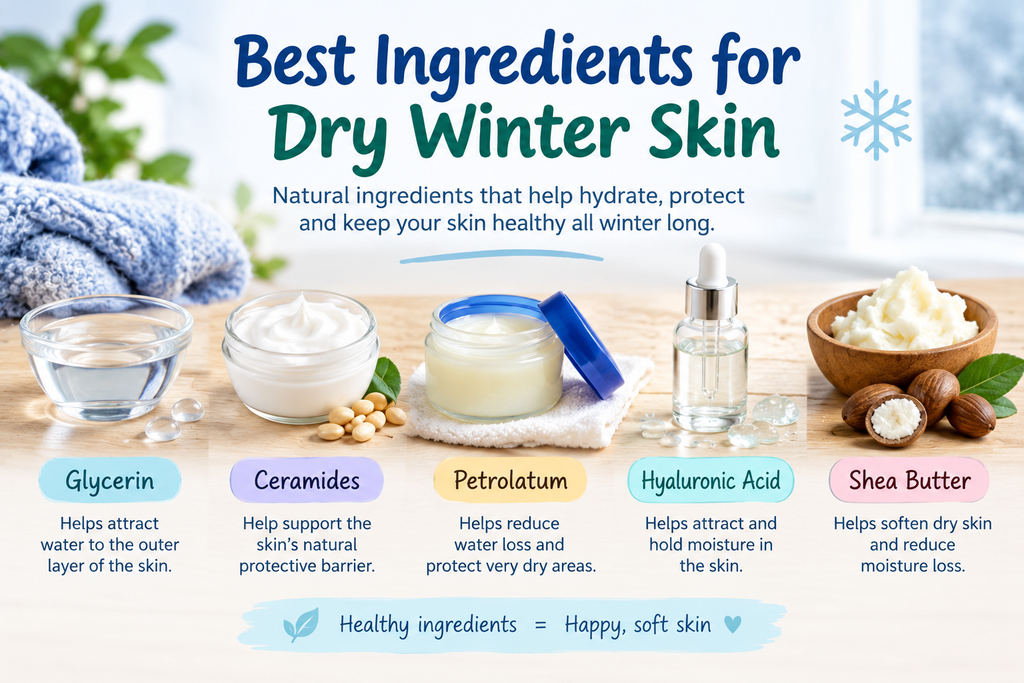
Glycerin
Glycerin attracts water to the outer layer of the skin. It is commonly included in moisturizers designed to improve hydration and soften rough areas.
Ceramides
Ceramides are lipids that help maintain the skin’s protective barrier. Moisturizers containing ceramides may be helpful when the skin feels dry or its barrier needs additional support.
Petrolatum
Petrolatum forms a protective layer that reduces water loss. It can be particularly useful on very dry hands, heels, elbows, and other suitable areas.
Hyaluronic Acid
Hyaluronic acid helps attract and retain water. It is commonly found in hydrating serums and creams, and is often combined with other ingredients that help limit moisture loss.
Urea
Urea can help hydrate rough, dry skin. Products containing higher concentrations may also soften thickened areas, although some formulations can sting irritated or broken skin.
Shea Butter
Shea butter is an emollient that helps soften skin and improve its feel. It is included in many creams designed for dry areas.
How to choose: You do not need every ingredient in one product. A fragrance-free moisturizer that suits your skin and contains effective hydrating or barrier-supporting ingredients is a sensible starting point.
For additional guidance on protecting your skin during colder weather, explore these dermatologist-recommended dry skin care tips, including advice on gentle cleansing, moisturizing, and choosing suitable skincare products.
A Simple Winter Skincare Routine
A manageable routine can help you stay consistent without adding unnecessary products.
Morning Care
- Wash with lukewarm water or a gentle cleanser.
- Apply moisturizer to areas that tend to become dry.
- Use broad-spectrum sunscreen with SPF 30 or higher on exposed skin.
- Cover your hands and exposed areas when going outdoors in cold or windy weather.
Evening Care
- Remove sunscreen, makeup, and daily dirt gently.
- Avoid aggressive scrubbing or unnecessary exfoliation.
- Apply moisturizer while your skin is slightly damp.
- Use a suitable fragrance-free ointment on particularly dry areas if needed.
If you wash your hands frequently, reapply hand cream throughout the day. Consistency is more important than using a large number of products.
Winter Skincare Mistakes That Can Make Dryness Worse
Some common habits can undermine an otherwise useful routine.
- Taking long, hot showers: Excessive heat may remove protective oils from the skin.
- Skipping moisturizer after washing: Moisture can escape more easily when the skin’s surface is left unprotected.
- Using harsh scrubs: Aggressive exfoliation may increase irritation and visible flaking.
- Trying several new products together: Multiple changes make it harder to identify the cause of a reaction.
- Assuming every natural remedy is gentle: Essential oils, lemon juice, and fragranced mixtures can irritate sensitive skin.
- Ignoring persistent symptoms: Severe itching, painful cracks, or recurring inflammation may need professional attention.
Adjusting these habits can make it easier to protect your skin throughout the colder months.
When Should You Consult a Healthcare Professional?
Mild winter dryness often improves with gentle cleansing and regular moisturizing. However, not every dry or itchy patch is caused by the weather.
Consider seeking medical advice if you experience:
- Persistent itching that interferes with sleep.
- Deep cracks, bleeding, or painful skin.
- Ongoing redness, swelling, or an unusual rash.
- Dryness that does not improve despite consistent skincare.
- Increasing warmth, pain, or pus around an affected area.
These symptoms may indicate eczema, contact dermatitis, infection, or another problem that requires specific treatment. Avoid relying only on home remedies when symptoms are severe or the skin is broken.
Frequently Asked Questions
1. Why does skin become rough during winter?
Low humidity, indoor heating, hot showers, and irritating cleansers can contribute to moisture loss or damage the skin’s protective barrier. This may cause tightness, roughness, and flaking.
2. What is the simplest way to manage dryness of skin in winter?
Begin with a gentle cleanser, short lukewarm showers, and regular application of a suitable moisturizer. Protect exposed skin from cold winds and avoid products that cause irritation.
3. Should I use a cream or a lotion during winter?
Creams are generally thicker than lotions and may provide more lasting moisture. Ointments can be useful for very dry areas. Choose a texture that suits your skin and feels comfortable enough to use regularly.
4. Can natural remedies remove winter dryness?
Gentle measures, such as using a cool compress and applying a suitable moisturizer, may improve comfort. However, natural ingredients are not always safe for sensitive skin, and irritating mixtures can worsen the problem.
5. How often should I apply moisturizer in winter?
Apply moisturizer after bathing and washing your face, and reapply whenever your skin feels dry. Hands may need more frequent application because they are repeatedly exposed to water and cleansers.
6. Does drinking more water prevent dry skin?
Adequate hydration supports general health, but extra water alone may not correct dryness caused by environmental conditions or a weakened skin barrier. Moisturizing and gentle skincare remain important.
7. Can winter dryness affect oily skin?
Yes. Skin that produces excess oil can still experience surface dehydration or irritation. Choose a suitable moisturizer rather than assuming oily skin never needs additional hydration.
8. When should I worry about dry skin?
Seek professional advice if dryness becomes painful, causes bleeding, produces persistent redness, or fails to improve with regular care. Severe itching and signs of infection also deserve medical attention.
Conclusion
Cold weather, indoor heating, bathing habits, and irritating skincare products can all contribute to uncomfortable winter skin. Fortunately, a few thoughtful changes can help support your skin’s natural protective barrier.
If you experience dryness of skin in winter, focus on gentle cleansing, regular moisturizing, suitable clothing, and protection from harsh weather. Choose products according to your skin’s needs instead of following every new skincare trend.
Pay attention to changes in your skin and seek professional guidance if symptoms become severe or persistent. A simple, consistent routine is a practical way to maintain comfortable, healthy-looking skin throughout winter.
Disclaimer: This article provides general skincare information for educational purposes only. It does not replace professional medical advice, diagnosis, or treatment.
