
Winter changes more than the temperature outside. Shorter days, chilly winds, dry indoor air, and changes in daily routines can affect how we eat, sleep, exercise, and care for our bodies. Without a little preparation, these seasonal changes may contribute to dry skin, low energy, and a greater risk of certain respiratory infections.
A thoughtful winter health care routine does not need to be complicated. By making a few sensible adjustments to your meals, clothing, personal hygiene, and home environment, you can make the colder months more comfortable.
This guide explains 12 practical winter health care habits, why they matter, and how to make them part of your everyday life.
Table of Contents
Why Should You Pay Attention to Your Health During Winter?
Cold weather can place additional demands on the body, particularly when temperatures fall sharply. People may spend more time inside, move around less, and experience discomfort from dry air or inadequate heating.
Some people also have a higher risk of cold-related problems, including older adults, young children, and individuals with certain long-term medical conditions.
Preparing ahead allows you to address everyday concerns before they become more difficult to manage. A balanced diet, suitable clothing, regular movement, and a safe living environment are useful starting points.

1. Choose Clothing That Keeps Your Body Comfortably Warm
Your winter wardrobe should help maintain warmth without making you uncomfortable when you move between indoor and outdoor environments.
Rather than depending on a single thick garment, combine lightweight clothing with a well-insulated outer layer. A soft thermal top can provide a useful foundation, while a wool-blend jumper or fleece-lined garment helps retain body heat. A wind-resistant coat can offer additional protection outside.
Remember to protect your fingers, ears, and feet when the weather is particularly cold. Choose footwear that keeps your feet dry and provides enough grip on wet or slippery surfaces.
If your clothes become damp from rain or perspiration, replace them with dry garments when possible. Staying in wet clothing for too long can increase heat loss.
2. Build Winter Meals Around a Variety of Nutrients
Winter is a good opportunity to review your everyday eating habits. Your body requires a range of nutrients for normal immune function, bone health, muscle activity, and energy production.
Try creating meals with different colours, textures, and food groups instead of eating the same few foods repeatedly.
For example, a homemade meal could include lentils, whole-grain bread, cooked vegetables, and a serving of fruit. Eggs, fish, beans, yoghurt, and poultry can provide protein, while nuts and seeds offer additional nutrients in moderate portions.
Seasonal produce such as carrots, leafy greens, citrus fruits, and guavas can add variety to your plate. Vegetable stews and lentil-based dishes are also useful options when you prefer a warm meal.
No particular food guarantees protection against infection. Consistent, varied eating habits are more helpful than depending on one so-called immunity-boosting ingredient.
3. Make Hydration Part of Your Cold-Weather Routine
When the temperature drops, drinking water may become less noticeable in your daily routine. You might not experience the same thirst that you feel during hot weather, even though your body continues to lose water through normal bodily processes.
One simple solution is to connect drinking with activities you already do. Have a glass of water after waking up, keep water near your workspace, and drink regularly with meals.
If plain water feels unappealing, try warm water or a caffeine-free drink that you enjoy. Broth-based soups and water-rich fruits can also contribute to your overall fluid intake.
Pay attention to your individual needs, which can vary with age, physical activity, medicines, and health conditions.People with kidney or heart conditions may need a carefully managed daily fluid intake. If you have been given a specific fluid allowance, spread your drinks throughout the day and consult your healthcare provider before making changes to your usual intake.
4. Help Your Skin Cope With Cold Air and Indoor Heating
Winter skin problems often develop when cold outdoor conditions combine with low indoor humidity and frequent exposure to hot water. The skin may begin to feel tight, rough, flaky, or irritated.
A gentle approach can help preserve the skin’s natural moisture barrier.
Wash with lukewarm water and choose a mild cleanser that does not leave your skin feeling stripped. After washing, apply a suitable moisturizer before the skin becomes completely dry. People with very dry skin may prefer a richer cream rather than a lightweight lotion.
Your lips also need protection from cold winds. Keep a simple, non-irritating lip balm available and reapply it when the skin starts feeling tight. Try not to lick your lips repeatedly because saliva can make dryness worse.
When going outside, cover exposed skin where practical. If irritation becomes severe, develops painful cracks, or continues despite gentle care, seek professional advice.
5. Find Comfortable Ways to Stay Physically Active
A chilly morning or rainy afternoon can make exercise seem less appealing. However, spending most of the day sitting may leave you feeling stiff and make it harder to maintain your usual fitness routine.
You can remain active without exercising outdoors in uncomfortable weather. Walk around your home, perform gentle mobility exercises, dance to music, or follow a suitable indoor workout.
Another helpful habit is to break up long periods of sitting. Stand up, stretch, or walk briefly at regular intervals throughout the day.
If you prefer outdoor activity, choose a time when conditions are safer and wear appropriate clothing. Avoid icy paths and poorly lit areas.
Start gradually if you have been inactive. Anyone with a significant medical condition should choose activities appropriate to their health and seek medical guidance when necessary.
6. Create a Restful Evening Routine
Changes in daylight and daily schedules can sometimes disrupt sleep patterns. At the same time, late-night screen use, irregular bedtimes, and excessive caffeine may make restful sleep more difficult.
A consistent evening routine can help you prepare for sleep. Try to wake up at a regular time, reduce stimulating activities before bed, and keep your sleeping area quiet and comfortable.
If you find that cold temperatures disturb your sleep, adjust your bedding and room temperature to a comfortable level. Avoid making the room excessively hot, particularly if heating dries the air.
Most adults generally benefit from around seven to nine hours of sleep per night, although individual requirements differ.
If sleep difficulties continue for weeks or begin affecting your daily activities, consider discussing them with a healthcare professional.
7. Develop Everyday Habits That Limit the Spread of Germs
Respiratory illnesses can circulate more easily when people spend extended periods together in enclosed spaces. Simple hygiene habits can reduce some opportunities for germs to spread.
Wash your hands with soap and water, particularly before preparing food, after using the bathroom, and after coughing or sneezing. If soap and water are unavailable, an appropriate alcohol-based hand sanitizer can be useful.
When coughing, turn away from others and use a tissue or your bent elbow to cover your mouth and nose. Dispose of used tissues and clean your hands afterward.
Where practical, allow fresh air into indoor spaces and avoid sharing close indoor environments with others when you are ill. Recommended seasonal vaccinations can provide additional protection against specific infections.
Remember that winter symptoms do not always have the same cause. Seek medical advice if you experience severe symptoms, your condition deteriorates, or you are particularly vulnerable to complications.
8. Check Your Home for Cold-Weather Hazards
Your home should provide a safe place to recover from the cold, but certain winter conditions can introduce their own problems.
Inspect windows and doors for noticeable draughts, check heating equipment according to its manufacturer’s instructions, and address leaks that contribute to dampness. If your home develops persistent mould, investigate the source of moisture instead of simply covering the affected area.
Ventilation also matters. When conditions allow, exchange indoor air without letting living spaces become dangerously cold.
Take extra care with portable heaters and electrical equipment. Keep heating devices away from bedding, curtains, and other materials that could catch fire. Never burn charcoal or use outdoor fuel-burning equipment inside an enclosed room.
Carbon monoxide is an odourless, potentially fatal gas produced by some fuel-burning appliances. Ensure that such equipment is maintained correctly and use suitable carbon monoxide alarms where recommended.
Preparing for colder days involves more than wearing warm clothes; explore the NHS winter health and safety guide for practical advice on home heating, seasonal vaccinations, and protecting people who are more vulnerable to cold weather.
9. Understand Your Vitamin D Needs
Vitamin D contributes to calcium absorption and normal bone maintenance. The amount your body produces through sunlight depends on factors such as season, location, skin exposure, and individual characteristics.
During periods when sunlight exposure is limited, some people may need to pay closer attention to their vitamin D intake.
Foods that contain vitamin D include oily fish, egg yolks, and certain fortified products. However, the amount available from food varies, and dietary sources may not meet everyone’s needs.
Do not assume that taking a large supplement dose is automatically beneficial. Excessive vitamin D can be harmful, and recommendations depend on individual circumstances.
If you have concerns about deficiency, ask a healthcare professional whether dietary adjustments, supplements, or testing would be appropriate.
10. Maintain Social Connections and Emotional Well-Being
Cold weather can change the way people spend their free time. Some may go outside less frequently, postpone social activities, or find their usual routine disrupted.
Making space for enjoyable activities can help maintain a sense of balance. Arrange a phone call with a friend, spend time on a hobby, prepare a meal with family, or take a short walk during suitable daylight hours.
Try setting small daily goals rather than expecting yourself to remain productive every moment. Reading, gentle exercise, creative activities, and relaxation can all have a place in a balanced routine.
If you experience persistent sadness, loss of interest, anxiety, or difficulty managing ordinary responsibilities, professional support may be helpful. Do not dismiss ongoing emotional difficulties as something you simply have to tolerate until spring.
11. Pay Attention to Your Hands, Feet, and Other Exposed Areas
The hands and feet can become particularly uncomfortable in cold weather because they are frequently exposed to the environment and may be affected by poor footwear, moisture, or inadequate protection.
Use gloves when necessary, dry your hands carefully after washing, and apply moisturizer if they become rough. Choose socks that keep your feet comfortable and replace them whenever they become damp.
At home, avoid placing numb fingers or toes directly against very hot heating devices. Cold-exposed skin may be more vulnerable to burns when sensation is reduced.
People with diabetes, circulation problems, or reduced foot sensation should check their feet regularly and follow any specific care instructions provided by their healthcare team.
Severe pain, persistent numbness, unusual skin colour changes, or suspected frostbite require prompt medical attention.
12. Organize Essential Supplies Before Temperatures Drop
Planning ahead can reduce stress when cold weather makes shopping or travel more difficult.
Consider keeping basic household supplies together in an accessible location. These might include a working thermometer, suitable cold-weather clothing, a supply of frequently used medicines, and easy-to-prepare food.
Check medicine expiry dates and follow storage instructions, especially if your home becomes very cold or your heating system is unreliable. Arrange prescription refills before you run out rather than waiting until travel becomes difficult.
It is also useful to have emergency contact numbers available and to check whether older relatives or neighbours need help obtaining essential supplies.
A small amount of preparation can make a significant difference during unusually cold periods or disruptions to normal routines.
Winter Health Care Mistakes Worth Avoiding
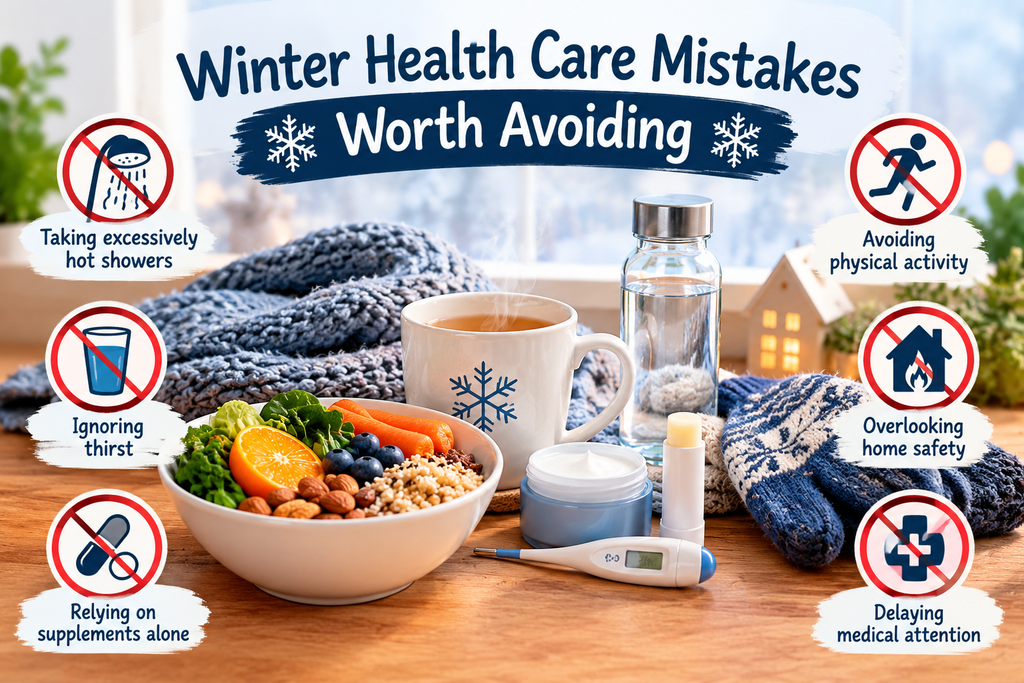
Some common habits may seem harmless but can make winter discomfort worse.
- Taking excessively hot showers: Very hot water can remove skin oils and increase dryness.
- Ignoring thirst: A cooler environment does not eliminate the body’s need for fluids.
- Taking supplements without guidance: High doses of certain vitamins can cause harm.
- Staying indoors without movement: Include safe physical activity in your daily schedule.
- Overlooking home safety: Poorly maintained heating equipment can create serious risks.
- Delaying medical attention: Severe or unusual symptoms should not automatically be attributed to cold weather.
The aim is not to follow a perfect routine every day. Instead, build habits that are practical, safe, and sustainable for your circumstances.
Frequently Asked Questions About Winter Health Care
How can I maintain good health during winter?
Build your routine around nutritious meals, regular fluid intake, suitable clothing, consistent sleep, safe exercise, and good hygiene. Keep your living environment comfortable and seek medical advice when necessary.
What should I eat to support my health in cold weather?
Choose a variety of vegetables, fruits, whole grains, protein-rich foods, and suitable sources of healthy fats. Warm homemade meals can make it easier to enjoy nutritious food during colder months.
Why does my skin become dry in winter?
Cold outdoor air, low indoor humidity, wind, and frequent hot showers can contribute to moisture loss. Gentle cleansing and regular moisturizing may help reduce dryness.
Is it necessary to drink water when I do not feel thirsty?
Yes, your body still needs fluids in cold weather. Drink regularly according to your needs, unless a healthcare professional has given you specific fluid restrictions.
Who should take extra care during winter?
Older adults, young children, people with certain chronic illnesses, and individuals without reliable heating may face additional risks during very cold weather.
Can winter weather affect mental well-being?
Changes in daylight, activity levels, and social contact can affect some people’s mood. Maintaining connections, following a manageable routine, and seeking help for persistent symptoms can be beneficial.
Conclusion
A healthy winter begins with everyday decisions rather than complicated treatments. Suitable clothing, varied meals, regular hydration, gentle skincare, sufficient sleep, and safe movement can all contribute to a more comfortable season.
It is equally important to pay attention to indoor air quality, heating safety, emotional well-being, and the needs of people who may be more vulnerable to cold weather.
Choose the habits that fit your circumstances and practise them consistently. With sensible preparation and appropriate medical care when needed, you can look after your well-being throughout the colder months.
Health Disclaimer: This article provides general educational information and is not a substitute for professional medical advice, diagnosis, or treatment.
