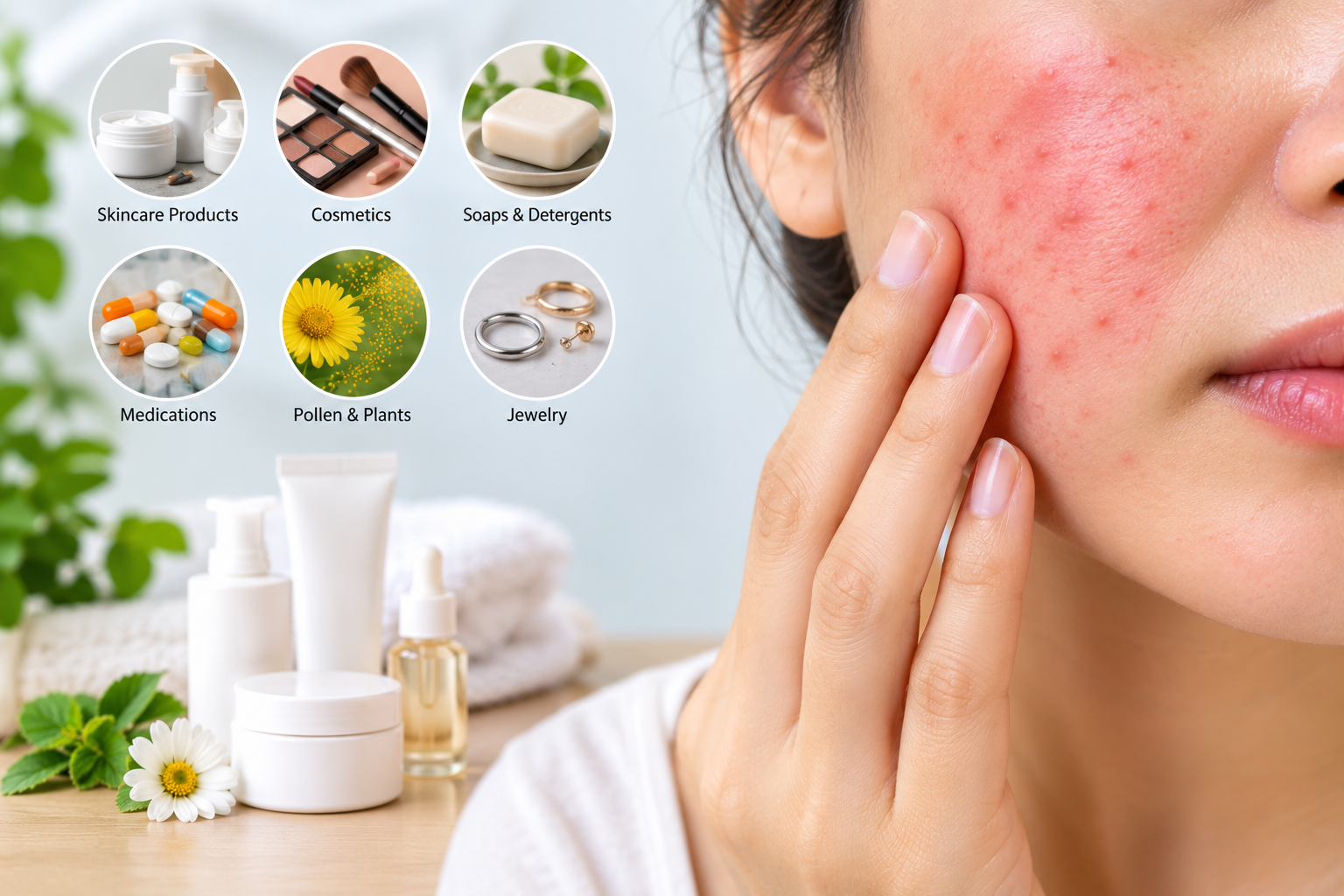
An allergic reaction on face can appear suddenly and may cause redness, itching, swelling, dryness, burning, or small bumps. The reaction can happen after using a new skincare product, cosmetic, soap, detergent, medication, or coming into contact with an allergen.
Although many facial allergic reactions are mild, it is important to understand what may be causing them and how to care for the skin safely. This guide explains common causes, symptoms, home care, treatment options, and when medical attention may be necessary.
Table of Contents
What Causes an Allergic Reaction on Face?
There are several possible triggers for an allergic reaction on face. Some people may react to ingredients that do not bother others.
Common triggers include:
- Skincare products: Creams, moisturizers, serums, and facial cleansers may contain fragrances, preservatives, or other ingredients that irritate sensitive skin.
- Cosmetics: Foundation, concealer, powder, makeup removers, and other cosmetic products can sometimes cause a reaction.
- Soaps and detergents: Strong fragrances and chemicals may cause redness or irritation.
- Hair products: Shampoo, conditioner, hair dye, and styling products can sometimes come into contact with facial skin.
- Medications: Some medicines can cause allergic skin reactions.
- Plants and environmental allergens: Certain plants, dust, pollen, and other substances can trigger skin reactions.
- Jewelry: Metals such as nickel can cause contact dermatitis in sensitive individuals.
Identifying the trigger is one of the most important steps toward preventing the problem from coming back.
Symptoms of an Allergic Reaction on Face
The symptoms of an allergic reaction on face can vary depending on the trigger and the person’s sensitivity.
Common symptoms may include:
- Red or irritated skin
- Itching
- Swelling
- Burning or stinging
- Dry or flaky patches
- Small red bumps
- Rash
- Hives
- Skin that feels unusually warm or tight
Sometimes the reaction develops shortly after exposure, while other reactions may take longer to appear.
How to Treat an Allergic Reaction on Face
Treatment depends on the severity and cause of the reaction. If you suspect a product is responsible, stop using it and gently rinse the affected area with lukewarm water.
For a mild allergic reaction on face, these simple steps may help:
1. Stop Using the Suspected Product
If the reaction started after using a new cosmetic or skincare product, discontinue it temporarily. Avoid applying additional products until the skin begins to settle.
2. Use a Cool Compress
A clean, cool, damp cloth can be placed gently on the affected skin for several minutes. This may help reduce discomfort, itching, and mild swelling.
3. Keep Your Skincare Routine Simple
Use gentle, fragrance-free products when necessary. Avoid scrubs, strong acids, retinoids, perfumes, and other potentially irritating products while the skin is recovering.
4. Avoid Scratching
Scratching can further damage irritated skin and may increase the risk of infection. Try to keep your hands away from the affected area.
Can Home Remedies Help?
For a mild allergic reaction on face, basic skin care may provide comfort, but home remedies should be used carefully.
A cool compress is generally a simple option. Keeping the skin moisturized with a gentle, fragrance-free moisturizer may also help if dryness is present.
Avoid experimenting with lemon juice, baking soda, toothpaste, essential oils, or other harsh ingredients. These substances can further irritate already sensitive skin.
If the reaction continues, becomes worse, or keeps returning, speaking with a healthcare professional is a better option than repeatedly trying home remedies.
When Should You See a Doctor?
You should consider medical advice if an allergic reaction on face is severe, persistent, painful, spreading, or repeatedly occurring without an obvious cause.
A healthcare professional can examine the skin and determine whether the problem is an allergy, contact dermatitis, infection, eczema, or another skin condition.
You may also need professional evaluation if the reaction does not improve after stopping a suspected product.
For more information about contact dermatitis and common skin reactions, visit the American Academy of Dermatology (AAD).
When Is a Facial Allergic Reaction an Emergency?
Some allergic reactions can become serious. Seek emergency medical help if facial swelling occurs along with:
- Difficulty breathing
- Difficulty swallowing
- Swelling of the tongue or throat
- Severe dizziness or fainting
- Wheezing
- Rapid worsening of symptoms
These symptoms can indicate a serious allergic reaction and require urgent medical attention.
How Can You Prevent an Allergic Reaction on Face?
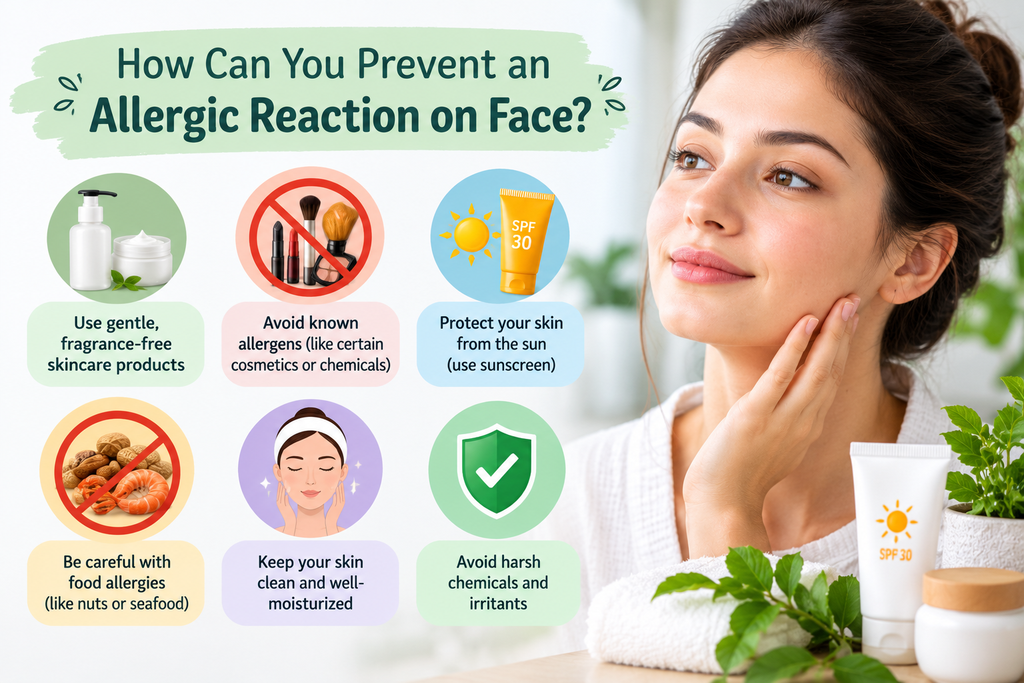
Preventing an allergic reaction on face starts with identifying and avoiding the substance that caused the problem.
Here are some useful prevention tips:
- Introduce new skincare products one at a time.
- Check product labels for ingredients you have reacted to before.
- Consider fragrance-free products if your skin is sensitive.
- Avoid using several new products at once.
- Remove makeup gently before sleeping.
- Do not share cosmetics with other people.
- Follow instructions when using hair dyes and chemical products.
- Stop using any product that repeatedly causes irritation.
A patch test can sometimes help identify whether a product may irritate your skin, but it does not guarantee that a product will never cause a reaction on the face.
Final Thoughts
An allergic reaction on face can be uncomfortable, but many mild reactions improve after the trigger is removed and the skin is given time to recover. Keeping your routine gentle and avoiding known irritants can help protect your skin.
However, facial swelling with breathing or swallowing problems should always be treated as an emergency. If your symptoms are severe, persistent, or difficult to identify, consult a qualified healthcare professional for appropriate advice.
Frequently Asked Questions
How long does an allergic reaction on the face last?
The duration depends on the cause and severity. A mild reaction may improve after the trigger is removed, while more persistent reactions may require medical evaluation.
Can skincare products cause facial allergies?
Yes. Fragrances, preservatives, and other cosmetic ingredients can cause allergic or irritant reactions in some people.
Should I stop using makeup during a facial reaction?
It is generally sensible to avoid makeup on irritated skin until the cause is clearer and the skin has recovered.
Can an allergic reaction spread across the face?
Yes, depending on the trigger, irritation or an allergic rash can spread to other areas that have been exposed.
Is facial swelling always caused by an allergy?
No. Facial swelling can have several causes, including infections, medication reactions, dental problems, and other medical conditions. Severe or rapidly developing swelling should be assessed promptly.
A lack of essential nutrients can make your skin more sensitive and prone to reactions. Learn more about Vitamin D deficiency symptoms, causes and treatment.
Disclaimer:The information in this article is for educational purposes only and is not intended as medical advice. Low calorie energy drinks may affect individuals differently based on their health conditions, caffeine sensitivity, and daily intake
