
Energy drinks are popular among people who want a quick boost during a busy day, before exercise, or when they feel tired. However, many traditional energy drinks can contain a significant amount of added sugar and calories. This is why low calorie energy drinks have become a popular choice for people who want to pay more attention to their daily calorie intake.
Choosing a better drink does not simply mean looking at the number of calories on the label. It is also important to check caffeine, added sugar, serving size, and other ingredients. A smart choice depends on your individual needs and how much caffeine you already consume during the day.
Table of Contents
What Are Low Calorie Energy Drinks?
Low calorie energy drinks are beverages designed to provide caffeine or other energy-related ingredients while containing relatively few calories. Some use little or no added sugar and may contain sweeteners instead.
The calorie content can vary from one product to another, so checking the nutrition label is important. A drink that looks low in calories may still contain a considerable amount of caffeine.
These drinks are not a replacement for healthy meals, regular sleep, or drinking enough water. They are simply one option among many beverages available to consumers.
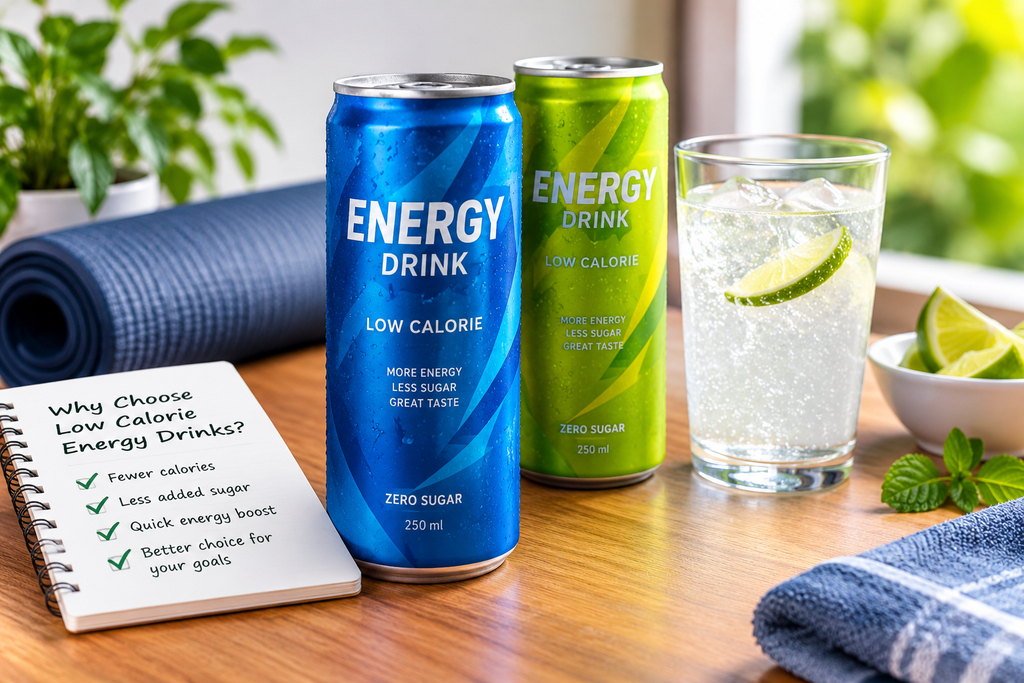
Why Do People Choose Low Calorie Energy Drinks?
There are several reasons people choose low calorie energy drinks instead of regular sugary energy drinks.
1. Lower Calorie Intake
People who are watching their overall calorie intake may prefer a drink with fewer calories. Replacing a high-calorie sugary beverage with a lower-calorie option can make it easier to manage total daily calories.
However, the rest of the diet still matters. One low-calorie drink cannot make an otherwise unbalanced diet healthy.
2. Less Added Sugar
Some low calorie energy drinks contain little or no added sugar. This can be useful for people who are trying to reduce their intake of sugary beverages.
It is still important to read the ingredient list because different products use different sweeteners and flavoring ingredients.
3. Convenient for Busy Days
A canned drink is convenient to carry and does not require preparation. Some people use caffeinated drinks during long workdays, study sessions, or travel.
Convenience should not become a reason to consume large amounts of caffeine, though.
What Should You Check on the Label?
When selecting low calorie energy drinks, do not focus only on calories. Look at the complete nutrition label.
Calories
Check the calories per serving and compare them with the actual amount you plan to drink. Some cans contain more than one serving.
Caffeine
Caffeine is one of the most important things to check. Too much caffeine can cause unwanted effects such as restlessness, difficulty sleeping, a fast heartbeat, or feeling nervous in some people.
Remember to consider caffeine from other sources too, including coffee, tea, cola, chocolate, and certain supplements.
Added Sugar
Look for the amount of added sugar. A lower-sugar product may be preferable if you are trying to reduce sugary drinks in your diet.
Serving Size
Never assume that one can always equals one serving. Read the serving information carefully before drinking the entire container.
Are Low Calorie Energy Drinks Healthy?
The answer depends on the product and how it is consumed. Low calorie energy drinks may contain fewer calories and less sugar than some traditional energy drinks, but low calories do not automatically make a product healthy.
Caffeine intake is an important consideration. People who are sensitive to caffeine may experience side effects even from moderate amounts.
For everyday hydration, water is generally a simple choice. Milk, unsweetened tea, and other nutritious beverages can also fit into a balanced diet depending on individual needs.
Best Time to Drink an Energy Drink
There is no single best time for everyone. If you decide to drink an energy drink, think about how caffeine may affect your sleep.
Having a caffeinated drink late in the day may make it harder for some people to fall asleep. Poor sleep can leave you feeling tired the next day, creating a cycle where you rely on more caffeine.
For this reason, timing matters just as much as the calorie content.
Low Calorie Does Not Mean Unlimited
One common mistake is assuming that low calorie energy drinks can be consumed freely because they contain fewer calories.
The calorie number is only one part of the picture. Caffeine and other ingredients also matter.
Instead of drinking several cans throughout the day, check the caffeine amount and consider your total caffeine intake from all sources. Following the product’s serving information is also a sensible approach.

Who Should Be Careful With Energy Drinks?
Some people should be particularly cautious with caffeinated energy drinks.
Children and teenagers should generally avoid energy drinks because of their caffeine content. Pregnant or breastfeeding individuals, people with certain medical conditions, and anyone taking medications that may interact with caffeine should discuss caffeine intake with a healthcare professional.
People who regularly experience caffeine-related symptoms should also consider reducing their intake.
If you have a health condition or are unsure how much caffeine is appropriate for you, professional medical advice is the safest option.
Tips for Choosing Better Low-Calorie Options
When comparing low calorie energy drinks, keep these simple tips in mind:
- Check the calories per serving.
- Look at the caffeine content.
- Check the amount of added sugar.
- Read the serving size carefully.
- Compare different products before buying.
- Avoid combining several high-caffeine products.
- Pay attention to how your body reacts to caffeine.
- Avoid drinking caffeinated beverages close to bedtime.
- Keep water as an important part of your daily hydration.
- Do not use energy drinks as a substitute for proper sleep or meals.
These simple habits can help you make a more informed decision.
According to the U.S. Food & Drug Administration (FDA), healthy adults should limit caffeine to 400mg per day, which is an important factor when choosing energy drinks.
Low Calorie Energy Drinks vs. Regular Energy Drinks
The biggest difference is often the amount of sugar and calories, but products vary widely.
A regular energy drink may contain more added sugar, while a lower-calorie version may use non-sugar sweeteners. Both types can still contain caffeine.
Therefore, it is better to compare the nutrition labels rather than assuming that one category is always better.
Can They Help With Weight Management?
People sometimes choose low calorie energy drinks because they are trying to reduce calories from beverages. Choosing a lower-calorie drink instead of a high-calorie sugary beverage can reduce the calories coming from drinks.
However, weight management depends on overall eating habits, physical activity, sleep, and total calorie intake. No particular energy drink should be considered a weight-loss solution.
A balanced diet and sustainable lifestyle habits are much more important than relying on a specific beverage.
Simple Alternatives to Energy Drinks
If you mainly want a refreshing drink with fewer calories, you have several options.
Water is one of the simplest choices. Sparkling water without added sugar can provide a fizzy alternative. Unsweetened tea can also provide caffeine without the high sugar content found in some beverages.
For people who need an energy boost, getting enough sleep, eating balanced meals, staying hydrated, and taking regular breaks can be more useful long-term habits.
Final Thoughts
Low calorie energy drinks can be a convenient option for people who want to reduce calories or added sugar from beverages, but the calorie count should not be the only thing you consider.
Always check caffeine, serving size, added sugar, and ingredients before choosing a product. It is also important to consider your total caffeine intake throughout the day.
The best choice is one that fits your individual needs and overall lifestyle. For everyday hydration, water remains a simple and reliable option. If you have concerns about caffeine or a medical condition, speak with a qualified healthcare professional before making significant changes to your intake.
Frequently Asked Questions
Are low-calorie energy drinks better than regular energy drinks?
They may contain fewer calories or less sugar, but this does not automatically make them healthier. Always compare caffeine and other ingredients as well.
Do low-calorie energy drinks contain caffeine?
Many do, although the amount varies between products. Always check the label before drinking one.
Can I drink an energy drink every day?
It depends on the product, caffeine content, and your individual health circumstances. Regularly consuming large amounts of caffeine may not be suitable for everyone.
Are energy drinks suitable for children?
Energy drinks are generally not recommended for children and teenagers because of their caffeine content.
What is the healthiest alternative to an energy drink?
For everyday hydration, water is one of the simplest choices. Unsweetened beverages can also be useful alternatives depending on your needs.
If you are trying to manage your weight while staying energized, you may also like our story on how I lost weight with simple and healthy habits.
Disclaimer: The information in this article is for educational purposes only and is not intended as medical advice. Low calorie energy drinks may affect individuals differently based on their health conditions, caffeine sensitivity, and daily intake.
