
A toothache can make it difficult to eat, sleep, or focus on daily activities. The pain may start suddenly and become uncomfortable, especially when you cannot visit a dentist immediately. Some people use cloves as a traditional home remedy because they contain eugenol, a natural compound known for its numbing properties.
Learning how to use cloves for toothache may help you understand how this traditional remedy works, how to use it more safely, and when professional dental care is necessary. However, cloves cannot repair a cavity, treat a dental infection, or replace a visit to the dentist.
Table of Contents
What Makes Cloves Helpful for Toothache?
Cloves have been used in traditional dental care for many years. They contain eugenol, which has mild local anesthetic and anti-inflammatory properties. This compound is also used in certain dental products.
Cloves may temporarily reduce discomfort in some situations, but the evidence for using whole cloves or homemade clove preparations to treat toothache is limited.
It is important to remember that tooth pain can have several causes, including cavities, gum inflammation, cracked teeth, or infection. Finding the actual cause is the best way to get lasting relief.

How to Use Cloves for Toothache at Home
If you are considering how to use cloves for toothache, choose a gentle approach and avoid placing concentrated clove oil directly on your gums. Clove oil can irritate or burn the delicate tissues inside your mouth.
1. Use a Warm Saltwater Rinse
Although saltwater does not contain cloves, it is a simple option for keeping the mouth clean while you arrange dental care.
- Mix half a teaspoon of salt into a glass of warm water.
- Swish the solution gently around your mouth.
- Spit it out instead of swallowing it.
- Repeat as needed, provided it does not irritate your mouth.
This rinse may help soothe irritated gums, but it will not cure the underlying cause of a toothache.
2. Be Careful With Whole Cloves
Some traditional remedies suggest placing a whole clove near a painful tooth. However, a clove can irritate the gums, become a choking risk, or cause problems if accidentally swallowed.
For these reasons, placing a whole clove directly against a painful tooth is not the safest option, particularly for children. Ask a dentist or pharmacist about safer alternatives.
3. Avoid Applying Undiluted Clove Oil
Clove oil is much more concentrated than whole cloves. Applying it directly to a tooth, gum, or other soft tissue may cause irritation, burns, or allergic reactions.
Do not swallow clove oil, and do not use homemade clove-oil mixtures inside your mouth without professional guidance. If you are pregnant, treating a child, or taking medicines that affect bleeding, seek advice from a healthcare professional before using concentrated clove products.
4. Try a Cold Compress for Swelling
A cold compress may help reduce discomfort and swelling around the outside of your cheek.
- Wrap an ice pack in a clean towel.
- Hold it against the cheek for about 15–20 minutes.
- Remove it and allow your skin to return to its normal temperature before repeating.
Never place ice directly on your tooth or gums.
How Long Does Clove Relief Last?
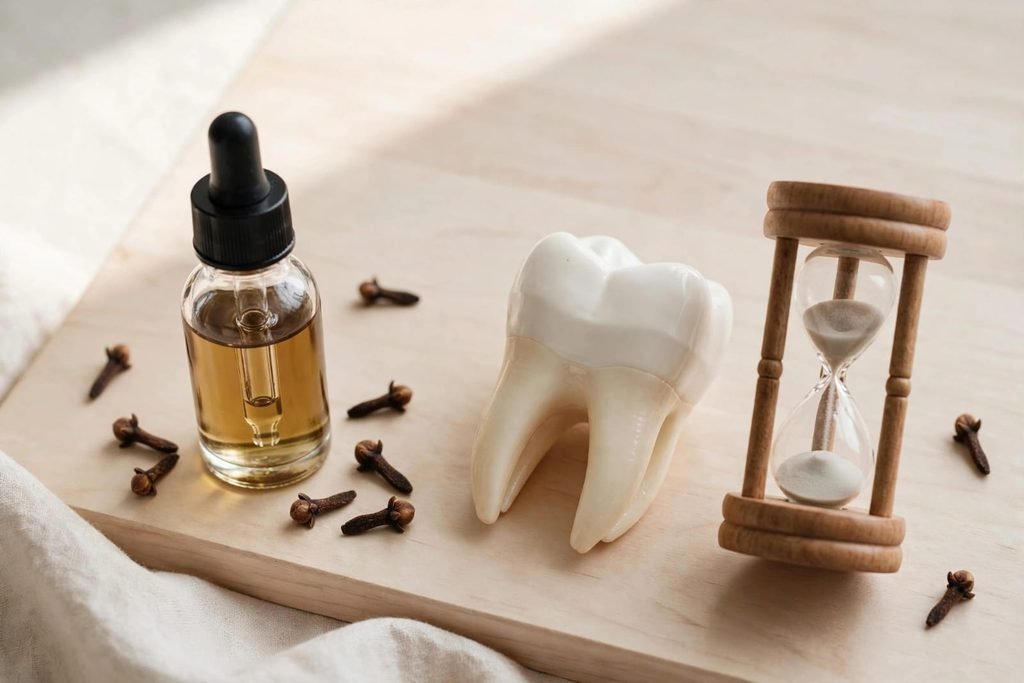
The effects of cloves are not predictable, and there is not enough reliable evidence to say how long a homemade clove remedy will relieve tooth pain. Even if the discomfort improves temporarily, the cause may still be present.
If you are researching how to use cloves for toothache, remember that temporary relief does not mean a cavity or infection has healed. Arrange a dental appointment as soon as possible, especially if the pain continues or returns.
Important Safety Tips Before Using Cloves
Natural ingredients are not always harmless. Keep these precautions in mind before trying a traditional remedy:
- Never apply undiluted clove oil directly to your gums.
- Do not swallow clove oil or use large amounts of clove products.
- Keep essential oils away from children.
- Stop using any product that causes burning, swelling, or irritation.
- Do not use cloves as a substitute for dental treatment.
- Ask a dentist or pharmacist before using clove products if you have allergies or take medicines that affect blood clotting.
For more information about toothache and dental care, consult a qualified dentist or a trusted health resource.
When Should You See a Dentist?
A toothache can be a sign of a dental problem that needs treatment. Contact a dentist if your pain lasts longer than a day or two, keeps returning, or becomes severe.
Seek urgent dental care if you experience fever, pus, a bad taste associated with the painful tooth, or swelling around your gums or jaw. If swelling spreads toward your eye or neck, or you have difficulty breathing or swallowing, seek emergency medical care immediately.
Understanding how to use cloves for toothache is useful, but recognizing warning signs is even more important. Early treatment can help prevent a minor dental problem from becoming more serious.
For more information about toothache, its causes, and safe ways to manage discomfort, read this helpful guide from the NHS.
Frequently Asked Questions
1. Can cloves stop a toothache completely?
Cloves may provide temporary numbing effects, but they cannot reliably stop tooth pain or treat its underlying cause. A dentist can identify the problem and recommend appropriate treatment.
2. Is clove oil safe for toothache?
Undiluted clove oil can irritate or burn oral tissues. Do not apply it directly to your gums or swallow it. Ask a dentist or pharmacist about safer options.
3. Can I use cloves for a toothache every day?
Repeated use of clove products may irritate the mouth and delay proper treatment. Do not rely on cloves for ongoing pain. Arrange a dental examination instead.
4. What is the safest home remedy for toothache?
A gentle warm saltwater rinse and a cold compress on the outside of the cheek may provide temporary comfort. These measures do not treat cavities or infections, so dental care is still important.
Final Thoughts
Cloves are a traditional remedy that some people use when dealing with tooth discomfort. Their natural compound, eugenol, has numbing properties, but homemade clove remedies are not a proven treatment for the causes of toothache.
If you want to understand how to use cloves for toothache, the most important step is to prioritize safety, avoid concentrated clove oil on oral tissues, and seek dental advice when pain persists. A professional examination is the best way to identify the cause and receive lasting relief.
If you have low porosity hair and want to choose the right lightweight oil, check out our guide on Best Oil for Low Porosity Hair for helpful tips and recommendations.
Disclaimer: This information is for educational purposes only, please consult your doctor before trying any remedy.
